

Polity aims to advance democratic consciousness, gender equality, state reform, and social change in Sri Lanka, while interested in South Asia and the World.
As its predecessor Pravada (1991-2002), Polity is published by the Social Scientists’ Association in Colombo, with critical content on politics, political economy, history, women, ethnicity, sexualities, religion, labour studies, agrarian relations, nationalisms, violence, ecology, and much more.

Iran: Solidarity with popular struggles against poverty, unemployment, discrimination, and repression
Editors and Vahed
Once again, the Iranian people are on the streets against their repressive rulers. Once again, the Islamic Republic...

Governing in Anticipation of Backlash
Editors
As Sri Lanka reels from the devastation caused by Cyclone Ditwah, President Anura Kumara Dissanayake in his address to...
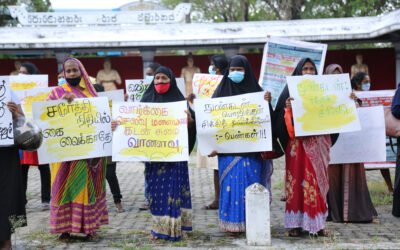
Review and Repair Microfinance Authority Bill! Safeguard Women’s Dignity, Livelihoods, and Long-Term Security!
Suriya Women’s Development Centre
Editors’ Note: On 17 November 2025, the NPP government gazetted a bill to establish a statutory agency styled the...

Year One of the NPP Government: Some Heretical Thoughts
Jayadeva Uyangoda
By the third week of November 2025, the National People’s Power (NPP) has completed its first year as Sri Lanka’s new...

Best Reads 2025
Collective
Ponni Arasu is an independent scholar, activist, expressive arts therapist, translator, and theatre artist.Arundhati...
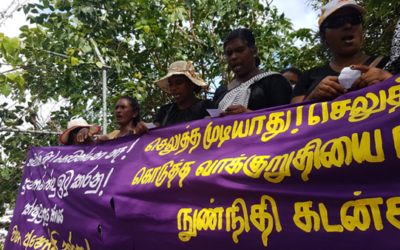
Left Feminism in and after the Aragalaya
Chulani Kodikara and Amalini de Sayrah
The Aragalaya/Porattam/Struggle of 2022 constitutes an unprecedented event in democratic mobilisation and protest...
Current Issue

Out Now! Vol. 13 No. 2 (July – December 2025). 148 pages. #SriLanka. Politics. Cyclone Ditwah. Ecology. Feminism. Education. Justice. Domestic Violence Act. History. Culture. Work. Labour. Books. Cover Picture Sakuna M. Gamage. LKR1000 from the Social Scientists’ Association or Barefoot or SLBOOKS.lk.
Calls
Archive
Pravada (1991-2002) and Polity (2003-) back issues available here.

Social Scientists’ Association
The Social Scientists’ Association (SSA) was founded in 1977, at a turning point in Sri Lankan politics, economy, and society, marked by among other aspects: the ‘open economy’ market reforms; deepening ethnic conflict; and the growing concentration of executive power. Its initiators were academics from public universities, seeking an autonomous space to grapple with these shifts; and to promote progressive political, economic, and social change.