
Memory, Pain, and the Hope of Justice
Centre for Society and Religion (CSR)
Introduction[1]
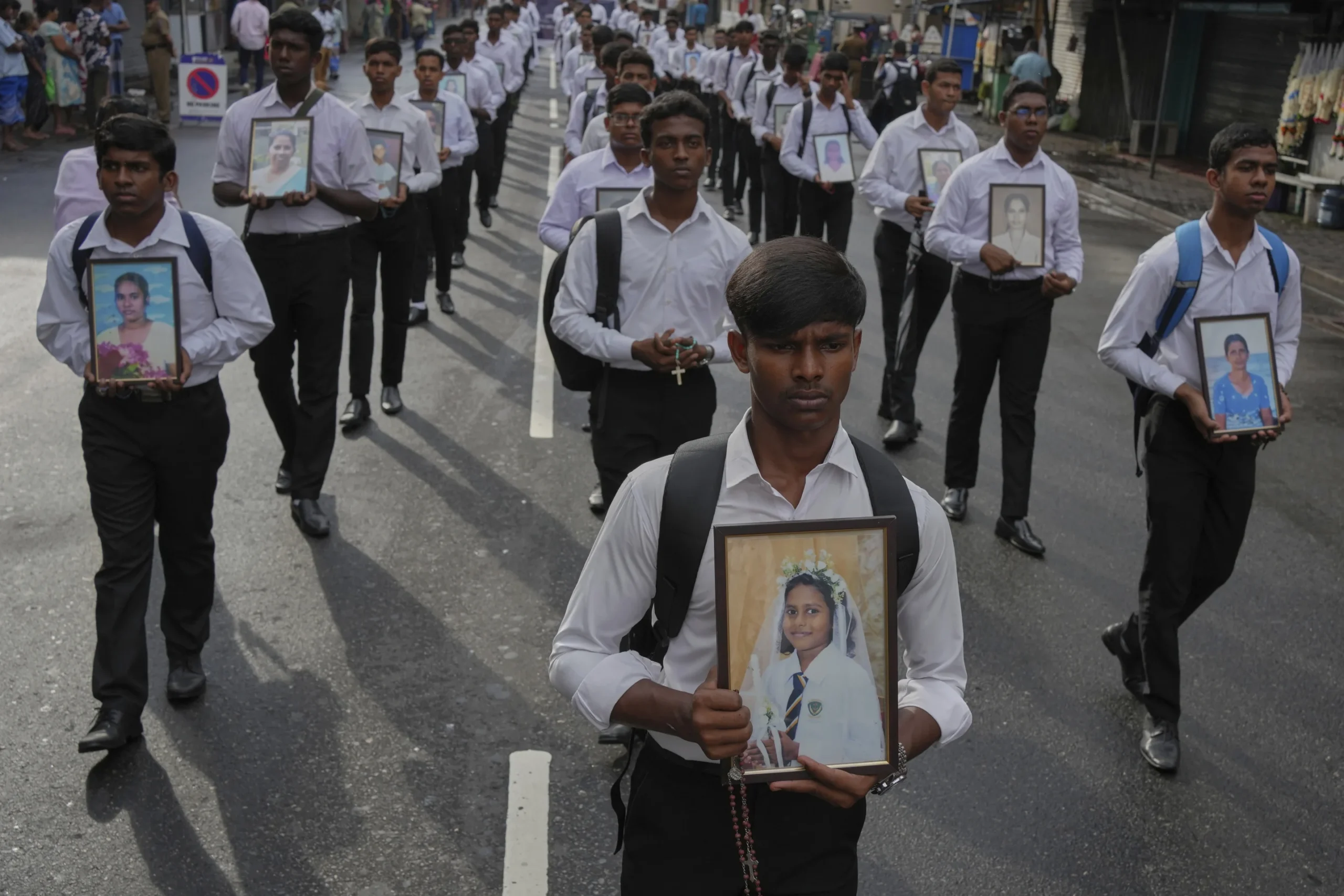
Seven years after the brutal terrorist attack in Sri Lanka on 21 April 2019, on Easter Sunday, the primary objective of publishing a special report by the Centre for Society and Religion (CSR) is to commemorate the memory, share the pain, and go beyond that to reach the hope of justice by knowing the truth and exerting some pressure to achieve criminal justice. Seven years after the attack, investigations appear to be moving in a positive direction, and this report analytically examines the process of eight (08) investigations conducted so far. Over the past seven years, several committees, commissions and investigative divisions have conducted inquiries into the Easter Sunday terrorist attack. Some of these investigations were aimed at looking into the attack, while others were conducted with political motives to suppress emerging allegations.
- Justice Vijith Malalgoda Committee: Appointed within 24 hours of the attack, this committee revealed the preliminary facts regarding the failure to prevent the attack despite receiving intelligence information.
- Presidential Commission of Inquiry (PCoI) under Justice Janak de Silva: This commission, which conducted a more extensive investigation, recommended criminal charges against individuals, including former President Maithripala Sirisena and made numerous recommendations ranging from banning certain organisations to education reforms.
- Parliamentary Select Committee (PSC): A serious lack of coordination among security forces and the fact that intelligence services were aware of Zahran was revealed here. Furthermore, it included observations that raised suspicions about whether the Easter Sunday terrorist attack was not an isolated incident but the result of a conspiracy to gain power.
- Justice S. I. Imam Committee: It is observed at first glance that this committee, appointed regarding the disclosures by the British Channel 4 channel, attempted to exonerate the accused by seeking evidence from the accused themselves.
- Justice Jayaki de Alwis Committee: This committee was appointed a few days after Ravi Seneviratne and Shani Abeysekara who were the supervisory officers of the initial Easter attack investigations joined the program of the Retired Police Collective of the National People’s Power (NPP); it went beyond previous reports to provide observations that Shani Abeysekara and Ravi Seneviratne were responsible for the attack.
- Criminal Investigation from April 2019 to November 2019: During these investigations, the Criminal Investigation Department (CID) arrested a significant number of people associated with the attackers, and criminal cases have already been filed against most of them. While investigating which parties were directing Zahran, the investigations stopped halfway with the Presidential Election.
- From November 2019 to October 2024: Allegations were levelled against the investigations conducted during this period regarding attempts to link certain parties to the Easter Sunday terrorist attacks for political needs, as well as attempts to suppress the truth about the attack. In the first two years of the investigation alone, more than five Directors of the CID were transferred.
- From October 2024 to the present: Investigations have commenced in a manner that creates some hope for justice. Primarily, investigations into the Channel 4 disclosures are being carried out.
The reports of all committees and commissions that we can observe were appointed to uncover the truth, suggesting that this attack was not just the act of a gang including Zahran Hashim, but has characteristics of an organised conspiracy that goes beyond that.
- Failure and misleading by intelligence agencies: Although the State Intelligence Service (SIS) and the Directorate of Military Intelligence (DMI) possessed information prior to the attack, it was not properly shared. In particular, the military intelligence’s erroneous view that Zahran had gone to India while he was in Sri Lanka is something that raises serious suspicion.
- Channel 4 disclosure, Suresh Sallay, and intelligence agencies: According to the disclosure made by Hanzeer Azad Maulana, allegations have been made that the former Director of the State Intelligence Service, Suresh Sallay, and Pillayan aided and abetted this attack. It was revealed at the Malalgoda Committee that the Counter-Terrorism Division had not sent the complete files regarding Zahran to the Attorney General’s Department. It was revealed at the Presidential Commission and the Select Committee that military intelligence closely monitored some of these bombers. It was also revealed that security forces had engaged certain high-level members of their groups as their informants. Furthermore, it is noteworthy that the Justice Imam Committee had to accept that there were links between Hanzeer Azad Maulana, who revealed a political conspiracy through Channel 4, and Zahran’s group.
Judicial process and current situation
The Attorney General’s Department has so far filed 41 cases in the High Courts related to the Easter Sunday attacks. One of the most important cases is the one being heard in the Colombo Permanent High Court, Trial at Bar against 25 accused. It is a case heard daily, and as one accused has passed away, the case is being heard against 24 accused.
Some progress in the investigations has been seen after October 2024; accordingly, three suspects including Suresh Sallay, have been arrested by now. Facts have been reported against them in the Colombo Fort Magistrate’s Court, and three individuals including Suresh Sallay have been named as suspects in the relevant case. This creates some hope for the delivery of justice.
Further investigation matters
The Centre for Society and Religion emphasises that a deep investigation is required into the following matters for the justice process to be complete:
- Abdul Latheef Jameel: The phone calls of Jameel, who did not detonate the bomb at the Taj Samudra Hotel. The behaviour of the intelligence officers who went to check on him, the disappearance of Jameel’s phone, and Maulana’s allegation.
- Abu Hind: Identifying the true identity of this secret character who is said to have directed Zahran and the force behind him.
- Sara Jasmine: Whether Sara Jasmine escaped from the Sainthamaruthu attack, the mysterious nature of her DNA tests, her role within the Zahran gang, and identifying those who provided her protection.
- Vanathavilluwa and Intelligence Agents: The failure to prevent the attack despite the presence of military intelligence informants within the bombers’
- Conflict between the State Intelligence Service (SIS) and Military Intelligence (DMI): It has been revealed that these two intelligence units held differing views regarding Zahran, and the need to identify the reasons that led to this disagreement.
Conclusion and demands
The position of the Centre for Society and Religion is that further investigations must take place to uncover the “masterminds” and “planners” behind the Easter attack. Therefore:
- All investigation reports and evidence records conducted so far must be made public.
- A fully empowered mixed commission consisting of local and foreign experts should be appointed to study the evidence and findings of the committees, commissions, and investigations conducted so far, to advise on further investigations, and to carry out the relevant tasks.
- Disciplinary and legal action must be taken against all those who obstructed investigations, destroyed evidence, and misled investigations.
- To expedite the investigations currently underway regarding the Easter Sunday terrorist attack, the necessary infrastructure must be provided, and the safety of the investigators must be guaranteed. Furthermore, to create the environment necessary for conducting the investigations fairly, Mr. Aruna Jayasekara, the current Deputy Minister of Defence who was the Eastern Commander at the time of the controversial Sainthamaruthu incident, must be removed from/vacate the relevant post until the investigations are completed.
- Investigations into the Channel 4 incident have already begun, out of the five main points for further investigation published by the Centre for Society and Religion on April 17, 2025, and investigations into the other four points should be started immediately.
- The safety of all witnesses related to the Easter Sunday terrorist attack must be guaranteed. The reparations process for victims must be carried out systematically, also taking into account the report on the economic and social impact on victims published by the Centre for Society and Religion in 2025.
Everyone must join to carry forward the hope that has now been created as a result of seven years of continuous struggle until justice is served.
Image credit: Eranga Jayawardena (source: http://bit.ly/4d7Df98)
Notes
[1] Editors’ Note: This is the Executive Summary of a report titled 21st April 2019-21st April 2026 “Memory, Pain and the Hope” Seeking Justice Even After 07 Years, released on 17 April 2026 in Colombo. The report and its summary are available in Sinhala, Tamil and English at https://easterattack.info/memory-pain-and-the-hope-seeking-justice-even-after-07-years/
You May Also Like…
‘Border villages’: Emergence, Salience, and implications for ‘Community’ in Sri Lanka
Viyanga Gunasekera
Despite Sri Lanka being an island and not sharing land borders with another country, the term ‘border villages’...
Image-Based Sexual Abuse, and Consent, in the Digital Age
Sely Liyanage
The rapid development of digital technologies has created new forms of content and new forms of harm. Some content is...
India’s Youth Protest and the Limits of Demand-Driven Mobilisation
Manoranjan Pegu
The recent protests ‘led’ by the Cockroach Janta Party (CJP) in India, have been seen as the latest addition to South...