
Image-Based Sexual Abuse, and Consent, in the Digital Age
Sely Liyanage
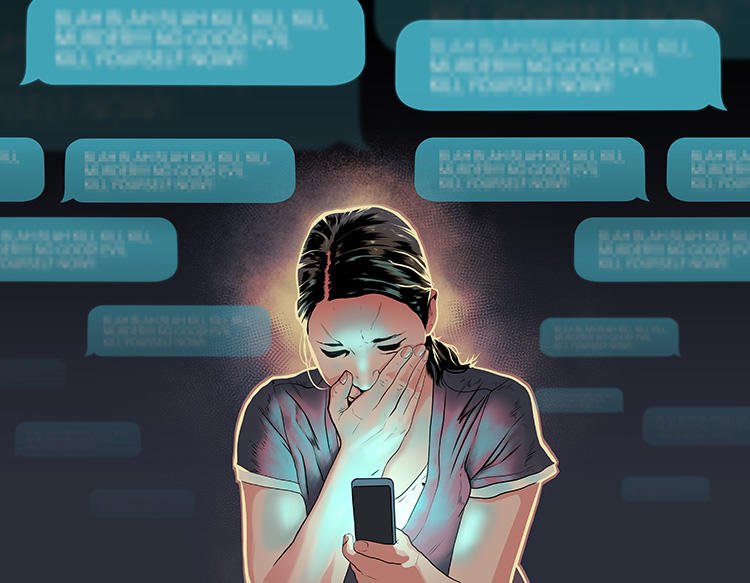
The rapid development of digital technologies has created new forms of content and new forms of harm. Some content is produced for entertainment; some for information; and some specifically for harassment. Increasingly, however, the same content can serve all three purposes simultaneously: harassment becomes entertainment; entertainment generates attention; and attention can generate profit.
This becomes particularly disturbing when we consider the circulation of intimate images and videos without the consent of the person depicted.
When a private moment becomes public entertainment
Image-based sexual abuse is generally understood as the creation or distribution of intimate or sexually explicit material without the consent of the person depicted. It is often associated with the non-consensual sharing of intimate images by a former partner, sometimes with the intention of humiliating, harassing, threatening, or causing distress to the victim-survivor (Branch et al. 2017). Sri Lanka lacks comprehensive statistical data that can tell us precisely how many incidents of image-based sexual abuse (IBSA) occur annually or how many are formally reported by victim-survivors. However, organisations working on digital violence have been receiving reports of women being blackmailed through intimate images for years. The Grassrooted Trust began receiving reports from students about the non-consensual sharing of intimate images around 2015, while the Prathya hotline, established in 2022 to streamline reporting of image-based sexual abuse, received more than 100 reports during its first two years (Arseculeratne 2026). Meanwhile, The Examiner (2026) reports that the number of complaints received by the Sri Lanka Computer Emergency Readiness Team (CERT) has increased to over 2,000 per month.
Anyone who regularly uses social media can observe the visibility of this phenomenon. Posts and videos involving women whose private images or videos have been circulated without their consent, often described as having been ‘leaked’, frequently circulate across social media platforms. Meanwhile, the recent wave of abusive photographs, AI-generated videos, and images of women and children being shared, distributed, and promoted on Facebook has raised concerns among authorities and the public. The Sri Lanka Police have taken action to deactivate Facebook accounts and have arrested one suspect who allegedly managed Facebook groups that shared sexually explicit images and content of women and children (Daily Mirror 2026). Later, following a number of public complaints received by CERT, the government cybersecurity agency found four more similar Facebook groups. The groups reportedly contained posts sharing non-consensual sexual images, as well as content encouraging the use of drugs to perpetrate sexual abuse. There were also attempts to sell intimate images and videos of their own family members including children (The Examiner 2026).
The problem, however, does not end with the original sharing of the image or video. A conversation is often built around the woman herself. Social-media pages and individual users may share screenshots, reproduce parts of the original content, make memes, extract statements or dialogues, and discuss details such as the woman’s name, appearance, clothing, hometown, relationships, or body. What began as a violation of privacy becomes public entertainment.
And here is where we need to ask some fundamental questions:
Where is her consent in all of this?
Does anyone else get to give consent on her behalf?
Can she say “No”?
The process of sharing, downloading, screenshotting, reproducing, commenting on, and recreating content from an original intimate image or video is often carried out without the consent of the person depicted. Yet, these actions can be treated casually, even humorously, by those participating in them. This reflects a broader social problem of recognising the importance of consent and respect for privacy in digital spaces.
A person taking an intimate photograph of herself does not mean that she has consented to that photograph being shared with others. Sending an intimate image to an intimate partner does not mean consenting to its publication. Consent to create an image is not consent to distribute it. This distinction is fundamental to understanding consent in the digital age.
So, if a woman creates an intimate photograph for her own private use, does the public have a right to access it? If she sends it to a partner, and the partner shares it with others, who is responsible for that violation of privacy?
Beyond “revenge”: When the victim never created the image
The seriousness of IBSA becomes even clearer when we recognise that the victim-survivor may not have willingly created the material at all. In some cases, women may be secretly recorded using hidden cameras. Images may be taken while someone is sleeping, without their knowledge, through coercion or force, or through hacking and other forms of technological intrusion.
The term “revenge porn”, which is commonly used to describe some forms of IBSA, has increasingly been criticised because it narrows our understanding of the problem. Not every perpetrator is motivated by revenge; and not every incident occurs following a relationship breakdown. Some material may be shared for entertainment, financial gain, sexual gratification, social status, harassment, coercion, or simply because the perpetrator believes they can do so without consequences. More importantly, the term “revenge porn” can unintentionally place attention on the relationship between the victim-survivor and perpetrator rather than on the central issue, which is the absence of consent to share the material.
The emergence of artificial intelligence has introduced another disturbing dimension: synthetic or manipulated sexual content, including deepfakes. According to a 2025 study by UNFPA and UN Women in Sri Lanka on technology-facilitated violence experienced by women and marginalized groups, 25.2% of the 103 respondents who reported experiencing technology-facilitated gender-based violence (TFGBV) had experienced doctored videos or images, including deepfakes. In such cases, a person may never have participated in the creation of the sexual material whatsoever. Images can be taken from ordinary photographs posted online, including photographs from weddings, graduations, social events, or everyday life, and manipulated into sexually explicit material. Thus, she may not have taken the image or sent it to anyone. She may not even have known that it existed. Yet, she can still become its victim. Therefore, asking women to “be more careful” should never be the only solution. The responsibility must be placed on those who distribute, consume, reproduce, and normalise non-consensual sexual content.
From reality to hyperreality
This problem can be understood through Jean Baudrillard’s concept of hyperreality, as discussed by Zahra (2018). Baudrillard argued that contemporary societies increasingly experience a world in which representations, images, and simulations become so deeply intertwined with reality that the distinction between the two becomes difficult to maintain. Social media provides a particularly powerful environment for this phenomenon.
An intimate photograph can be separated from the person who originally created it. Once uploaded, copied, screenshotted, edited, memed, reposted, and redistributed, the image can become a digital object that exists independently of the individual whose body it represents. In this hyperreal environment, the person behind the image can disappear from public consciousness.
However, the victim-survivor has a family. She has friendships, employment, aspirations, memories, relationships, and a future. Most importantly, she has autonomy. She has the right to determine what happens to her body and what aspects of her life become public. Yet, within the logic of online circulation, she becomes reduced to a photograph, a video, a screenshot, a meme, or a trending topic. She is no longer treated as a person with a life and dignity. Instead, she becomes content, something made available for consumption. This is perhaps one of the most disturbing characteristics of digital sexual abuse, where the victim becomes invisible while the image becomes visible everywhere.
The mask of social media
Another important dimension of online abuse is the de-individuation that social-media environments can create. In face-to-face interactions, people are generally identifiable. We see the person speaking to us. Their physical presence creates a sense of social accountability. However, in online spaces people can hide behind usernames, anonymous accounts, pages, groups, or pseudonyms. This can create a psychological distance between an individual and their actions.
A person who might hesitate to humiliate someone face-to-face may feel comfortable sharing a degrading comment online. Someone who would never publicly display another person’s intimate photograph may download and circulate it digitally because the victim is physically absent from the interaction. But the absence of physical presence does not mean the absence of consequences. Behind every image and every screen is a human being, and behind every act of online abuse is a real-world consequence. The internet is not a separate universe in which social responsibility disappears.
Why do we still blame her?
One of the biggest challenges in responding to IBSA is society’s tendency to focus on what the woman did before the abuse rather than what the perpetrator did.
“She should not have taken the photograph.”
“She should not have sent it.”
“She should have known better.”
“Why would she trust him?”
These statements shift responsibility from the person who violated consent to the person whose consent was violated. Victim-blaming assumes that women are fully or partially responsible for the abuse they experience because of their initial decision to create or share an image. But the central issue is not whether an intimate image was created. It is whether the person consented to its distribution.
This distinction must become part of our everyday understanding of online interactions. Victim-blaming is also particularly harmful because it can discourage victim-survivors from seeking support, reporting abuse, or speaking publicly about their experiences. If the anticipated response from society is shame, ridicule, moral judgement, or rejection, why would a victim-survivor feel safe asking for help? Such attitudes often extend to institutional responses too. In Sri Lanka, reports indicate that some police officers have shamed complainants for possessing their own intimate images on their phones and placed the responsibility for investigating these cases on the complainants themselves (Arseculeratne 2026).
The problem becomes even more severe when the public treats the victim’s suffering as entertainment. Some people have even questioned why deepfake sexual material should be considered a serious crime when it does not depict the person’s “real body” (Seo and Valerio 2025). Yet this argument misses the point entirely, because sexual violence does not become harmless simply because technology was used to produce it.
We also need to recognise that the repeated circulation of intimate content can create ongoing and sometimes long-lasting harm. A photograph or video can continue to reappear years after the original incident. Each new circulation can reopen an old wound and remind the victim-survivor that the material remains beyond her control. For this reason, IBSA cannot be regarded as a single moment of abuse. It is an ongoing violation.
The original act may happen once. The internet can reproduce it indefinitely. This is why our response must go beyond asking how to remove a particular image. We must also ask how to prevent people from creating the demand, attention, entertainment, and profit that sustain its circulation. Both stronger legal protections and effective mechanisms for removing non-consensual content are imperative.
The online world is still the real world
When image-based sexual abuse occurs, one principle should be clear: online space is connected to real life. The responsibilities we have as citizens do not disappear when we enter cyberspace. An individual does not lose their right to privacy because an image exists digitally. A woman does not lose her autonomy because her photograph has been uploaded. A victim-survivor does not become public property because someone else violated her privacy.
Technology has developed rapidly in Sri Lanka. We have enthusiastically embraced social media, smartphones, artificial intelligence, and other digital technologies as signs of progress. But technological progress must be accompanied by cultural and ethical development. It is not enough to teach people how to use technology. We must also teach people how to use it responsibly, because social stigma and shame can discourage victim-survivors from reporting their experiences, with these barriers potentially being particularly significant for Muslim, LGBTQIA+, and rural women. Fear of victim-blaming and negative social repercussions may lead many women to remain silent and avoid seeking support (UNFPA and UN Women 2025).
Therefore, we need to build a culture where people ask before they share. A culture where privacy is respected. A culture where consent is understood as specific and ongoing. A culture where an intimate image is not treated as entertainment simply because it is available. A culture where people understand that downloading, screenshotting, reposting, commenting on, or making jokes about non-consensual sexual content can contribute to the abuse. And most importantly, we need a culture that asks, “Why did he share it?” rather than asking “Why did she take it?”
Responding to IBSA as a gendered form of violence
Legislation, law enforcement, technology companies, digital safeguards, and reporting mechanisms are all essential in responding to IBSA. According to the research study conducted by UNFPA and UN Women in Sri Lanka (2025), there are several barriers that discourage survivors from reporting TFGBV. “Fear of victim-blaming and stigma, lack of trust in authorities, limited access to psychosocial support, and protracted legal proceedings” are a few of them. Long court proceedings can cause prolonged distress for survivors and may discourage survivors from pursuing legal action. Only 33% reported their experiences to law enforcement, while just 6% pursued criminal charges. This highlights a clear need for more effective mechanisms to support existing legislation.
However, laws alone cannot address harm caused by IBSA. IBSA is not simply a technological problem. It is also a gendered social problem, and its persistence raises questions about masculinity. Research on revenge pornography has demonstrated how patriarchy and masculinity can help explain some forms of image-based sexual abuse. DeKeseredy (2016), for example, connects revenge pornography with broader patterns of male dominance, masculine status, and the perception of women as possessions within intimate relationships. This is important because the abuse does not occur in a social vacuum.
In patriarchal societies, women may be represented as objects whose sexuality can be controlled, judged, and disciplined. A woman who ends a relationship may be labelled a “cheater” or a “bad woman”, while similar behaviour by a man may be interpreted through expressions such as “men will be men”. Why does the same action receive different meanings depending on whether it is performed by a man or a woman? These gendered assumptions deserve critical examination. Women are not possessions or objects waiting to be degraded, nor do they lose their autonomy because they enter into relationships. Choosing to express their sexuality within a private context does not mean surrendering their right to privacy.
IBSA therefore needs to be understood within the broader continuum of gender-based and sexual violence. Violence that has historically existed within domestic and private spaces can now be extended into digital spaces. Technology has not necessarily created the desire to control women; rather, it has provided new tools through which existing forms of gendered power can be exercised.
The problem of toxic masculinity and male disengagement
Sri Lanka has seen increasing efforts to promote gender equality and create awareness about gender-based violence. These initiatives are important and should be recognised, as they have helped many women understand their rights, identify abusive behaviour, and access support systems. However, a critical question remains: Who is participating in these conversations? Too often, conversations about gender equality are treated as conversations for women. Women attend workshops and participate in awareness programmes, while they are encouraged to understand consent and taught how to protect themselves online. But where are the men?
Since gender-based violence is a social problem, it cannot be addressed by educating only those who experience violence. Men must also be actively engaged in conversations about consent, masculinity, sexuality, power, respect, digital responsibility, and violence. If not, we risk placing the burden of preventing violence on potential victims rather than addressing the behaviour of perpetrators and the social conditions that enable abuse.
Her right to say “No”
Ultimately, the question is not whether a woman should have taken a particular photograph, but whether anyone else had the right to decide what happened to it. The answer should be clear. No one gets to decide her “No”. Not her partner, a stranger, an anonymous social-media page, a group of online users, an audience looking for entertainment, or society itself. Her body, her image, her privacy, and her consent belong to her.
As Sri Lankan society continues to embrace technological change, we must also allow our understanding of privacy, dignity, gender equality, and consent to evolve. Culture is not stagnant; it changes alongside society. If our technologies can advance rapidly, our social values must also develop with them. We should aspire to build a digital culture that does not turn another person’s suffering into entertainment, that does not reward the circulation of abuse with attention, or force victim-survivors to carry the shame created by perpetrators.
Most importantly, we need a culture that holds the perpetrator accountable, supports the victim-survivor, and understands that consent does not disappear simply because an image has entered the digital world. Because in the end, the most important question is not: “Why did she take the photograph?” It is: “Who gave you permission to share it?” And when she says “No”, we must learn to understand that it is her right, not ours.
Sely Liyanage is an assistant lecturer in the Department of Sociology at the University of Ruhuna.
Image source: https://bit.ly/3T021kt
References
Arseculeratne, Avanti. (2026). “The need to address image-based sexual abuse in a digital Sri Lanka”. Groundviews (17 May): https://groundviews.org/2026/05/17/the-need-to-address-image-based-sexual-abuse-in-a-digital-sri-lanka/.
Branch, Kathryn, Carly M. Hilinski-Rosick, Emily Johnson, and Gabriela Solano. (2017). “Revenge Porn Victimization of College Students in the United States: An Exploratory Analysis.” International Journal of Cyber Criminology, 11 (1): 128-142.
Daily Mirror. (2026). “Police to shut down Facebook groups abusing women, children”. (29 August): https://www.dailymirror.lk/print/breaking-news/Police-to-shut-down-Facebook-groups-abusing-women-children/108-349027.
DeKeseredy, Walter. (2016). “Cultural Contexts and the Revenge Pornography Environment”. In Asher Flynn, Nicola Henry, and Anastasia Powell, More than Revenge: Addressing the Harms of Revenge Pornography (22 February). Monash University, La Trobe University, and RMIT University. Available at https://researchmgt.monash.edu/ws/portalfiles/portal/214257814/More_than_Revenge_Final_Report_Nicola_Henry.pdf.
The Examiner. (2026). “Cybersec agency detects more Facebook groups selling sexual photos”. (4 September): https://www.examiner.media/cert-detects-more-facebook-groups-selling-sexual-photos/.
Fatem-Zahra, Abid. (2018). Revenge porn: The dangers of hyperreality and gendered cyber violence. Institute of International Studies, Department of International Relations, Universitas Gadjah Mada. Available at https://simpan.ugm.ac.id/s/UvNjJsk2496evpF.
Seo, Yoonjung, and Mike Valerio. (2025). “Deepfake porn is destroying real lives in South Korea”. CNN (30 April): https://edition.cnn.com/2025/04/25/asia/south-korea-deepfake-crimes-intl-hnk-dst/index.html.
United Nations Population Fund (UNFPA) and United Nations Entity for Gender Equality and the Empowerment of Women (UN Women). (2025). Research study on technology-facilitated violence experienced by women and marginalized groups in Sri Lanka. Available at https://asiapacific.unwomen.org/en/digital-library/publications/2025/09/research-study-on-technology-facilitated-violence-experienced-by-women.
You May Also Like…

‘Border villages’: Emergence, Salience, and implications for ‘Community’ in Sri Lanka
Viyanga Gunasekera
Despite Sri Lanka being an island and not sharing land borders with another country, the term ‘border villages’...
India’s Youth Protest and the Limits of Demand-Driven Mobilisation
Manoranjan Pegu
The recent protests ‘led’ by the Cockroach Janta Party (CJP) in India, have been seen as the latest addition to South...

This Government, That Opposition, and the Work Still Ours
Lionel Bopage
For sixty-six years, until his death in 2014, the legendary comrade Bala Tampoe led the Ceylon Mercantile Union...