
Conversion and Tradition: The Religious Public in Millennial Sri Lanka
Geethika Dharmasinghe
A proletarian ethic parallel to the bourgeois ethics of Protestant Buddhism has not developed in the city’s working class, and in spite of many years of left politics, Marxist ideology has not taken root as a proletarian ethic. When the inner world makes little sense in terms of rational thought and the outer world of physical and social reality is grim, one may well resort to other modes of dealing with it.
(Gombrich and Obeyesekere 1988: 14-15)
In his efforts to examine the transformations of Buddhist subjectivity and the associated public sphere within the Sinhala Buddhist tradition during the colonial period—and in the aftermath of the Sinhala Buddhist revival that emerged following independence—much of Gananath Obeyesekere’s scholarly labour was devoted to grappling with a theoretical approach to Sinhala Buddhism, which he described as involving “important departures from tradition” or the “invention of tradition” (Gombrich and Obeyesekere 1988: 241).
Prior to the turn of the millennium, a key site of scholarly inquiry across multiple disciplines focused on how religious practices, reshaped under European colonialism and Christian missionisation, gave rise to new religious orientations and forms of authentic religious commitment within religious communities. Within this broader field of inquiry, Obeyesekere sought to understand the impact of religious modernity by examining the transformations experienced by the urban middle class and the urban poor, particularly following the introduction of Protestant Christianity through British colonial rule. Under changing political and economic conditions, he analysed how Sinhalese communities reworked their traditions and how the very category of “Buddhist” was redefined in the process.
Drawing on this theoretical framework, this essay turns to millennial Sri Lanka, which has witnessed the rise of Pentecostal evangelical movements—often described as the “third wave” of Protestant Christian intervention (Coleman 2000; Freston 2009; Mahadev 2024). My aim is to provide an overview of the contemporary transformations taking place within the Buddhist world during this period and, in doing so, to examine the current meanings and implications of “departure from tradition”. I draw on research with a group of women whom I refer to as “ex-Buddhists”, who have turned to a Pentecostal evangelical Christian movement known as Good News, primarily in search of healing (suvapath venna) or relief from suffering (sahanayak labanna). By ex-Buddhists, as you will see, I mean something broader than converts. My reflections represent initial readings from an ongoing long-term research project.
A Buddhist way of being
Through the above epigraph, Obeyesekere, together with Richard Gombrich (1988), suggests that any underlying postulates that once structured the worldview of Sinhala Buddhism were necessarily reshaped in response to emergent new social realities and reflects changing class dynamics. Parallel to these shifts in worldview, ritual forms and the interpretive frameworks surrounding them also underwent significant transformation. Obeyesekere argued that Sinhala Buddhists often failed to articulate a coherent relationship between the post-independence form of “Sinhala religion” and the socio-political conditions within which it operated. In response to this disjuncture, he maintained that the rituals and practices of what he termed ‘little tradition’ (Chūla Sampradāya)—traditional Sinhala ritual religion—were not abandoned but rather reworked and redeployed.
Central to this transformation were figures such as Anagarika Dharmapala of the Sinhala nationalist movement, who drew on rationalist idioms associated with colonial modernity to advance a form of Buddhism that was pro-science, anti-myth, and oriented toward practical engagement in worldly life. This configuration, described as “Protestant Buddhism” by Obeyesekere unsettled the established contours of traditional Sinhala religion. Obeyesekere interpreted this moment as a crisis generated by the coexistence of two competing worldviews. Yet these transformations, whether through school education or pirivena instruction, were rarely pursued to their logical conclusion. As Obeyesekere notes, there were very few Sinhala-language texts through which Sinhala Buddhists could learn about and make sense of this emerging form of Buddhism (1970: 46-47).
A central concern of sociological inquiry has long been the ways in which the doctrines and theological principles of so-called “higher” religions are reshaped within the lived, behavioural contexts of their adherents (Seneviratne 1999). Focusing on Buddhist tradition (Bauddhāgama), Obeyesekere employs the term “Protestant Buddhism” to describe the cultural reorientation that took place within Sinhala Buddhist society capturing the displacement and reformulation of Buddhist practices and sensibilities under shifting political conditions. It is in this context that Obeyesekere argues contemporary Sinhala Buddhism may aptly be described as “Protestant Buddhism”.
Obeyesekere first introduced the concept of “Protestant Buddhism”, in his article “Religious Symbolism and Political Change in Ceylon”, published in 1970. He later elaborated it in collaboration with Richard Gombrich in Buddhism Transformed (1988). In his/their usage, the term carries two related meanings: first, that many of its norms and organisational structures are historically derived from Protestant Christianity; and second, and more crucially, that it constituted a protest against pre-independence Christianity and the Western political hegemony associated with it (1970: 46–47). Central to this formation was the privileging of rational evidence and scientific reasoning as the foundational criteria for defining what constitutes pure Buddhism (nirmala Bududahama) and what falls outside it.
Yet this intellectual reform project stood in evident tension with the widespread beliefs in demonic cults, witchcraft, and magical practices embedded in peasant religious culture. The effort to restore what was understood as “fundamental Buddhism” therefore entailed the demystification of these popular beliefs and the rationalisation of peasant religious practices. By “rationalisation”, Obeyesekere does not suggest the wholesale elimination of such beliefs. Rather, their “vulgar” elements were refined, rendered more “respectable”, and incorporated into a reconfigured religious framework. In this process, the abstract ideals of reformed Buddhism were reshaped to address the concrete “needs” of believers—including urban Buddhists—through revised forms of ritual and worship (1970: 47).
Accordingly, this new Buddhism brought confusion to Buddhists who believed in the spirit religion based on the four guardian deities and their blessings “although their precise identity has not been stable through space and time” (Gombrich and Obeyesekere 1988: 20). Gombrich and Obeyesekere argued that Buddhists sought new ways to avoid that confusion, and the efforts transformed ‘Sinhala Buddhism’. They write, if,
traditional religious life has two parts, the strictly Buddhist and the spirit religion, we are merely recording separate developments in each of those two parts: that just as Buddhism changed in the hands of the new urban middle class, the spirit religion has changed in the hands of the urban poor. (1988: 9)
In this paper, I argue that the recently developed urban middle class and urban poor are rediscovering elements of their traditional religious heritage through the ritual practices of Pentecostal evangelical groups. On the one hand, they are moving away from the Buddhist tradition, but on the other hand, they are finding an extension of their old tradition through new evangelical religions. Let me, I should say roughly, explain.
Obeyesekere’s readings of the transformations Buddhism has undergone in Sinhala society have generated substantial scholarly criticism. Critics have objected, in particular, to analyses that attribute the “sea change” brought about under colonialism primarily to the worldview of the colonial power, thereby rendering the colonised as largely passive recipients lacking agency or representational capacity.[1]
My aim here, however, is not to reject analytical categories such as “modern Buddhism” or “Protestant Buddhism”. Rather, it is to remain attentive to the conceptual questions these terms raise about the relationship between tradition and the present. Under both colonial and postcolonial conditions, local actors actively reconfigured “Buddhism” to articulate new projects of power, novel forms of social organisation, and modes of political mobilisation. Yet to claim that these processes entirely displaced or erased existing authoritative discourses—specifically, established Buddhist practices and interpretive traditions—is less persuasive. This tension invites a broader theoretical question about “modernised Buddhism” at the threshold of colonial modernity: can a political project such as colonialism or nationalism fundamentally transform an entire social field by redefining the operative modes of thought within a tradition and thereby establish an entirely new regime of authority? It is to this unresolved theoretical problem that the present analysis seeks to remain open.
Building on Obeyesekere’s analyses of Sinhala Buddhism, I examine how millennial Sinhala Buddhists in Sri Lanka are being transformed in the context of the spread of Pentecostalism in the postcolonial Global South. The contemporary religious life of Buddhists examined in this paper emerges from two conditions in Sri Lankan society since the 1990s, particularly in the postwar period. The first is the rise of militant Buddhist religious groups that has been a subject of many scholars, including myself. The second is the expansion of Pentecostal evangelical groups, which have been actively spreading their religion by primarily targeting middle and lower-class Sinhala Buddhist communities in urban areas as well as in traditionally Buddhist villages.
From the mid-1990s, and more visibly in the postwar period after 2009, nationalist mobilisations, evangelical Christian activism, and religious conflicts became key sites through which Sri Lanka’s neoliberal transformation unfolded, contributing to the reconfiguration and consolidation of state power (Mahadev 2024: 13).
Accordingly, the spread of the Pentecostalist “Good News” in millennial Sri Lanka was accompanied by what I describe as a “third wave” of militant Buddhist nationalism, marked by the emergence of organisations such as the Sinhala Veera Vidahana, Bodu Bala Sēna, Sinhala Rāvaya, Rāvana Balaya, Maha Sohon Balakāya, Sinhalē and the Nava Sinhalē, many of which engaged in episodic violence against evangelical Christians and Muslims.
As Obeyesekere notes, efforts to rationalise Sinhala Buddhism arrived as a nationalist project and have continued under various Sangha and lay leaderships (1970). However, the increasing number of Sinhala Buddhists converting to new evangelical religions marks the limits of that project. While these ex-Buddhists have departed from Buddhism, I argue that they have not simply abandoned their former religious world. Instead of marking a complete rupture with prior religious lives, conversion appears, in practice, to involve an extension and rearticulation of earlier assumptions, sensibilities, and concerns through a new religious language.
In this sense, conversion does not so much represent a break from Sinhala Buddhist cosmology as its displacement into Pentecostal evangelical forms.
In developing these preliminary arguments, the work of Talal Asad, particularly his conceptualisation of tradition as an embodied capacity acquired through the repetitive enactment of practices articulated within an inherited language is helpful. In his framing, the persistence of tradition may be understood as “an expression of a desire for the completion of a present that is simply unfinished time” (Asad 2015). As Asad clarifies through Wittgenstein, what is acquired is not a set of abstract principles or rules, but a mode of being. Tradition, in this sense, is not a detachable resource that can be taken up or set aside at will, but a cultivated disposition—a way of inhabiting experience that, once learned, cannot simply be abandoned (2015).
Inspired by Asad’s work on religion as a discursive tradition, Ruth Marshall, reflecting on Pentecostal and charismatic Christianity or Christianity’s multifarious iterations, proposes treating the process as a tradition rather than a religion, arguing that the differences in them are a “question of degree rather than of kind” (2014: 345). From the perspective of my argument and following Marshall, I suggest that although ex-Buddhists recognize Sinhala Buddhist practices and evangelical practices as belonging to distinct traditions, they seek to compensate for the loss of the former through their engagement with the latter, thereby inhabiting both traditions simultaneously to heal themselves. In this process, I argue that they often—whether consciously or unconsciously—fuse elements drawn from both religious traditions.
Evangelical groups and millennial Buddhist expectations
One visible example of evangelical expansion is the Miracle Dome in Katunayake, located a few miles from the Bandaranaike International Airport, established by controversial pastor Jerome Fernando. Opened in 2022, the Miracle Dome is a 5,000-seat conference center erected as a monumental religious edifice, its scale and architecture ensuring a striking spatial and symbolic separation from other religious sites in the country. In the context of the massive architecture and the property value of the Miracle Dome, pastor Fernando was recently accused of money laundering and insulting Buddhism, Islam and Hinduism (The Sunday Times 2023).
Katunayake itself is significant: it is the site of Sri Lanka’s first free trade zone, a garment factory enclave established in 1977 with the introduction of open-market economic reforms. Designed exclusively for export-oriented manufacturing, the zone attracted foreign investment and subjected the national economy to the regulatory frameworks of international institutions such as the World Bank and the International Monetary Fund. Katunayake drew unprecedented numbers of young rural women from lower socioeconomic backgrounds into precarious industrial labor (Hewamanne 2006).
Given that women constitute the majority of participants in Pentecostal evangelical ministries, and that some of these women are garment factory workers, the geographic location of the Miracle Dome suggests a deliberate alignment between religious outreach and the social vulnerabilities produced by neoliberal economic restructuring. It is also near the International Airport in Sri Lanka attracting international believers. Taken together, these territorial features of the Miracle Dome resonate with Paul Freston’s broader observation that “today Christianity is spread around the world; in fact, it is now disproportionately identified with people at the lower end of the social scale in countries at the lower end of the international scale” (Freston 2009: 4). A similar dynamic can be observed in Embilipitiya, a village in the Southern Province, where another large evangelical conference center has been established. On Wednesdays and Sundays, it is estimated that at least 4,000 devotees gather at each of these sites.
These religious spaces primarily focus on healing, particularly for chronic illnesses and mobility impairments, understood through a framework of demonology and divine intervention—a performance of miracles. Promotional materials—including leaflets, social media content, banners, and cutouts—feature testimonies of cure attributed to priestly intervention, often depicting women as possessed by demons that can only be controlled or expelled through ritual performance. In this way, the ministries have become key sites for the performance of religious life among ex-Sinhala Buddhists, practices that revivalist movements in general and third-wave actors like Soma Thera explicitly reject as not belonging to proper Buddhism (Ehipassiko Dharmaya 2021; Na uyane Ariyadhamma Himi 2023).
Notably, these Pentecostal miracle performances depart from earlier ritual spaces associated with exorcism in Buddhist religious tradition—typically modest structures with open compounds for large-scale Buddhist ritual performances, in which specialists wore masks and elaborate clothes—and instead take the form of enclosed, monumental buildings where ministerial miracle performances are conducted, often in three languages. These spaces materialise enduring beliefs in divine power, demonic affliction, and the possibility of manipulating supernatural forces through organised ritual practice.
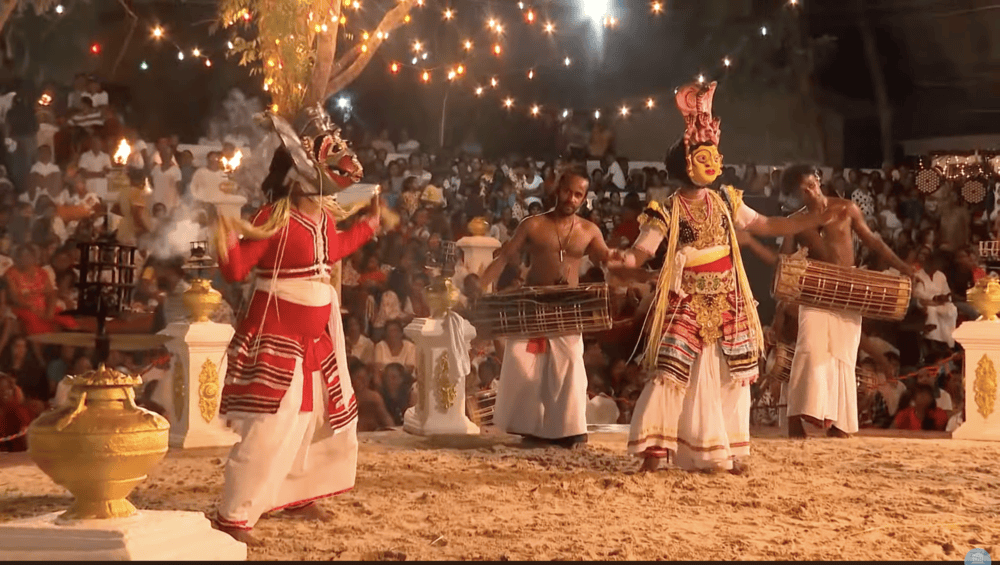
Buddhist ritual practices
Their identity implies that the defining and major component of that life is the Buddhist tradition. Their accounts of illness, misfortune, and healing remain structured by demonological and moral frameworks drawn from Sinhala Buddhist worlds, even as ritual authority is now sought from Pentecostal ministries rather than monks or Sinhala Buddhist ritual specialists. The women, while no longer engaging in practices such as Bali ceremonies, Yantra (charms), Huniyam (deity Sooniyam), and Bodhi Pūjā (worship of Bo tree)—which Gombrich and Obeyesekere (1988) identify as constitutive elements of Sinhala Buddhist ritual religion—are now affiliated with Pentecostal evangelical ministries. Accordingly, I suggest that although ex-Buddhists recognise Sinhala Buddhist practices and evangelical practices as belonging to distinct traditions, they seek to compensate for the loss of the former through their engagement with the latter.
All nine women I interviewed are urban, middle and lower-class, and have embraced the Good News in response to recent family crises, illness, and emotional distress. They attribute to the pastors of these churches a “magical” capacity to heal their own illnesses, as well as those of their children and husbands, and to resolve a range of related social and domestic problems. Notably, they no longer seek help from monks or expect relief through the ritual practices associated with Sinhala Buddhism, which they cited as one reason for leaving their former religious tradition. My focus here is on presenting selected narratives drawn from this group of converts.
“Come and see”—this was the invitation extended by my neighbor who preaches the “good news,” echoing the Buddhist exhortation ehi passiko.[2] Explaining her experience, my neighbour, an ex-Buddhist, sought to persuade me that her new religious affiliation had the power to expel demonic forces believed to inhabit the human body and to bring about mental peace.
She narrated her experience as follows:
I was very depressed. My husband was having an affair. I was ready to commit suicide. One day, as I was walking to the shop, I suddenly decided to take a different route. I had never gone that way before. A preacher I met on the road gave me a phone number and told me, “all your problems will be solved. God will protect you. Come to our ministry (sabhava) tomorrow.” I went to the church in Kollupitiya the next morning. The pastor prayed for me, and everyone there prayed for me. I cried while praying. That was seven years ago. Even now, whenever we pray together, the tears keep coming. You have to come and see (avith balanna)—otherwise you won’t believe it.[3]
Multiple factors shaped these women’s decisions to leave Sinhala Buddhism. They often described their conversions as occurring “by chance”—encounters with evangelical preachers at moments of personal crisis—yet these encounters enabled a reorientation of worldview and offered forms of social support they felt were absent in their previous religious settings. They repeatedly emphasised the discovery of qualities within the evangelical church that they perceived as lacking in the village temple, the resident monk, and the Buddhist lay community. The collective nature of prayer, in which the congregation gathers to seek relief from suffering, emerged as a central source of emotional satisfaction and confirmation that leaving Buddhism was the right decision. They also highlighted the freedom to articulate personal suffering openly before God and the pastors’ pastoral practice of home visits and blessings as significant sources of comfort. These remarks reveal that the Pentecostal evangelicals are filling the celebrated events of communal importance that once were the province of Buddhism in Sinhala society such as monks visiting homes when people are sick and their family is facing trouble.
The notion of community—and, in particular, the experience of being treated as equals—was consistently emphasised across interviews. As one woman explained:
When you go to the village temple, or even a popular religious space, people who give more money are treated with respect. Like at Kataragama, those who donate more are taken to the front. The monk talks to them. That doesn’t happen in the ministry. We are all equal. Even millionaires wash the dishes. No one wears gold jewellery. Everyone comes dressed in white.
Buddhism transformed
A recurring concern in these accounts was the perceived abandonment of the urban lower class by Buddhist temples. Several women linked this sense of exclusion to the broader politicisation of the temple in millennial Sri Lanka and to the increasing public visibility of monks as political actors. They pointed to the emergence of a new monastic culture centred on individual monks and their personal charisma—manifested through preaching styles, networks, and educational initiatives—rather than communal religious life. Unlike older village temples, many contemporary monks and urban monasteries appear oriented toward upper-middle-class Buddhists and promote an ideal of “pure Buddhism.”
The recently founded monasteries may therefore be read as material evidence crystallising ex-Buddhists’ criticisms. Often located in urban or suburban areas shaped by an expanding middle class, these monasteries are characterised by architectural forms resembling grandiose complexes. Unlike most Buddhist temples, only the incumbent monk and one or two other monks typically reside in these spaces, while they are staffed by many young men. Such monastic establishments include well-known examples such as Mahamēvnāva (2011), founded by Kiribathgoda Gnanananda Thera, and Siri Sadaham Ashramaya (2004), established by Pitiduwe Siridhamma. What is particularly striking is that entry into some of these monastic spaces requires formal identification, despite the theoretical openness of Buddhist temples to all.
In 2015, Siridhamma founded Umandāwa Maha Vihara Monastery as an extension of Siri Sadaham Ashramaya. Umandāwa is situated on self-owned and self-administered land spanning approximately seventy acres. It was during this period that he self-identified as Siri Samanthabhadra Arhat Thera (“the all-pervading one” or “universally worthy”). The monk asserts himself as an Arhat, a designation traditionally reserved for one who has destroyed or abandoned all desires.
Although his earlier sermons emphasised the teaching and dissemination of what he described as the Buddha’s true dharma, in recent years he has begun performing spirit-oriented religious practices, such as the lime-cutting ritual (dehi kapima). He has also installed a large shrine at Umandāwa dedicated to Viṣṇu, one of the four deities popularly venerated in Sri Lanka, accompanied by a young kapuva (an intermediary; defined by Obeyesekere as Mr. go-between) for the purpose of warding off adverse planetary influences. “Viṣṇu has all along been viewed as a benevolent deity at the head of the pantheon” (Gombrich and Obeyesekere 1988: 105) who descends into the world in ten incarnations, removes evil and danger, and protects all beings. It is very likely that the shrine dedicated to Viṣṇu reflects the growing importance of divine healing practices as a means of attracting followers.
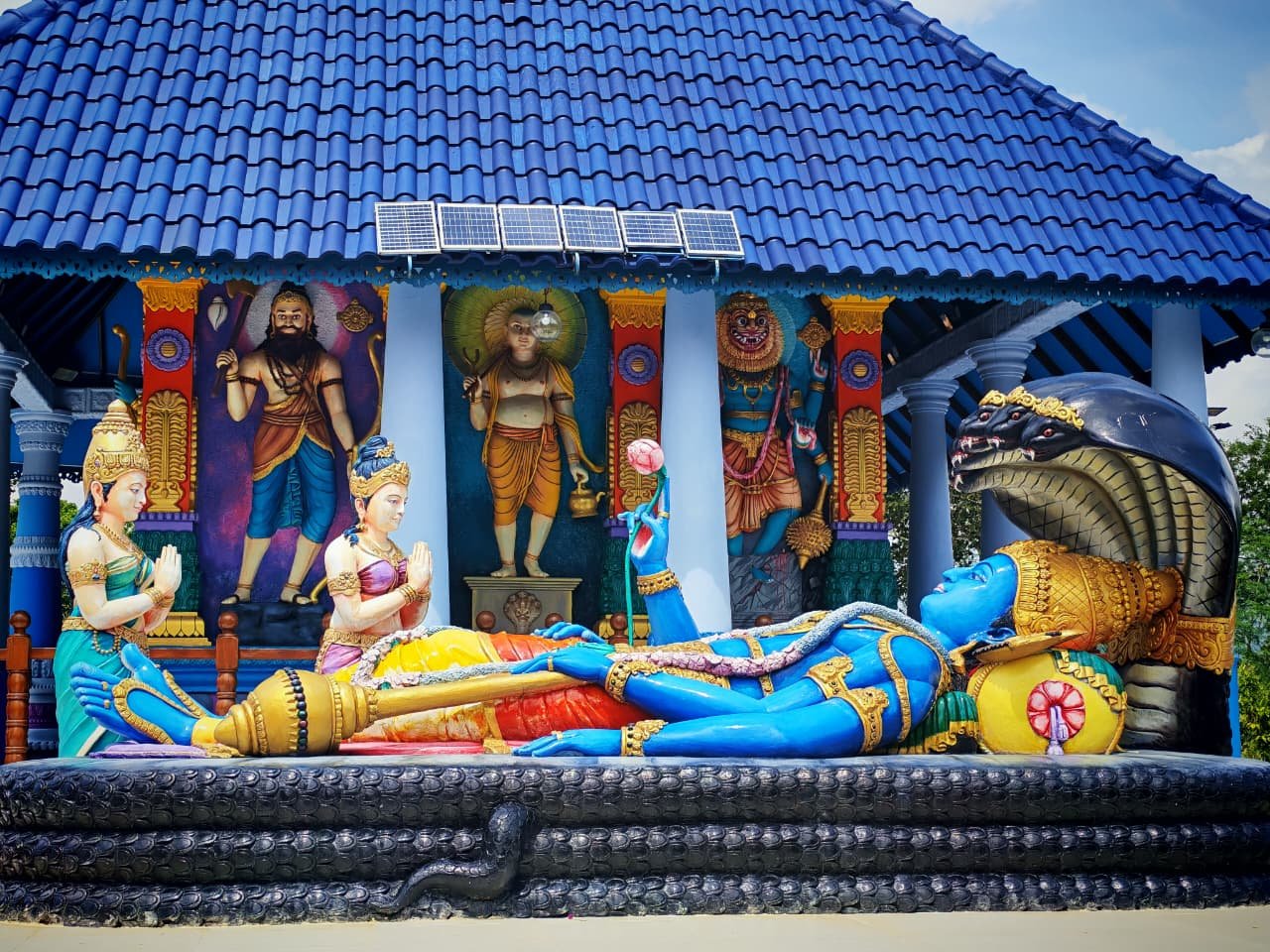
Viṣṇu shrine at Umandāwa
Mahamēvnāva, by contrast, explicitly states its objective as establishing religious authority exclusively on what it identifies as the “Supreme Buddha’s true doctrine and teachings” (Mahamēvnāva website).[4] “Preaching the Dhamma by emphasising the pure words of the Buddha” is frequently presented on the websites of these monasteries as the defining feature of their respective religious programs.[5]
Among the most prominent contemporary advocates of “pure Buddhism” was third-wave monk late Gangodawila Soma. Much like Anagarika Dharmapala, Venerable Soma maintained that ritual religion constituted a form of folk mythology and that a “true” Buddhist (aththa bauddhyo) should not place faith in such practices. In his sermons, the rejection of deity worship and the characterisation of Sinhala Buddhist ritual practices as “irrational” (atharikika) and “un-Buddhist” (abauddha) were repeatedly emphasised.[6]
The dissemination of this denunciatory discourse—inflected with nationalist political rhetoric—was facilitated by the expansion of national and private electronic media beginning in the 1990s.[7] Television programs such as Doramadalāwa, broadcast on the Independent Television Network (ITN), a state-governed channel, amplified these ideas by bringing Soma Thera, along with a broader circle of intellectuals who shared similar reformist perspectives, to rural audiences. As a result, many adherents of “pure Buddhism” have adopted a critical stance toward the presence of deity worship within temple spaces, and ritual activity in shrine rooms has been reduced in some locations.
One notable consequence of these developments has been the decline in the number of kapurālas and ritual specialists—both male and female—who formerly conducted practices such as charms, huniyam and Bali ceremonies in village settings. Although no comprehensive survey has been conducted, my own field observations suggest that many such ritual sites in Karandeniya of Galle District in the South have diminished or disappeared. The roles of kapurālas and kattadiyas in rural life have been increasingly marginalised, often confined to mediated forms such as digital platforms or limited to special ceremonial occasions.
I suggest—admittedly as a tentative reading—that the erosion of these ritual spaces has created a void within village religious life, one that has increasingly been occupied by evangelical Christian groups. These new evangelical religious formations have also responded to emerging aspirations for social equality, offering alternative ritual and communal frameworks through which such demands can be articulated.
Ex-Buddhists and new fields of anthropology
Anthropologist Pradeep Jeganathan shows how the continuation of war since the 1980s transformed Sri Lanka into a “terrain of violence” for anthropologists, historians, and sociologists (1998: 13). Yet, when looking back over the past few decades, it is striking that relatively little research has examined the social changes and transformations that have taken place within Sinhala Buddhist society, or Sinhala rural life more broadly.
Following the physical departure of the pioneering anthropologist Gananath Obeyesekere, we are reminded of the profound transformations that have unfolded in the lives of people in these often-neglected rural contexts. There is a need to renew a tradition of careful attention to the social conditions that have given rise to new religious and cultural formations.
In my reading, Neena Mahadev is among the most significant recent scholars to produce an Obeyesekere-style anthropological analysis of millennial Sri Lanka. Her book Karma and Grace (2024) examines the underlying conditions of religious antagonism in Sri Lanka. One of the most prominent frontiers of religious competition she identifies is the rise of Pentecostal evangelical Christianity. Mahadev also analyses how this movement has generated new racialised tensions around Buddhist heritage within the religious public sphere. Through an anthropological exploration of debates surrounding Christian conversion and Buddhist opposition to it, Mahadev demonstrates that the fragmented violence directed at Pentecostal churches cannot be understood merely as resistance to the spread of the “gospel” through new media practices. Rather, she argues that these conflicts reflect deeper ontological differences concerning the nature of religious truth. While conversion is framed within evangelical Christianity as a salvific rupture enabled by divine grace, Sinhala Buddhists often interpret conversion—“giving up one’s karma for the sake of Christian grace”—as an interruption of the saṃsāric process of working through karmic debt across multiple lifetimes (2024: 30). Karma and Grace thus traces both the continuities and fragmentations of these differential logics as they become politicised through discourses on conversion and religious difference.
My own critical reading of these conflicts—particularly Mahadev’s work that frames them primarily in terms of transcendental worldviews—will be developed elsewhere. Nevertheless, her analysis opens up an important new field of inquiry: the transformation of Buddhism, Buddhists, and Sinhala society through the influence of charismatic and highly ritualised Christian practices, which form a central feature of evangelical religiosity.
Ritual practices once categorised as spirit religion—including healing and exorcism rituals—are now largely absent from Buddhist village life. Yet highly mediated spectacles of exorcism performed by evangelical priests circulate widely on social media. This shift may suggest that, in the context of globalised capitalism and its attendant anxieties, Sinhala Buddhists have experienced a decline in ritual resources for addressing suffering, while evangelical groups have assumed the role of healing a Buddhist psyche strained by consumerist expectations and economic uncertainty. In this sense, evangelical Christianity may be filling not only a ritual gap within Sinhala Buddhism but also responding to unmet social and moral ideals.
Having highlighted this dynamic, it is important to note that Buddhists are actively responding to it.
In August 2025, I visited two Buddhist temple–based healing centers, which they refer to as Suvasetha Seva (healing services), located in a suburb of Colombo. It was a Sunday morning around 7 a.m., and nearly 250 people had gathered inside the premises. Two foreigners were present among the attendees. They were participating in a Buddha pūjā, during which a person identifying as the veda mahaththaya (ayurvedic doctor) observed the precepts and began preaching on the importance of purifying the mind to have a healthy life (suvapath jivithayak). The ceremony lasted approximately two hours. There were four different tables, each staffed by three middle-aged men and a woman: the first for registering new patients, the second for examining patients—with a stethoscope around his neck and instruments to measure blood pressure—and the fourth for dispensing medicine. They were all seated in front of a large Buddha statue, where the Buddha pūjā was performed.
I spoke with a young boy dressed in white, who interacted with patients and provided information. He spoke in English and told me:
We are giving our patients medicines that are thousands of years old, from our ayurvedic Sinhala tradition. There are things you can cure and things you cannot—it is because of karma. If you have done bad karma, you must exhaust it. What we do is not a miracle performance (vishvakarma). We provide medicine, but we also help purify the mind by practicing the Buddha’s teachings.
I also spoke with several patients waiting in line to receive medicines, which included both tablets and medicinal drinks. Two had traveled from Matara, a town in the south—a five-hour bus ride—to seek treatment. One patient described suffering from chronic back pain, which had almost disappeared after two years of regular visits to the center.
I was not permitted to take photographs of the medical storage area, where long racks of dark-colored bottles were kept. The young boy explained that the center was not legally registered as an ayurvedic medical facility. Later, having talked to pharmaceutical agents about ayurvedic medicines in Sri Lanka and following local murmurs and rumors, I learned that some medicines—specifically prednisolone, a steroid used to reduce inflammation, suppress the immune system, and treat conditions such as asthma, arthritis, allergic reactions, skin issues, and cancer—are sold by large pharmaceutical companies to ayurvedic practitioners.
In this context, with Pentecostal miracle performances presenting healing as God’s grace and Buddhists framing it as the result of karma (Mahadev 2024) alongside medical treatment, Christians and Buddhists rely on very different criteria for assessing what constitutes healing.
Obeyesekere’s work on the Buddhist psyche and its social context thus remains crucial for further inquiry. Key questions emerge: Are evangelical Christian movements returning to Sinhala Buddhism what it lost through the reformist rejection of minor traditions? Have these groups effectively transformed practices displaced by Protestant Buddhism into new “major” traditions? New research on these questions can help explain militant Buddhist critiques of Christianity’s appeal among groups marginalised by earlier projects of Buddhist modernisation, while simultaneously revealing the futility of violence as a response. More broadly, such a line of inquiry will reveal the dynamics of interreligious coexistence and everyday peace within Sri Lanka’s plural yet deeply antagonistic religious landscape.
Geethika Dharmasinghe (PhD., Cornell University) is senior lecturer in the Sociology Department at the University of Colombo and post-doctoral fellow in the Department for the Study of Religion at the University of Toronto.
Photo credits: Geethika Dharmasinghe
References
Asad, Talal. (2015). “Thinking About Tradition, Religion, and Politics in Egypt Today”. Critical Inquiry, 42 (1): 166-214.
Blackburn, Anne M. (2010). Locations of Buddhism: Colonialism and Modernity in Sri Lanka. Chicago: University of Chicago Press.
Coleman, Simon. (2000). The Globalization of Charismatic Christianity. Cambridge: Cambridge University Press.
Ehipassiko Dharmaya. (2021). “Bauddha api vædiya yutu devivaru? [Which gods should we Buddhists worship?] Most Ven. Gangodawila Soma Thero”. YouTube (1 December). Available at https://www.youtube.com/
Freston, Paul. (2009). Globalization, Southern Christianity, and Proselytism. Review of Faith and International Affairs. Vol. 7(1):3-9.
Gombrich, Richard, and Gananath Obeyesekere. (1988). Buddhism Transformed Religious Change in Sri Lanka. New Jersey: Princeton University Press.
Hallisey, Charles. (1995). Roads Taken and Not Taken in the Study of Theravada Buddhism. In Donald S. Lopez Jr. (Ed.), Curators of the Buddha: The Study of Buddhism Under Colonialism (31-61). Chicago: University of Chicago Press.
Hewamanne, Sandya. (2006). “‘Participation? My blood and flesh is being sucked dry’: Market-based development and Sri Lanka’s free trade zone women workers”. Journal of Third World Studies, 23 (1): 51-74.
Jeganathan, Pradeep. (1998). “Violence as an Analytical Problem: Sri Lankanist Anthropology After July, ’83”. Nethra, 2 (4): 9-47.
Mahadev, Neena. (2024). Karma and Grace: Religious Difference in Millennial Sri Lanka. New York: Columbia University Press.
Marshall, Ruth. (2014). “Christianity, Anthropology, Politics”. Current Anthropology, 55 (S10): 344–356.
Na uyane Ariyadhamma Himi. (2023). “Kataragama devi kathāva: gaṁgoḍavila sōma himi [Kataragama Divine Speech: Gangodawila Soma Thero]”. YouTube (2 September), Available at https://www.youtube.com/
Obeyesekere, Gananath. (1970). “Religious Symbolism and Political Change in Ceylon”. Modern Ceylon Studies, 1 (1): 43-63.
Schober, Juliane and Steven Collins. (2012). “The Theravāda Civilizations Project: Future Directions in the Study of Buddhism in Southeast Asia”. Contemporary Buddhism, 13 (1):157-166.
Seneviratne, H. L. (1999). Work of Kings: The New Buddhism in Sri Lanka, Chicago: University of Chicago Press.
The Sunday Times. (2023). “Money laundering inquiry against Jerome Fernando”. (3 December): https://www.sundaytimes.lk/231203/news/money-laundering-inquiry-against-jerome-fernando-540987.html.
Turner, Alicia. (2014). Saving Buddhism: The Impermanence of Religion in Colonial Burma. Honolulu: University of Hawai’i Press.
Notes
[1] See, Blackburn, Anne. (2010). Locations of Buddhism: Colonialism and Modernity in Sri Lanka. Chicago: University of Chicago Press.; Turner, Alicia. (2014). Saving Buddhism: The Impermanence of Religion in Colonial Burma. Honolulu: University of Hawaii Press.; Schober, Juliane and Steven Collins. (2012). “The Theravāda Civilizations Project: Future Directions in the Study of Buddhism in Southeast Asia”. Contemporary Buddhism, 13 (1): 157-166.; Hallisey, Charles. (1995). “Roads Taken and Not Taken in the Study of Theravada Buddhism”. In Donald S. Lopez Jr. (Ed.), Curators of the Buddha: The study of Buddhism under colonialism (31-62). Chicago: University of Chicago Press.
[2] A few miles before the highway exit leading to Katunayake Airport stands a huge cutout of the Miracle Dome, displaying this message in large letters alongside an image of Pastor Jerome Fernando.
[3] All translations are my own unless otherwise noted.
[4] See Mahamēvnāva’s main website https://mahamevnawa.lk/sgsrm/. The website is maintained in Sinhala; all citations from it are translated into English by me unless otherwise noted. accessed on 5 February, 2026.
[5] See Mahamēvnāva’s main website https://mahamevnawa.lk/founder-of-mahamevnawa/. Accessed on 5 February, 2026.
[6]Recorded audio cassettes and audio clips of Soma’s speeches circulated widely across Sri Lanka. These materials do not indicate the dates on which particular speeches were delivered. The abstracts cited here were taken from Na uyane Ariyadhamma Himi (2023) and Ehipassiko Dharmaya (2021)
[7] See, Mahadev, Neena. 2024. Karma and Grace. It offers a detailed analysis of how Sri Lankan Buddhist nationalists strategically use state news media—primarily in Sinhala and, to a lesser extent, in English—to counter both local and translocal Christian ministerial efforts, particularly those aimed at publicizing miracle practices and advancing evangelical missions.
You May Also Like…

A ‘Duty of Care’ to Animals: Two Decades of Struggle for Law Reform in Sri Lanka
Kasun Kavishka
In late April 2026, Sri Lanka welcomed Aloka, an Indian stray dog who walked along with US-based Buddhists monks in...
Polity Vol 13 No. 2 (December 2025)
ContentsGoverning in Anticipation of Backlash by EditorsThe Great Flood by B. SkanthakumarFCEJ Stands in Support of...
A Heart That Never Forgets
Binu Peiris
Over the high walls of the white mansions where our money lay, Our youth sped their way holding the tears of our...