
India’s Youth Protest and the Limits of Demand-Driven Mobilisation
Manoranjan Pegu
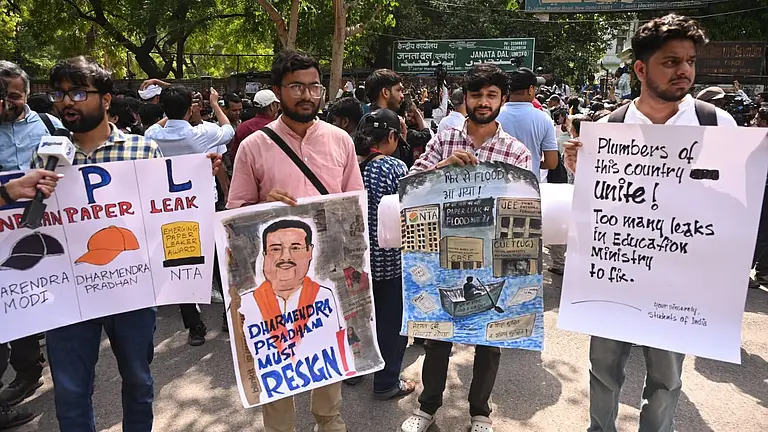
The recent protests ‘led’ by the Cockroach Janta Party (CJP) in India, have been seen as the latest addition to South Asia’s wave of youth uprisings. What began as an online satire following a statement made by the Chief Justice of India, terming unemployed youth as ‘parasites’ and ‘cockroaches’[1], soon evolved into a broader movement of young people demanding change.
The Jantar Mantar mobilisation lasted over 36 days spanning 6 June up to 25 July, leading to the eventual resignation of India’s then education minister and the government acceding to the ‘demands’ of the CJP. Much has already been written about it. The protest and its success have been interpreted as kicking off a new dawn for democracy in India.
Cockroach Janta Party
The CJP (Cockroach People’s Party) first emerged as an X (formerly twitter) account. The account grew at a rapid pace, and started amassing a large number of followers, so much so that it was taken off the internet within days. A new account called CJP is back in existence – now with over 396,000 followers, and growing. Later, we came to know that it was formed by a young Indian professional named Abhijit Dipke, based out of the US. Dipke had earlier worked for the Aam Aadmi Party. The X handle soon became a website, where people could sign up as CJP members. The only qualifications listed were: they must be unemployed, chronically online, professional ranters, and so on.
By early June, the numbers of sign-ups had become large enough to attract media attention and Dipke started appearing in many prime-time television and digital news shows. The party also appointed spokespersons who held press briefings at the Constitution Club in New Delhi. Following the National Eligibility cum Entrance Test (NEET) paper leak, the CJP announced that they would hold protests at Jantar Mantar, demanding the resignation of India’s then education minister. The NEET is a centralised entrance examination conducted for admission to undergraduate medical programmes, and millions (2.2 million this year), take the exam.
Dipke announced that he would return to India and had initially asked the CJP followers to greet him at the Delhi International Airport. While many speculated that he would be detained upon arrival, instead we saw visuals of him emerging from the airport, holding a copy of Dr. B. R. Ambedkar’s My Autobiography[2], before proceeding directly to Jantar Mantar to join the ongoing protests on 6 June.
Jantar Mantar protest
The movement steadily attracted a lot of enthusiasts and followers. Popular activist Sonam Wangchuk soon joined the protest and announced that he would begin an indefinite hunger strike. Wangchuk had been released from jail on 14 March 2026, after spending more than six months in detention for leading a hunger strike demanding statehood for Ladakh and greater protections for its tribal communities.
Wangchuk was joined by six student activists, including the All India Students’ Association (AISA) president, Neha Bora, in the hunger strike. AISA is a student organisation affiliated with the Communist Party of India (Marxist–Leninist) Liberation. The Jantar Mantar protests continued without any major disruption, with various left-based student organisation members forming the bulk of the crowd in the initial days. With increased media coverage, a growing number of young people and students soon started to join in, and the crowd began to swell.
However, as the numbers began to grow, and popular support for the movement increased, the government stepped in with larger force. On 18 July, the Delhi Police forcibly transported Sonam Wangchuk to the hospital. Wangchuk’s failing health had sparked a lot of attention among Indians, with many calling him to break his fast. The forcible removal generated even more attention, and more people began arriving at Jantar Mantar.
The establishment media, popularly termed as ‘Godi Media’, despite many attempts had not been able to break the momentum or tarnish the movement. Their usual claims of the movement being ‘foreign funded’, and those protesting being ‘conspirators’, fell on deaf ears. On-the-ground reporting by alternative media, Instagram and social media reels by the young leaders continuously debunked the myths spread by the establishment media and amplified the voice of the protestors.
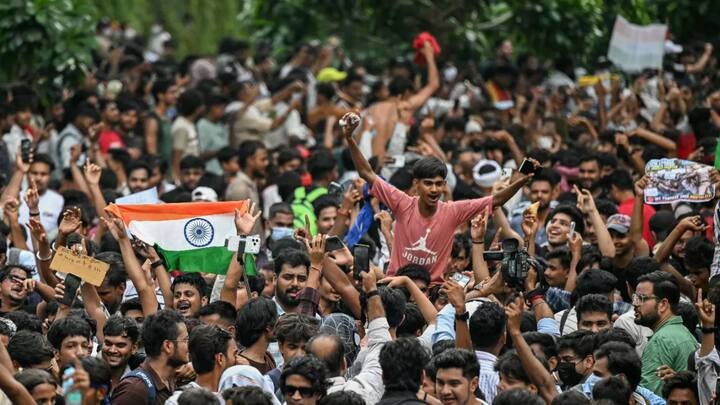
20 July Rally
People from across India began to arrive at Jantar Mantar for the 20 July rally announced by the CJP. The turnout exceeded all expectations with people from all walks of life, and the majority being young, joining the protest. Memes and humour became the defining language of the movement. The ‘cockroaches’ had reclaimed an insult as a tool for a large movement.
Despite a lathi-charge and the use of tear gas, students continued to protest. The young protestors also directly targeted the prime minister, in various videos. The language used by the protesters would eventually become the subject of numerous commentaries, with some arguing that the protests should have remained more civil, while others pointed to the fact that a seemingly “invincible” prime minister had now become the target of such public criticism. In an apparent attempt to reach out to Gen Z, the prime minister, during an Instagram Live session, would later “forgive” the protesters for using swear words against him.
A series of negotiations took place between the CJP and the government delegation led by Union Health Minister JP Nadda. Following these discussions, the CJP on 25 July, called for a formal end to the Jantar Mantar protests claiming that the government had agreed to most of their demands. A day earlier, Mr. Wangchuk had also ended his 26-day hunger strike, breaking his fast with a sip of juice offered by Nadda, in the presence of Union Minister Jitendra Singh and his wife, Gitanjali Angmo.
Contextualising South Asia’s youth protests
South Asia faces a large-scale job crisis. The young people’s movements in South Asia are a reflection of an expanding youth population confronting labour markets that are unable to provide sufficient secure employment or equal access to opportunities. According to the World Bank, the region struggles to keep pace with the rapidly expanding working-age population. Only 59% of the working age population have jobs in the formal sector, employing a miniscule 10% of the workforce. The persistent underemployment, joblessness and inequity in opportunities provide the material basis for the youth uprisings in the region.
In Nepal, young people formed a majority of the large-scale rebellion in September of 2025. In a country with over 41% between 16-40 years and overall unemployment at 12.6%, the young people had grown tired of the growing inequity. Using the hashtag #NepoKid on Instagram and other social media platforms, the young contrasted the display of wealth by children of politicians with their own situation. A year earlier, in Bangladesh, young people protested the reinstatement of the 30% quota reservation for descendants of freedom fighters in civil service positions. In a country with an ever-expanding informal sector, the youth viewed civil service positions as a secure position and wanted equal opportunity in accessing it. This quota had originally been scrapped in 2018 after similar student protests, so its return created new obstacles for job seekers in an already difficult labour market. Youth unemployment in Bangladesh is estimated as 16.8% with 14.8% male and 22.7% female. The movements in Bangladesh and Nepal led to change of governments in their respective countries.
Following this pattern, the CJP movement in India took place in the context of rising frustrations and long incipient anger among the young, about jobless growth. The State of Working India 2026 report highlighted that of the approximately 5 million graduates added each year between 2004-05 to 2023, only 2.8 million found employment. And the share of people who got salaried employment was even smaller, contributing to rising graduate unemployment. The same report highlighted that India’s internal migrant worker is becoming increasingly educated. So, education did not necessarily provide a way out of precarity and joblessness. Narratives of India as ‘vishwaguru’ (teacher to the world) and ‘rising power’ etc. has run its course among the working class. Large scale struggles by industrial working-class youth in the Delhi NCR (National Capital Region) immediately preceded the CJP movement. The Jantar Mantar mobilisation by the CJP, provided a platform for many of these dispersed struggles to project their collective aspirations.
Limitations of ‘demand-driven’ movements
Movements take place in a context and each of them bring about change, some persistent, some transient. The protests in South Asia by young people offer us important learnings on their forms, lasting changes, and possibilities. For a holistic analysis of the CJP movement, a distinction needs to be made between the CJP as an organisation and its demand-driven movement, versus the larger youth anxieties we saw at the 20 July rally, and the continuing protests we witness currently in India.
For any form of a holistic analysis on the CJP movement, a differentiation needs to be made between the CJP as an organisation and its demand-driven movement versus the larger youth anxieties we saw in the 20 July rally, and the continuing protests we witness currently in India. This is not to diminish the relevance of the demand-driven movement but to highlight its limitations. The 20 July rally, to those participating, was never only about education reforms. People from all walks of life had come to express solidarity and demand something larger. That demand was not articulated in the manifestos and demand charters of the CJP or the other student organisations. In fact, the articulation of large-scale grievances into carefully crafted demands for negotiations often becomes a control tactic. What was presented as ‘demands’ by Dipke and other spokespersons, were not a complete reflection of the movement’s aspirations.
A careful analysis of the demand language of the CJP highlights how these had substantially changed over the course of the movement. In fact, the demands were framed early on by a set of ‘leaders’; who also called off the movement, declaring that the government had agreed to most of their demands. The movement successfully managed to achieve the resignation of the then education Minister. Pradhan, however, was quickly replaced by Pralhad Joshi, who many highlighted was no different from Pradhan ideologically. The demand for 1 crore (10 million INR) compensation to the families of those students who allegedly died by suicide following the exam paper leak, was changed to ‘maximum possible compensation’. The government also assured the CJP that all FIRs (First Information Reports triggering police investigation) registered against protestors will be withdrawn with an assurance that no future action will be taken against individuals involved in the agitation. And it promised that the CJP’s 5-point charter on examination reforms would be taken up for further discussions.
However, media reports highlight that repression and arrests continue to take place in various states. Of all the demands, besides the resignation of the education minister, the language for all the others had either substantially changed or deferred to a later date with no clear plans. And this reflects the limitations of a ‘demand-driven’ framework, where genuine anger is carefully crafted to make some key demands for negotiations. Often, all the demands are not met, or conceded to a middle point. However, they are celebrated as pragmatic victories.
Bureaucratic organisations with pre-determined shape and goals, often struggle to adjust to evolving realities of the ground. The limits and aspirations of the struggle were clearly shaped early on, often by the leaders. During the peak of the CJP protests, there were moments where signs of hope for true unity, where the young refused to be defined by binaries of religion and struggled collectively for the movement, presented itself. But none of those were seriously acted upon.
Trade unions and youth mobilisations
Responding to the appeal of the CJP, some central trade union organisations and farmer unions offered solidarity to the Jantar Mantar mobilisation from outside. A key question that has emerged across these youth movements in South Asia has been the relative absence of trade unions in them. Given that the places where these movements have taken place have a long history of working-class organisations, why do trade unions not become central to all these mobilisations? Especially when the movements against joblessness, precarity, and for equal access are distinctly working-class aspirations.
This absence is also quickly used by some analysts to dismiss the relevance of trade unions in contemporary times. While I would not be dismissive, I do believe that the answer lies in the rigid forms which have come to define the majority of the trade unions in South Asia currently. Trade unions and other working-class organisations have continuously raised collective grievances and brought them into the popular domain, often playing a critical role in building wider movements. However, many of them with their vertical structures, rigid forms and demand-driven style of leading movements, have struggled to forge broader alliances. Thus, movements organised horizontally and with flexible structures offer interesting insights for trade unions to reorganise themselves to respond to the changing composition and aspirations of the working class.
In countries such as Bangladesh and Nepal, various political parties and trade unions have formed Gen Z wings or departments, seeking to expand their outreach to younger constituencies. Such initiatives, however, may not be sufficient if they remain limited to incorporating young people into existing structures. Unions will have to fundamentally reorganise their organisational forms and rethink how they build collective power, create spaces for participation, and connect everyday grievances to broader working-class struggles.
A sense of hope
The CJP, riding the wave of popular support, launched a new campaign called “School Theek Karo” (Fix the Schools) on 15 August (India’s independence day). It also clarified that it would continue to be a pressure group, with no immediate plans to become a political party. Currently the group is auditing public schools, which continue to enjoy popular support.
Right before the Jantar Mantar protests, working class ‘Gen Z’, if I were to use that flawed moniker, had erupted in Noida and in and around Delhi NCR region. The movement soon expanded to other states, where young people working in factories, revolted for an increase in wages. The movement was so strong that the authorities were caught by surprise and soon conceded to the demand for better wages. This was followed with a strong state response with many workers being picked up for detention, many of whom are now contesting the arrests. Notably these labour mobilisations have not been categorised as a ‘Gen Z’ success story, in much of the analysis.
The CJP protests gave many a sense of hope in India. When the July uprising in Bangladesh was followed by the Nepal protests, many in India lamented the absence of such a ‘Gen Z’ movement there. While celebration is important, over the top romanticisation has the possibility of taking the substance away from the debate. The continuing success, albeit in small terms, be it of the farmers’ movement, opposition to the Citizenship Amendment Act, the wage struggles by the industrial proletariat in Noida and the Delhi NCR area, reflects a larger trust deficit faced by the current government.
As political observers, it is imperative that we observe all these movements in continuity rather than confining our analyses to the age of the protestors (the framing as Gen Z) or their use of ‘social media’ as an organising tool. Instead, a more productive line of inquiry would be to understand the lessons these movements offer and what it would take to translate these varied forms of resistance into lasting structural change.
Manoranjan Pegu holds a PhD in Sociology and writes in a personal capacity on issues of tribes, labour and nationalism in India.
Image source: https://bit.ly/472K5Zy (lead); https://bit.ly/4xprGkA (in-text)
References
Agrawal, Rashi. (2026). “Manufacturing Revolt”. Sidecar (New Left Review) (16 July). https://newleftreview.org/sidecar/posts/manufacturing-revolt
Aiyar, Yamini. (2026). “How India’s Young Faced Down Modi”. TIME (29 July): https://time.com/article/2026/07/29/india-cockroach-youth-protests-unemployment-modi/
Azim Premji University, Centre for Sustainable Employment. (2026). State of Working India 2026. Bengaluru: Azim Premji University. Available at https://publications.azimpremjiuniversity.edu.in/6848/1/SWI%202026%20-%20Web.pdf
Bhardwaj, Kshitiz. (2026). “Sonam Wangchuk: The educator who led Gen Z’s biggest battle”. Firstpost (26 July): https://www.firstpost.com/india/person-of-the-week-sonam-wangchuk-the-educator-who-led-gen-zs-biggest-battle-14033936.html
Economic and Political Weekly – Engage. (2026). “Pradhan’s Resignation Kicks Off a New Phase of Indian Democracy”. (25 July): https://www.epw.in/engage/article/pradhans-resignation-kicks-new-phase-indian
The Economic Times. (2026). “All accounts, website taken down: CJP founder alleges crackdown as movement claims 10 lakh sign-ups”. (23 May): https://economictimes.indiatimes.com/news/india/all-accounts-website-taken-down-cjp-founder-alleges-crackdown-as-movement-claims-10-lakh-sign-ups/articleshow/131282442.cms
Frontline. (2026). “NEET Protest Cases 2026: State-by-State FIR Tracker”. (29 July): https://frontline.thehindu.com/news/cjp-neet-protest-cases-fir-tracker/article71281480.ece
Gautam, Roman. (2025). “Nepal’s horrific reckoning with its failed political class”. Himal Southasian (10 September): https://www.himalmag.com/nepal-gen-z-uprising-oli-resignation/
The Hindu Bureau. (2026). “At Least 10 People Injured by Pellets on July 20, Shows RTI Response”. The Hindu (11 August): https://www.thehindu.com/news/national/at-least-10-people-injured-by-pellets-on-july-20-shows-rti-response/article71329189.ece
The Hindu Bureau. (2026). “Dipke Set to Launch ‘School Thik Karo’ Campaign, Accuses Parties of Neglecting Govt-run Schools.” The Hindu (15 August): https://www.thehindu.com/news/national/dipke-set-to-launch-school-thik-karo-campaign-accuses-parties-of-neglecting-govt-run-schools/article71348483.ece
Kesavan, Mukul. (2026). “Dawn for Democracy: The Moral Ballast of the Insurgent Cockroaches Is Undeniable”. The Telegraph (26 July): https://www.telegraphindia.com/opinion/dawn-for-democracy-the-moral-ballast-of-the-insurgent-cockroaches-is-undeniable-prnt/cid/2171800
Mahapatra, Dhananjay. (2026). “Jobless Cockroaches Attack the System: CJI Surya Kant.” The Times of India (16 May): https://timesofindia.indiatimes.com/india/jobless-cockroaches-attack-the-system-cji-surya-kant/articleshow/131127870.cms
More, Manoj Dattatyre. (2026). “CJP to Function as Pressure Group, Will Join Jharkhand JPSC Protest: Dipke”. The Indian Express (6 August): https://indianexpress.com/article/cities/pune/cjp-pressure-group-jharkhand-jpsc-protest-abhijeet-dipke-10819387/
Perrigo, Billy. (2020). “As India’s Constitution Turns 70, Opposing Sides Fight to Claim Its Author as One of Their Own.” TIME (25 January): https://time.com/5770511/india-protests-br-ambedkar/
Prapty, Samanta Azrin. (2025). “Jobless youth in failing system”. New Age (30 November): https://www.newagebd.net/post/opinion/283635/jobless-youth-in-failing-system
Sharma, Himanshi. (2026). “CJP Founder to Return to India on June 6, Stage Protest Over NEET, Other Exam Irregularities”. Hindustan Times (2 June): https://www.hindustantimes.com/india-news/cockroach-janta-party-founder-to-return-to-india-on-june-6-stage-protest-101780340680284.html
Sharma, Yashraj. (2026). “‘Cockroach Janta Party’: Top Indian Judge’s Comment Sparks Satire, Protest”. Al Jazeera (20 May): https://www.aljazeera.com/features/2026/5/20/cockroach-janata-party-top-indian-judges-comment-sparks-satire-protest
Sharma, Yashraj, and Reuters. (2026). “India’s Modi Says He Forgives Students Who Abused Him in Cockroach Protests”. Al Jazeera (1 August): https://www.aljazeera.com/news/2026/8/1/indias-modi-says-he-forgives-students-who-abused-him-in-cockroach-protests
The World Bank. (n.d.). “South Asia Region.” Accessed on 25/08/2026. Available at https://www.worldbank.org/ext/en/region/sar
Notes
[1] Justice Surya Kant, responding to a lawyer who had filed a petition questioning the Delhi High Court for not designating him as a senior advocate, commented that, “There are already parasites of society who attack the system and you want to join hands with them? There are youngsters like cockroaches, who don’t get any employment and don’t have any place in the profession. Some of them become media, some of them become social media, some of them become RTI activists, some of them become other activists, and they start attacking everyone.” He later ‘clarified’ that his statement was intended for those who had acquired fraudulent degrees and not for all the youth of the country. However, it was already too late.
[2] Dr. Ambedkar, and the Constitution of which he was a principal architect, have become powerful markers of social movements in India. Contemporary movements have increasingly tried to invoke, or rather appropriate, Dr. Ambedkar’s legacy as a symbol for their cause; without necessarily engaging critically with his thoughts and politics. In that context, Dipke, himself a Dalit, arriving in India with a copy of Dr. Ambedkar’s biography in his hand has a larger symbolic importance. Yet, the CJP movement has itself been criticised for not engaging sufficiently with the question of caste.
You May Also Like…
This Government, That Opposition, and the Work Still Ours
Lionel Bopage
For sixty-six years, until his death in 2014, the legendary comrade Bala Tampoe led the Ceylon Mercantile Union...
Our support for the open letter: To Iran’s political prisoners, trapped ‘between two blades of a scissors’
Collective
As migrants and refugees in diaspora and in exile from Iran, who have our loved ones suffering in the Iranian state’s...

Breaking the Spell of an Imperial Photo Album: The Unlikely Beginnings of ‘Colombo Histories’
Sujit Sivasundaram
Where one is based in the world, one’s own positionality, the perspective with which one is writing, is crucial to the...