
DBS Jeyaraj: The Witness in Exile
Ruben Thurairajah
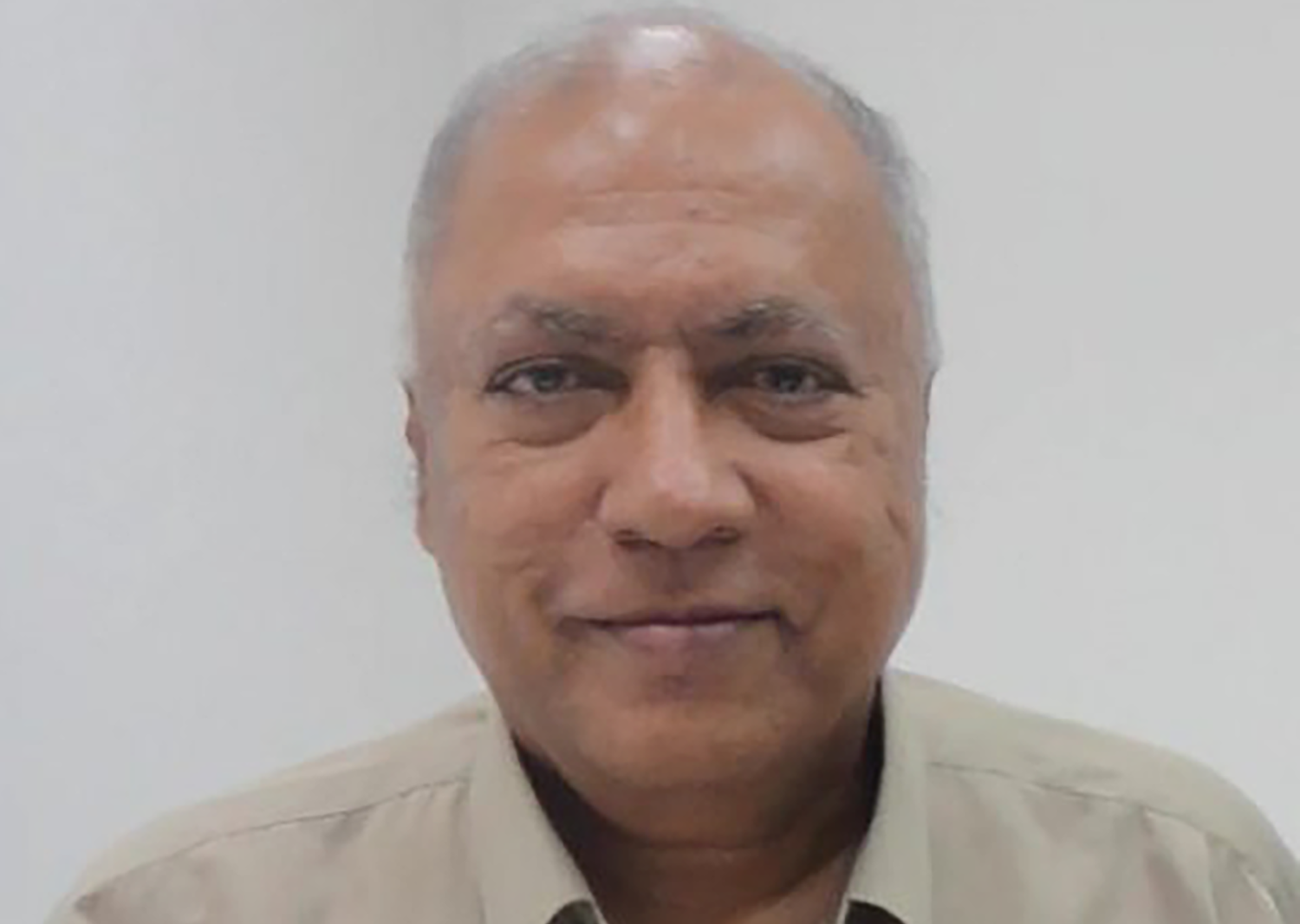
He died in Canada, and the news arrived with a certain administrative neatness, as though it was an update rather than an ending. There was nothing theatrical about it; no climactic closure that literature prefers. It was simply reported that DBS Jeyaraj had passed away, far from the island that had defined his legacy.
Sri Lanka has produced many deaths abroad. It exports its products and profits as efficiently as it exports its people. But in his case the geography felt almost deliberate. DBS had spent decades writing about an island that was always becoming something else: fractured, reassembled, renamed. And in the end, he too became part of that dispersion. It is tempting to describe this as irony. It is more accurate to call it pattern.
David Buell Sabapathy Jeyaraj was born in Colombo in 1954 and had his primary education at S.Thomas’ Preparatory School in Colombo, but his imagination was shaped as much by Jaffna as by the capital. Later, he studied at Jaffna College, an institution where the old Protestant ideal of learning survived a little longer than elsewhere. It was an education that valued precision over rhetoric, documents over slogans, and inquiry over certainty. Those habits never left him. They became the DNA of his journalism.
The world he inherited
DBS belonged to a generation formed in the late British colonial and early post-colonial period, when Ceylon still carried the habits of a small administrative society. It was a world of examinations, civil service prestige, newspapers that assumed literacy rather than allegiance, and an English language that functioned as both bridge and ringfence.
For the Tamil middle class of 1948-1956, education was not merely social mobility. It was a civic philosophy. The state was assumed to be imperfect but correctable. Procedure mattered. Law mattered. Arguments mattered. The future, if it arrived, would arrive through institutions. Incrementally. This belief required a certain distance from politics. Not indifference, but trust in form over force.
Independence did not immediately destroy this worldview. It merely began to erode its foundations while leaving its vocabulary intact. Post-independence Sri Lanka did not collapse in a single act. It declined through accumulation.
The “Sinhala Only Act” in 1956 altered the hierarchy of belonging. In 1970, university admissions shifted toward a set of ethnic quotas rather than one based on merit. Each adjustment appeared manageable in isolation. Together they produced a not-so-quiet recognition that the state was no longer neutral.
The violence that followed did not arrive as an interruption. It arrived as confirmation.
By the time the anti-Tamil pogroms etched themselves into collective memory, particularly in 1983, the fracture had already been internalised by many. What remained was not surprise but resignation. The idea of a shared political project had already been exhausted.
DBS began his professional life inside this exhaustion.
He entered the Tamil daily Virakesari in 1977, just as Ceylon was becoming Sri Lanka. Later he crossed into English journalism, writing for The Island, serving as the Colombo correspondent for The Hindu and Frontline, while contributing to the BBC Tamil Service. His great subject was never merely the war. It was the society that produced the war, and the people who found themselves imprisoned by it.
The turning point came in 1987. His reporting on the conflict between the Indian Peace Keeping Force (IPKF) and the Liberation Tigers of Tamil Eelam (LTTE) exposed civilian suffering at a moment when competing propagandas preferred silence. He was detained in Colombo under Indian political and diplomatic pressure, released without charge, and then discovered that truth offered no sanctuary.
The Sri Lankan state distrusted him; the Tigers, once they found his reporting inconvenient, threatened him. Harvard awarded him a Nieman Fellowship in 1988. DBS intended this as a one-year sabbatical. It became the beginning of exile. Friends urged him not to return. The murder of his friend and fellow journalist Richard de Zoysa confirmed what he already knew: the island had become a place where memory itself could be fatal.
Later he settled in Canada. This offered safety but not release. In Toronto he remained a Sri Lankan journalist in permanent suspension, cultivating sources across every community, even surviving a brutal assault in 1993 by Tamil gangsters that left both legs fractured. Yet he continued, sustained by an almost old-fashioned belief that facts mattered, that accuracy possessed its own moral force, and that a country could still be understood if one listened patiently enough.
Journalism as archival resistance
He did not write as a polemicist. Nor did he write as an academic. His work belonged to an older tradition of journalism in which detail itself was a form of authority.
His articles accumulated names, places, factions, and forgotten incidents with an almost compulsive precision. A militant group could not be mentioned without its genealogy. A political leader could not appear without his earlier affiliations. A conflict could not be described without its preceding betrayals. During the years of civil conflict, detail became his primary instrument. Not because detail was neutral, but because it resisted simplification.
Sri Lanka’s war was frequently narrated through abstractions: terrorism, liberation, security, sovereignty. These words removed texture. His writing restored it.
A military checkpoint was not merely a checkpoint. It was a site of negotiation, fear, delay, humiliation. A militant split was not merely ideological. It involved personal rivalries, broken friendships, accusations of betrayal, sudden deaths that altered organisational psychology.
He insisted on this granularity because abstraction had already become political.
There is a moral question that runs beneath his entire body of work. What does it mean to describe violence without either condemnation that flattens or empathy that excuses it?
He did not resolve this question. He inhabited it.
His writing often refused the emotional shortcuts that political readers expect. This refusal was sometimes interpreted as ambiguity. It was a form of discipline: a belief that description should not be replaced by moral performance. This discipline came at a cost. It left him open to criticism from all sides. But it also preserved a certain stability in his work across decades of shifting political narratives.
This method was often criticised as excessive. But excess was part of the argument. Sri Lanka, after all, was not a simple story. It was a sequence of unresolved stories layered upon each other without resolution.
He wrote as though forgetting was a political act enforced by others. In this sense, his journalism was not merely descriptive, it was preservative.
Difficulty of position
DBS understood Tamil political aspiration from within its emotional vocabulary, yet he did not surrender to its ideological fixations. He understood the logic of the Sri Lankan state, yet he did not treat it as morally self-explanatory. This dual awareness produced discomfort across audiences.
Sinhala nationalist readers often found him too intimate with Tamil militancy to be trusted. Sections of Tamil political memory found him insufficiently aligned with its heroic narrative. Academic observers sometimes found him too close to his sources to maintain analytical distance. But distance was never his project. He belonged to a generation that still believed proximity to events was a form of truth.
The island as a series of failures
To read his work in full is to encounter a recurring structure. Moments of possibility appear briefly, then dissolve. Negotiations begin, then collapse. Political settlements are proposed, then reinterpreted until they lose meaning. Sri Lanka, in this reading, becomes less a nation than a system of interrupted attempts.
The tragedy is not only violence. It is the repeated failure of moderation to sustain itself.
Moderate Tamil politics disappeared through marginalisation and assassination. Liberal Sinhala politics weakened under the pressure of majoritarian expectation. Between them, militancy and the security state expanded into the space left behind. They mirrored each other.
DBS chronicled this transformation not as journalistic observation but as sequence.
The lost middle class
One of the quieter themes in his writing is the disappearance of the bilingual, institution-oriented Tamil middle class that had once imagined itself as the stabilising layer of Ceylonese society. This class believed in administrative continuity. It believed disputes could be resolved through process. It believed education created a shared vocabulary across communities. That belief did not survive contact with post-independence politics.
What replaced it was not simply division, but the weakening of intermediaries. Fewer people could translate between languages of elite politicians. Fewer people could move between worlds without suspicion.
DBS was one of those who remained, after the structure that produced him had begun to disintegrate.
Exile and the weight of memory
His later life in Canada altered the tone but not the substance of his work. Exile does not erase attachment. It reorganises it.
Distance removes immediacy but intensifies recollection. Certain images become disproportionately vivid: a street in Jaffna, a newsroom conversation in Colombo, a political rumour repeated in a small gathering, the sound of curfew announcements. These fragments return repeatedly in exile writing, not as nostalgia but as unresolved material. DBS wrote as though the past remained incomplete.
This is a common condition among those shaped by prolonged conflict. The present loses authority. The past becomes the only available structure for coherence.
His death in Canada closes a geographical arc that had been unfolding for decades.
Sri Lanka produces a particular kind of intellectual trajectory: from island to diaspora, from immediacy to retrospective narration, from participation to observation. DBS followed this trajectory without turning it into an autobiography. He remained, throughout, a writer of Sri Lanka rather than a writer about exile. Even in Canada, the subject did not change. Only the distance did.
The archive and the island
What remains of him now is an archive of extraordinary density. It will be read in different ways depending on the reader’s position in Sri Lanka’s continuing disputes over memory.
For some, it will function as testimony. For others, as contested interpretation. For others still, as excessive documentation.
But beneath these readings lies a simpler fact: his work preserves the texture of a political world that has largely disappeared. Not the official narratives, but the lived complexities of a society moving through conflict without knowing its eventual shape.
Sri Lanka continues to produce new histories of itself. His writing records an earlier stage of that process, when outcomes were still uncertain and identities not yet fully formed. It would be easy to conclude that his death marks closure. It does not.
Sri Lanka rarely permits closure. Its conflicts tend to outlive their actors, and its narratives continue after their authors fall silent. In that sense, DBS remains present not as a person but as a method of remembering. He insisted, for decades, that events must be situated, not simplified; that history must be carried in detail, not reduced to slogan; that political life, however broken, still required description.
That insistence now survives him.
Thus, the island continues, as it always has, producing witnesses to its unfinished story.
Ruben Thurairajah is a Yorkshire-based general practitioner in Britain’s National Health Service; who also tweets https://x.com/RubenThurairaj and writes https://drruben.substack.com/
Image source: https://bit.ly/4bz394o
You May Also Like…

Image-Based Sexual Abuse, and Consent, in the Digital Age
Sely Liyanage
The rapid development of digital technologies has created new forms of content and new forms of harm. Some content is...
India’s Youth Protest and the Limits of Demand-Driven Mobilisation
Manoranjan Pegu
The recent protests ‘led’ by the Cockroach Janta Party (CJP) in India, have been seen as the latest addition to South...
This Government, That Opposition, and the Work Still Ours
Lionel Bopage
For sixty-six years, until his death in 2014, the legendary comrade Bala Tampoe led the Ceylon Mercantile Union...