
Polity aims to advance democratic consciousness, gender equality, state reform, and social change in Sri Lanka, while interested in South Asia and the World.
As its predecessor Pravada (1991-2002), Polity is published by the Social Scientists’ Association in Colombo, with critical content on politics, political economy, history, women, ethnicity, sexualities, religion, labour studies, agrarian relations, nationalisms, violence, ecology, and much more.

Dissident Memory and Democratic Citizenship: Sandya Ekneligoda and Her Struggle for Justice
Chulani Kodikara
Sandya Ekneligoda holding a flame and trident (24 January 2019). (Photo: Nilshan Fernando)Prageeth Ekneligoda,...

Democracy in the Global Interregnum
Devaka Gunawardena
The meaning of democracy is becoming unmoored. Since the end of World War II, the US claimed the banner of democracy,...

Budget 2022: Brace for Austerity
B. Skanthakumar
“… we must at least now, stop, groping in the darkness” ~ Basil Rajapaksa (12 November 2021)Basil Rajapaksa’s maiden...
Nationality, Complex Identities, and Multiple Belongings
Rohini Hensman
As we celebrate the 30th anniversary of Pravada/Polity, it is a pleasure to have been associated with it, as a regular...
‘A Letter from the Village’
Udan Fernando
I was recently, and abruptly, reminded of a conversation that a junior researcher at a research institute I previously...
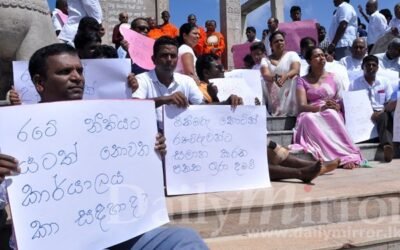
The Office on Missing Persons post-2020: Who and What is it for?
Chulani Kodikara
Demonstration held in front of the National War Heroes' Monument by the National Collective of War Heroes...
Current Issue

Out Now! Vol. 13 No. 2 (July – December 2025). 148 pages. #SriLanka. Politics. Cyclone Ditwah. Ecology. Feminism. Education. Justice. Domestic Violence Act. History. Culture. Work. Labour. Books. Cover Picture Sakuna M. Gamage. LKR1000 from the Social Scientists’ Association or Barefoot or SLBOOKS.lk.
Calls
Archive
Pravada (1991-2002) and Polity (2003-) back issues available here.

Social Scientists’ Association
The Social Scientists’ Association (SSA) was founded in 1977, at a turning point in Sri Lankan politics, economy, and society, marked by among other aspects: the ‘open economy’ market reforms; deepening ethnic conflict; and the growing concentration of executive power. Its initiators were academics from public universities, seeking an autonomous space to grapple with these shifts; and to promote progressive political, economic, and social change.