
Gananath’s Tryst with Lawyers
Radhika Coomaraswamy
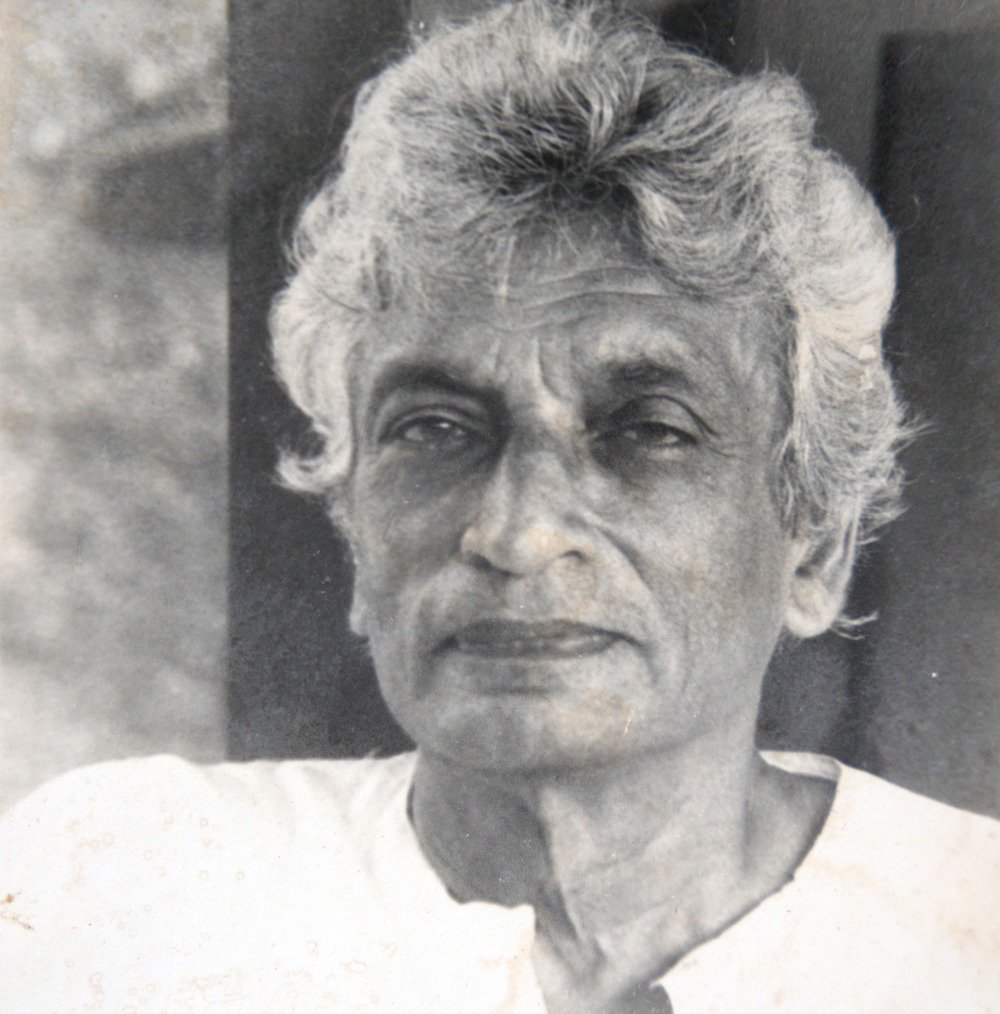
After the International Centre for Ethnic Studies (ICES) was set up in 1982, it gradually became a dynamic centre for the interaction between lawyers and social scientists, especially anthropologists. Led by Dr. Neelan Tiruchelvam, the Colombo office of the Centre defined its work as a struggle for human rights and power-sharing at the national level; and the rediscovery of the history and lost narratives of ethnic and religious groups at the local level.
The tension between these perspectives animated the research and the work. The law privileged universality; and at ICES that universality was primarily rooted in the Universal Declaration of Human Rights (UDHR). In contrast, the anthropologists focused on the local and the particular, bringing diversity, complexity, and richness to all the discussions.
Gananath Obeyesekere was central to the work and imagination of the ICES in the 1980s. His close association with ICES, along with other anthropologists such as S. J. Tambiah and H. L. Seneviratne, brought in a whole new generation of anthropologists who would become leading thinkers in their field—Malathi de Alwis, Pradeep Jeganathan, Darini Rajasingham-Senanayake, among others. But it was Gananath’s imagination that would set everyone on fire.
Buddhism Transformed (Gombrich and Obeyesekere 1988) was not only a template to understand Buddhism but a framework to analyse the practices of other religions during the colonial period. Gananath’s works like Medusa’s Hair (1981), The Cult of the Goddess Pattini (1984), show how religion and religious symbols are not only cultural constructions, but deeply personal and psychological phenomena, a continuous interaction between the self and culture. Gananath was also the master of alternative histories; his work on the Veddas and the Kandyan Kingdom reminding us of the other narratives we may not learn in traditional history books.
Gananath and his wife Ranjini were a constant presence at ICES primarily because of their friendship with Neelan and Sithie Tiruchelvam. He always presented his work at ICES even before it was published. Everyone had a stake in his research; and everyone became his staunch defender in his debate with Marshall Sahlins, even if they were not anthropologists. We absorbed his controversial stand on “cannibalism” and his virulent attacks on the Enlightenment project. He discussed many things with Neelan; who was killed before the publication of The Awakened Ones (2012)—the study of the visionary process within human beings—a book that would have been close to his heart. ICES at the time was a community that constantly read and commented on each other’s work regardless of discipline.
The presence of lawyers and anthropologists at ICES led to a great deal of debate and discussion. As its birth coincided with the July 1983 anti-Tamil riots in Sri Lanka and the 1984 anti-Sikh riots in India, ICES was a hot bed of human rights activism along with its sister institution, the Law & Society Trust (LST). ICES and LST sent fact-finding missions all over the country. Their investigations fed into A Mounting Tragedy of Errors released by the International Commission of Jurists (ICJ) in 1984.
Throughout the 1980s lawyers set up fact-finding missions, election monitoring efforts, making submissions in court, and lobbying for a new Constitution with a comprehensive Bill of Rights and a negotiated devolution package defined the work of lawyers and activists at ICES. The work was national, regional, and global. Fighting impunity and committing to legal transformation animated much of the legal research and projects. Neelan and people like Kumari Jayawardena were role models as “public intellectuals” for a whole generation of scholars.
As lawyers embraced what may be said was the benevolent aspects of the Enlightenment, anthropologists were less sure. India’s Veena Das was also a constant presence at ICES. Her book Mirrors of Violence (1990) came out of an ICES project. Veena focused on the 1984 anti-Sikh riots in India and she lived and worked with the victims of those riots. While highlighting the complicity and the duplicity of the state, she discussed how violence became embedded in speech, rituals and everyday life. For her, recovery did not come from heroic resistance or flamboyant accountability but from the reconstruction of the ordinary and everyday practices. The gestures, rituals and restoration of social relationships were the key elements for reconciliation.
Pradeep Jeganathan who also worked at ICES and who extensively interviewed an urban male participating in the 1983 riots comes to a similar conclusion in “A Space for Violence: Anthropology, Politics and Location of a Sinhala Practice of Masculinity” (2000). Neither Das nor Jeganathan had any faith in the administrative and justice mechanisms of the state. Their solutions focused on every-day life, recovery, and restoration. The dilemma between the legal approach and the anthropological approach remains at the heart of transitional justice efforts whether in Sri Lanka or the world.
Gananath’s response to accountability issues was somewhat different. He was relatively ambivalent on how to combat impunity in post war contexts. But in between the lawyers’ view of accountability and Veena Das’s emphasis on recovery, Gananath focused on the revival of ethics and ethical rebirth, a common theme in all his work since Buddhism Transformed.
Drawing from his own religion, he felt that the ethical realm had many of the answers for the causes of conflict as well as its resolution. Ethical Buddhism for Gananath was not only about the canon but is also drawn from popular religion, ritual practices, and social relationships. Though he accepts that karma is an essential aspect of ethical Buddhism, Gananath firmly believed that universal compassion and non-violence were the core principles, especially before the birth of 20th century “Protestant” Buddhism which he rages against.
In the aftermath of the terrible civil war, he calls for introspection. For Gananath, Buddhist ethics is healing; it is therapeutic and is not about enforcing divine commandments. It is about transforming the self, dealing with suffering, and extending kindness to all living beings. In that sense he is more at ease with the worldview of Veena Das.
Later on in my career, dealing with violence against women and children, and armed conflict, I realised how much these debates and discussions had filled my imagination. Fighting impunity through fact-finding and formal processes remained central to my work. Trained by both Neelan and Sithie Tiruchelvam, moral outrage and legal action were always necessary for me.
But the law was never enough. Every-day life, the repair and restoration of social relationships was as important. Understanding context and the fabric of social life must precede legal prescription. Gananath and Veena left a lasting impression. Before any mission, my staff had to read either a work of literature or anthropology from the country concerned before we began our programme. Any solution had to be informed by that reality.
The discussion about accountability, the give and take of lawyers and anthropologists with deep respect for each other’s work characterised the early years of ICES. Neelan Tiruchelvam’s own work in the field of law and anthropology—the study of the Gamsabhava (village council, for dispute resolution) system in Sri Lanka—began the friendships and partnerships. Regi Siriwardena, who introduced generations of ICES scholars to the love of literature, often organised the sessions. Gananath’s death conjures up memories of those very early days and fills me with a certain nostalgia for ‘The Thatched Patio’ on Kynsey Terrace where many of these discussions took place.
Radhika Coomaraswamy is a lawyer and academic; earlier the Executive Director of the International Centre for Ethnic Studies, Colombo; past Chairperson of the Human Rights Commission of Sri Lanka; the first UN Special Rapporteur on Violence against Women; and former Under-Secretary General of the United Nations and Special Representative for Children and Armed Conflict.
Photo credit: Ranjini Obeyesekere
References
Das, Veena (Ed.). (1990). Mirrors of Violence: Communities, Riots and Survivors in South Asia. Delhi: Oxford University Press.
Gombrich, Richard, and Gananath Obeyesekere. (1988). Buddhism Transformed: Religious Change in Sri Lanka. Princeton NJ: Princeton University Press.
Jeganathan, Pradeep. (2000). “A Space for Violence: Anthropology, Politics and the Location of a Sinhala Practice of Masculinity.” In Partha Chatterjee and Pradeep Jeganathan (Eds.), Subaltern Studies XI: Community, Gender and Violence (37-65). Delhi: Permanent Black.
Obeyesekere, Gananath. (2012). The Awakened Ones: Phenomenology of Visionary Experience. New York: Columbia University Press.
Obeyesekere, Gananath. (1984). The Cult of the Goddess Pattini. Chicago: University of Chicago Press.
Obeyesekere, Gananath. (1981). Medusa’s Hair: An Essay on Personal Symbols and Religious Experience. Chicago: University of Chicago Press.
Sieghart, Paul. (1984). Sri Lanka: A Mounting Tragedy of Errors. London: International Commission of Jurists.
You May Also Like…

A ‘Duty of Care’ to Animals: Two Decades of Struggle for Law Reform in Sri Lanka
Kasun Kavishka
In late April 2026, Sri Lanka welcomed Aloka, an Indian stray dog who walked along with US-based Buddhists monks in...
Polity Vol 13 No. 2 (December 2025)
ContentsGoverning in Anticipation of Backlash by EditorsThe Great Flood by B. SkanthakumarFCEJ Stands in Support of...
A Heart That Never Forgets
Binu Peiris
Over the high walls of the white mansions where our money lay, Our youth sped their way holding the tears of our...