
Laughter, Debate, and Dissent: Personal Glimpses of Gananath Obeyesekere
Selvy Thiruchandran
I first met Gananath at the International Centre for Ethnic Studies (ICES) in Colombo, when its Director, Radhika Coomaraswamy, invited me to present a paper. My topic was the rights of Jaffna Tamil women as reflected in the customary law of Thesavalamai. Unaccustomed to presenting before such a distinguished audience, I was naturally nervous. Yet, I managed to read my paper (1991) with a degree of confidence.
During the discussion, a man—whom I later came to know as the eminent scholar Professor Gananath Obeyesekere—challenged a point I had made. I had argued that Jaffna Tamil women enjoyed comparatively better rights under Thesavalamai than Indian women. He disagreed, noting that Indian women were not entirely deprived of their rights. I responded by clarifying that my comparison referred specifically to the restrictions imposed by Brahmanical Hinduism, particularly through the Manudharma Shastra, while acknowledging that women in regions such as Kerala enjoyed similar rights to those under Thesavalamai. He nodded in agreement.
As this exchange unfolded, I sensed unease in the room. The person seated next to me nudged me, attempting to caution me, while others signaled with their eyes that I should refrain from arguing further. It was only then that I realised I was engaging with Professor Obeyesekere himself. Although momentarily unsettled, I felt I had been respectful and had every right to express my view. It was, after all, a scholarly exchange—not a personal confrontation.
At tea, reactions were mixed. Some congratulated me warmly; others maintained a thoughtful silence, especially in his presence. I found this unnecessary. Intellectual debate should not be mistaken for disrespect. Yet, it revealed the immense stature and reverence he commanded. As he was leaving, he thanked Radhika for inviting him, casting a mischievous smile in my direction—a gesture I would later recognise as uniquely his.
At that time, I did not know that Gananath was a close friend of my brother, R. S. Perinbanayagam. When my brother later shared my identity with him, they both laughed heartily about the encounter. That moment marked the beginning of a warm friendship between Gananath, his wife Ranjini, my brother, and myself.
I met Gananath again in New York, at my brother’s apartment, during a dinner he hosted for the couple. With playful intent, my brother introduced me as “my sister Selvy”. Gananath burst into his familiar loud laughter and said, “I have already met her—confrontationally!”. That evening, I observed him more closely and was deeply struck by his simplicity and warmth. He was completely unpretentious, even helping to carry dishes to the kitchen after dinner. As he said goodnight, gently patting my shoulder, I found myself thinking: simplicity is thy virtue.
Our next encounter proved more significant. By then, I had earned my PhD (1993, Vrije Universiteit, Amsterdam) and wished to publish my thesis as a book. As is often the case, a thesis is not easily readable and requires substantial revision to meet broader scholarly standards. Gathering courage, I approached Gananath while he was in Colombo somewhere between June and July 1996. To my delight, he readily agreed to help. He asked me to send the thesis in advance, and we met twice thereafter for detailed discussions.
His guidance was invaluable. He advised me on which sections to expand, which to omit, and how to refine my arguments. The result was a manuscript ready for publication. Encouraged by this progress, I ventured to ask whether he would write the foreword. Without hesitation, he agreed. This was, for me, a moment of immense joy. My first book, Ideology, Caste, Class and Gender (1997) carried his foreword—a rare privilege I continue to cherish. I even allowed myself the unusual thought that it might be a good omen, as I went on to publish several more works.
Two conversations with him left a lasting intellectual impression on me. In one instance, he mentioned reviewing a thesis written by a university lecturer. I immediately reacted with disapproval, as I knew of allegations that the individual had sexually harassed students. I expressed my view that such a person should be marginalised. Gananath responded with his characteristic laughter and said, “Selvy, you should not mix morality with scholarship. The worst of immoralists can be the best of scholars”. The feminist in me resisted this sharply. I replied that such individuals should be held accountable and even imprisoned. The conversation ended there, but it stayed with me. Over time, I came to recognise the difficult but important distinction he was making.
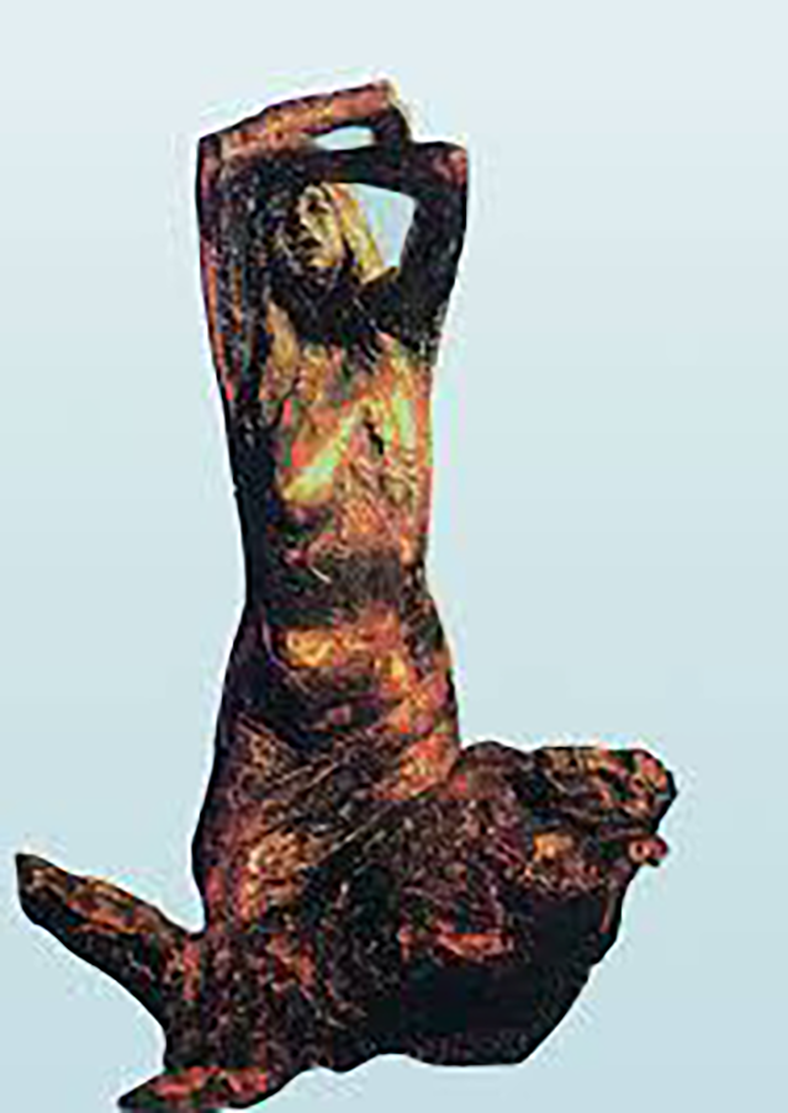
The other instance was my “flirtation” with Pattini. I learnt many things from The Cult of the Goddess Pattini (1984), the most important being Gananath’s assertion that Pattini in the Sinhala Buddhist tradition is worshipped as the embodiment of justice and not necessarily of chastity.
This is interesting when juxtaposed with the Jaffna traditional view of Pattini. Chastity was the main characteristic though she was part of the “little tradition” in Jaffna. At a later stage due to the hegemonic rise of Saiva Hinduism she was reduced in status altogether. The Pattini temples were converted into temples for the female Hindu goddess e.g. Bhuvaneswary Amman, consort of Lord Shiva.
This conversion was done on two premises. She was regarded as a “Jaina woman” and a “demoness”. Jaina woman because the concept of chastity which arose evolved from Silappadikaram, the Tamil epic which was authored by a Tamil Buddhist monk. Gananath had conducted extensive field research contacting not only scholars but ritualists and others who were associated with the temples as he believed in folk wisdom.
From scholarship, my memories turn to something more personal—food. Gananath had developed a fondness for kool, a traditional Tamil seafood porridge thickened with palmyrah root flour (odiyal). Once considered a humble dish of the “little tradition”, it has since gained widespread appreciation, even among the Tamil diaspora. When I invited Gananath and Ranjini for dinner in Colombo, I prepared kool along with payasam, a sweet dessert he had enjoyed before. He relished the meal and asked for it again.
On several occasions, when visiting Kandy for meetings of the Council of the University of Peradeniya, I would take kool and payasam for them. My husband and I also spent many weekends at their beautiful home. On one such visit, Gananath remarked that he wished I would visit more often, to which Ranjini added with a smile, “with payasam”. Sadly, that was the last time I brought it for them.
In his later days, Gananath fell ill and grew increasingly frail. He and Ranjini moved to their daughter’s home in Colombo. When I visited, he would still come out to receive me and engage in lively conversation despite his fraility. On my last visit in March 2025, I brought fish cutlets instead of kool or payasam, thinking of his health. He enjoyed them greatly and wanted more, but Ranjini gently refused, saving them for later.
A week later, Ranjini called to inform me that he had fallen and was in hospital. I understood the gravity behind her words. She asked me to inform my brother, which I did. We both felt a deep sense of sadness. Three days later, the news came—Gananath had passed away.
That marked the end of his mortal life, but not of his legacy. His work will continue to inspire generations of students, teachers, and scholars. He was not only a brilliant academic but also intellectually fearless and honest. He challenged “European myth-making”, including those surrounding Captain Cook, and questioned local myths shaped by ethnocentrism and linguistic nationalism. Though often criticised by Sinhala nationalists, such attacks were, as a Tamil proverb suggests, like barking at the moon.
Gananath Obeyesekere remains that moon—an enduring intellectual presence whose light will continue to guide us for generations to come.
Selvy Thiruchandran is a founder, former executive director, and presently a Trustee of the Women’s Education and Research Centre (WERC) in Colombo. Author and editor of several books, booklets, and issues of Nivedini–Journal of Gender Studies (in English and Tamil); her research interests span feminist theories, the history of the women’s movement in Sri Lanka, gender discrimination and rights, women and religion, women’s speech and writing, caste ideology, and much more. Her most recent work is an autobiographical memoir, The Journey That Shaped Me (Colombo: Perera-Hussein Publishing House, 2026).
Image: Kannagi (1984, sculpture in bronze) by Tissa Ranasinghe. Gananath and Ranjini Obeyesekere Collection.
Image source: https://shorturl.at/AbJ9D/ Weereratne, Neville. (2013). The Sculpture of Tissa Ranasinghe. Colombo: The National Trust Sri Lanka.
References
Obeyesekere, Gananath. (1984). The Cult of the Goddess Pattini. Chicago: Chicago University Press.
Thiruchandran, Selvy. (1991). “Subordination with a difference: The concept of Matriliny within a patriarchal structure: The experiences of Tamil women of Jaffna”. The Thatched Patio, 4 (6): 12-35.
Thiruchandran, Selvy. (1997). Ideology, Caste, Class and Gender. New Delhi: Vikas Publishing House.
You May Also Like…
India’s Youth Protest and the Limits of Demand-Driven Mobilisation
Manoranjan Pegu
The recent protests ‘led’ by the Cockroach Janta Party (CJP) in India, have been seen as the latest addition to South...
This Government, That Opposition, and the Work Still Ours
Lionel Bopage
For sixty-six years, until his death in 2014, the legendary comrade Bala Tampoe led the Ceylon Mercantile Union...

Our support for the open letter: To Iran’s political prisoners, trapped ‘between two blades of a scissors’
Collective
As migrants and refugees in diaspora and in exile from Iran, who have our loved ones suffering in the Iranian state’s...