
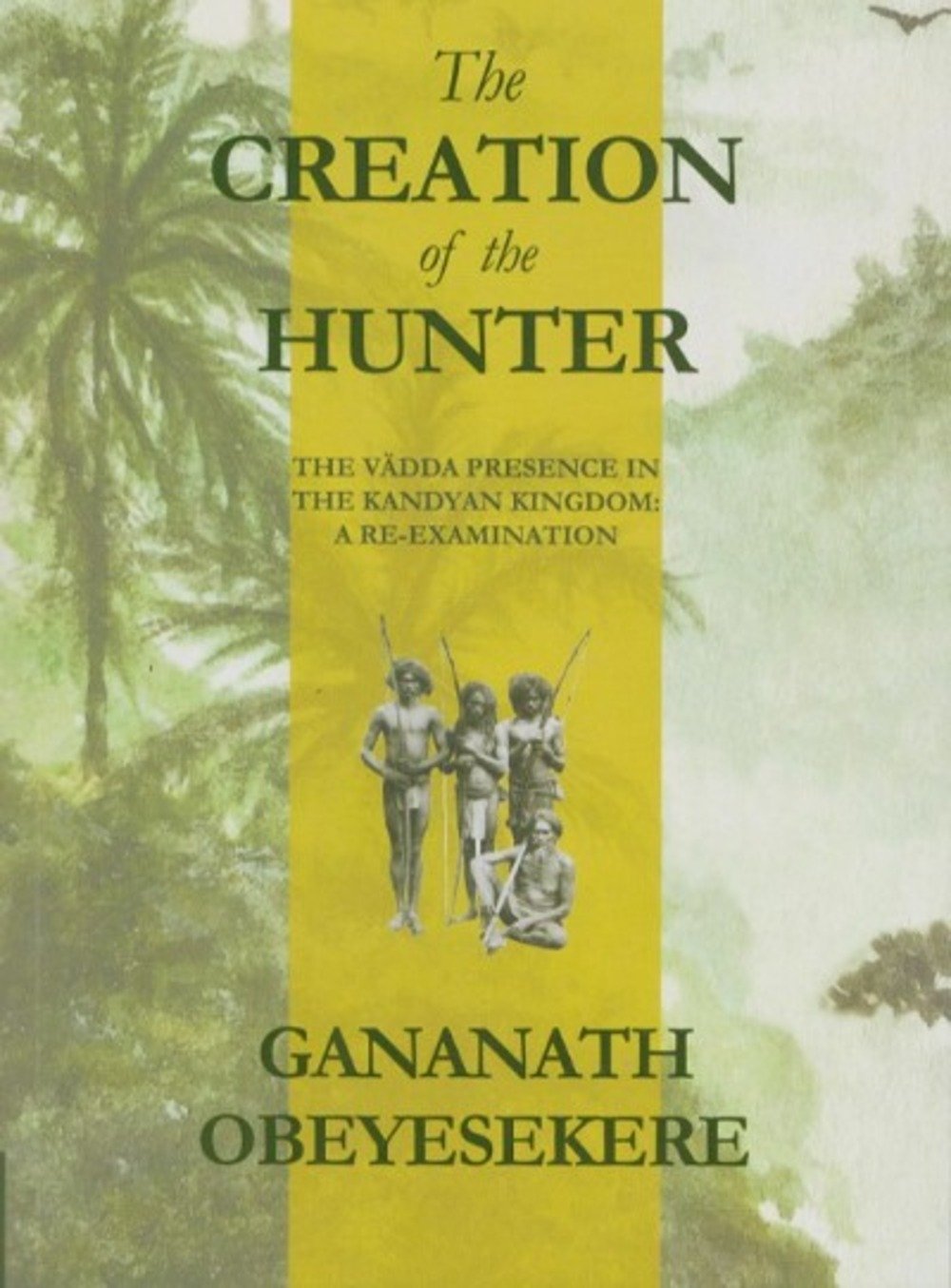
The Creation of the Hunter. The Vädda Presence in the Kandyan Kingdom: A Re-Examination. Gananath Obeyesekere. Colombo: Sailfish, 2022.
R. S. Perinbanayagam
Robert Siddharthan Perinbanayagam died on 5 November 2025 in New York City where he lived most of his life. Born in Rangoon, Burma on 14 February 1934, he was the eldest child of Amirtha (Singham) and Saravanamuttu Handy Perinbanayagam, an educator and a founder of the Jaffna Youth Congress. He schooled at Jaffna College, Vaddukoddai and Royal College, Colombo; proceeding for higher education to the University of Ceylon (B.A. 1959), followed by the University of Minnesota for his masters (1964) and doctorate (1967). His academic career began at the University of Missouri, Columbia (1967-1970), before moving to the New School for Social Research in New York (1970-1972), and finally Hunter College of the City University of New York from 1972 onwards. While an undergraduate in the sociology department at Peradeniya, Gananath Obeyesekere was his teacher. He grew closer to the Obeyesekeres during their domicile in the United States. Last year, as we began planning this forum celebrating the life and work of his friend Gananath, he requested that this book review first published in The Island newspaper and since emended by us, feature too. In remembrance of ‘Sid’ Perinbanayagam, a past contributor, we do so on the anniversary of his birth ~ The Editors.
In earlier works Obeyesekere demolished the claims of both Western scholars and European colonisers that cannibalism was a general practice among the natives of some of the countries they sought to rule and exploit and with his work he de-apotheosised Captain Cook and his sanctification by some western scholars. In his work on Sri Lanka, he was at it again. With his book on the Pattini cult and the practices at the temple in Kataragama, he challenged certain constructions about Sinhala society and its ethnic make-up and religious practices. In his work on Buddhism in modern Sri Lanka he showed how it was influenced by Protestant Christianity just as it did in Bengal, in the shape of the Brahma Samaj. And so on.
Now, in another of his learned works Gananath Obeyesekere comes this time to challenge another thesis developed by many authors about the Väddas of Sri Lanka and to provide an alternative, strictly evidence based, interpretation. He describes his approach in this mind-bogglingly detailed study of the Väddas as follows:
The historical methodology I adopt is as follows. It is impossible to deal with the long historical run of the Vädda presence in Sri Lanka without understanding their presence in more recent times. Thus, I will focus on the Kandy period literature, particularly between the late 16th and the early 19th centuries, a period for which we have reasonable historical records. Once we have this historical understanding, followed by the colonial intrusions, especially the disruptive British conquest of the Kandyan kingdom, and also our current fieldwork, we might be able to reach back to earlier times, albeit with extreme caution and tentativeness owing to the paucity of records. The texts that I examine are not classical historical and literary works in Pali and Sinhala written by highly sophisticated literati, mostly monks, but rather those written by a village intelligentsia on palm leaf manuscripts (pus-kola pot) found nowadays in public and private archives. (2022: 26-27)
This methodological approach consists of using folk documents as sources of data. These documents are: bandaravalia, and vamsa katha (stories about given families), kadaim pot (boundary records of given provinces) and vitti pots (records of various events and episodes). This approach is indeed a revolutionary one with which to study Sri Lankan historiography and is certainly a departure from the standard ones.
This methodological approach allows Obeyesekere to explore a variety of issues: the territory inhabited by the Väddas, the religious life of the Väddas and the rituals they practiced; their connection to the cult of Pattini and to the temple to Murugan/Skanda at Kataragama and its relationship to that of the Sinhalas; on Buddhism and its arrival in Sri Lanka and its impact on Sri Lanka, the frequent connection to Southern Indian communities; the careers of various monarchs; the role of the Väddas in various local conflicts, etc.
Insofar as this is the case, it is impossible to deal with them all here and I will deal with the overarching theme of the work which is the story of the Väddas. I will discuss Obeyesekere’s work focusing on two themes: Who were the Väddas? And what happened to them?[1]
Who were the Väddas?
One answer to the first question was given by two early anthropologists, the Seligmanns. Obeyesekere notes:
[…] C.G. and Brenda Z. Seligmann dealing with one of the world’s most “primitive” hunting and gathering groups, the Väddas of Sri Lanka … published in 1911 their work entitled The Veddas. It was one of the first systematic forays into ethnographic fieldwork. (9)
[…] The Veddas, they were imagined to be a wild man of the woods, clad only in a scanty loin cloth, carrying his bow and arrows on which he depended for his subsistence, simple and untrained, indeed, little removed from the very animals he hunted. Nowadays many middle-class Sri Lankans have accepted a version of this image assisted by grotesque caricatures of the Vädda represented in the local media. (17, italics in the original)
Obeyesekere challenges these observations. In the opening chapter Obeyesekere shows the role the Väddas played in the Kandyan kingdom. I will give a good example of this. Seeking support for a military campaign the king of Kandy tries to recruit some who can fight his battles. Obeyesekere reproduces one report:
In order to seek help from his own region of Matale, he summoned Niyarepola Alahakon Mohottala, and asked him to name the denizens (that is, men and animals) of Matale and the reply, Your worship (hamudurvane) there are only three [noble] houses in the rata of Matale” and when the king asked what these houses were, “Your worship [hamuduruvane) there is Kulatunga Mudiyanse of Udupihilla, Vanigasekere Mudiyanse of Aluvihara, Candrasekere Mudiyanse of Dumbukola , [and then also] Gamage Vädda and Hampat Vädda of Hulangamuva, and when the king asked who are the people in the lands beyond (epita rata), your worship, on the other side of the steep waters (hela-kandura) of Biridevela, there is Kannila Vädda in control of (hirakara hiṭiya) Kanangamuva, and Herat Banda in control of Nikakotuva, and Maha Tampala Vädda at Palapatvala, Domba Vädda at Dombavela-gama, Valli Vädda at Vallivela, Mahakavudalla Vädda at Kavudupalalla, Naiyiran Vädda [some texts Nayida] at Narangamuva, Imiya Vädda at Nalanda, Dippitiya Mahage [a female] controlling an area of nine gavuvas (leagues) in the district known as Nagapattalama, and Makara Vädda and Konduruva employed in the watch of the boundary (kadaima), Mahakanda Vädda controlling Kandapalla [today’s Kandapalla korale], Hempiti Mahage controlling Galevela, Baju Mahage controlling the Udasiya Pattuva of Udugoda Korale, Minimutu Mahage controlling the [same] Pallesiya Pattuva, Devakirti Mahage controlling Melpitiya … (48-49, italics in the original)
One cannot think of a better example of the integration of the Väddas and the Sinhala people, and that some Väddas shared high social status with the Sinhala others—that is to say, they were not just primitive hunters and gatherers.
Here is another example from Obeyesekere’s work that shows the integration of the Väddas with the mainstream and that they, like their Sinhala neighbours, had taken to agriculture.
The text goes on to say that King Prakramabahu (that is Vira Prakrama) gave the Vädda followers of Eriyave Malala Vädda equal proportions of land from the four sub-districts (hatara pattuva) of the Vanni and advised them not to quarrel among themselves. Their lands were demarcated with stone markers, earth bunds and with fences made of sticks (that presumably will sprout). The king also gave deeds of gift or sannas indicating that the lands were theirs “till the sun and moon lasted”, a standard phrase in all such deeds. When they were given the lands they were now to be called vanni unnähäla or “lords of the Vanni” by royal command and they were entitled to dues and/or services from villages of carpenters (kottal-badda), washer folk (rada-badda), drummers (berava-badda), and villages that have unspecified new sources of services (nava-badda). (41)
It is clear from these descriptions that the Väddas were not isolated from mainstream society but were an essential part of it.
Where have all the Väddas gone?
The numbers of the Vädda people have been dwindling seriously over the years leading to this question. Here is Obeyesekere’s summary:
I want to make a preliminary conclusion by addressing the implications of the physical omnipresence of the Väddas, if not their demographic significance, in a tentative manner. Let me emphasize that as far as Sri Lanka was concerned there were no “indigenous peoples,” no “aborigines,” no “wild men” and “tribes” of the Western imagination. I am as much an “aborigine” as anyone else and as genetically and culturally hybrid. (161)
[…] Nowadays, we are accustomed to think that the main structural opposition in history is between Sinhalas and Tamils. Yet, this oppositional relationship is a historically contingent one, that is, it depends on particular historical circumstances such that periods of Sinhala-Tamil opposition might be followed by alliances expressive of amity; or both opposition and amity might co-exist in the same time span; at other times neither opposition nor amity seem to matter and both communities went on ‘living and partly living’ if I might borrow a well-known phrase. (162)
Obeyesekere’s conclusion about the significance of his work in modern Sri Lanka needs to be quoted in full:
Ultimately, we hope that this research questions the current nationalist ideology of the Sinhala-Buddhists that Sri Lanka was an exclusive Buddhist civilization. I hope to eventually demonstrate that the non-Buddhist Väddas were a powerful visible presence although their approximate numbers cannot be calculated. Contrary to early European and current Buddhist prejudice we shall show that there was a constant interplay between Väddas and Sinhala Buddhists, such that over historical time Väddas could become Sinhala Buddhists and Sinhala Buddhists could become Väddas. (14)
Another of his observations deserves to be quoted too:
This leads to my final point: if Vädda versus Sinhala was a structural opposition of the long run and a historically consistent phenomenon, the opposition between Tamil and Sinhala was historically contingent, and only emerges when Tamilness is associated with false belief or heresy. Otherwise, Tamil affinity, in its technical sense, is intrinsic to Sinhala-ness and this is primordially recognized in the Vijaya story of Sinhala origins. The historically contingent oppositional feature against which the Sinhala place themselves is the Tamil-Shaivite one and that also when it is expressed in terms of invasion or conquest. This is in radical contrast to the oppositional dialectic of Tamil and Sinhala nationalism of our own day. However, the Kandyan discourse, as with contemporary nationalism, anchors the discourse on the exemplary example of “kings of yore.” Is this an invention of tradition or a truth about history or both? (172-173)
This work, ostensibly about the Väddas, is much more than that. It is, to begin with, about the heterogeneous composition of Lankan society with the Sinhala society as the dominant one; but the Sinhalas contain former and current Väddas, Indians such as the Mallalas from Malladesa, Malayalees from Kerala, Tamils from Tamil Nadu, many of whom came as soldiers to fight for the local kings and some were given land grants in return for their services and stayed behind.
Obeyesekere further challenges the simple use of the logic of structuralist theories. While its basic premises, in my view, are not disputable, it can be used in crude and mechanical ways: the civilised (we) and savages (they), we (eaters of animals and birds) and they (eaters of each other), we (have great literature and you (don’t). Thomas Babington Macaulay famously said: “A single shelf of a good European library was worth the whole native literature of India and Arabia.” And so it goes.
Clearly, anthropologising Sri Lanka through empirical studies, with both historical data and studies of modern times have inestimable value in every imaginable way and this work is a signal example of the contribution that such studies can make to dispel misconceptions as well as ideological reconstructions.[2]
Robert Siddharthan Perinbanayagam was emeritus professor of sociology at Hunter College of the City University of New York; and author of numerous books and monographs, best known in Sri Lanka for The Karmic Theater: Self, Society, and Astrology in Jaffna (1982). His Signifying Acts (1985), The Presence of Self (2000) and Discursive Acts (2011), are regarded as a trilogy making a significant contribution to social theory in general, and to symbolic interactionist social psychology in particular. His scholarship was honoured with the theory prize of the Theory Section of the American Sociological Association; and the Charles Horton Cooley award of the Society for the Study of Symbolic Interaction, which also conferred the George Herbert Mead Award for Lifetime Achievement upon him in 1998.
Notes
[1] Obeyesekere discusses these topics with due regard to evidence and connects them to the larger story of Sri Lanka though keeping faith with his theme of the search for the hunter. The documents from which he draws his information were composed in the immediacy of the people, and the events they describe have a strong claim to authenticity. One may add these documents are in many ways comparable to the Doomsday Book from England and the Chronicles of the Scottish People.
[2] One can also see the use of the Väddas and their relations with the Sinhala people in Leonard Woolf’s novel The Village in the Jungle. It shows the Sinhala characters treating the Vädda people with contempt. To treat them thus, it is obvious that they were not isolated in jungle habitats. Further, Woolf’s characters, both the Väddas and the Sinhalas, are shown to be hunting for their sustenance. It seems to me that Woolf was describing not only a village in the jungle but also jungle in the village! Woolf must surely know, since he was king of Baddegama—or at least the agent of King George V!
You May Also Like…
India’s Youth Protest and the Limits of Demand-Driven Mobilisation
Manoranjan Pegu
The recent protests ‘led’ by the Cockroach Janta Party (CJP) in India, have been seen as the latest addition to South...
This Government, That Opposition, and the Work Still Ours
Lionel Bopage
For sixty-six years, until his death in 2014, the legendary comrade Bala Tampoe led the Ceylon Mercantile Union...
Our support for the open letter: To Iran’s political prisoners, trapped ‘between two blades of a scissors’
Collective
As migrants and refugees in diaspora and in exile from Iran, who have our loved ones suffering in the Iranian state’s...