
‘Guru-Ship’: An Epistemological Turn in My Anthropological Education
Sanmugeswaran Pathmanesan
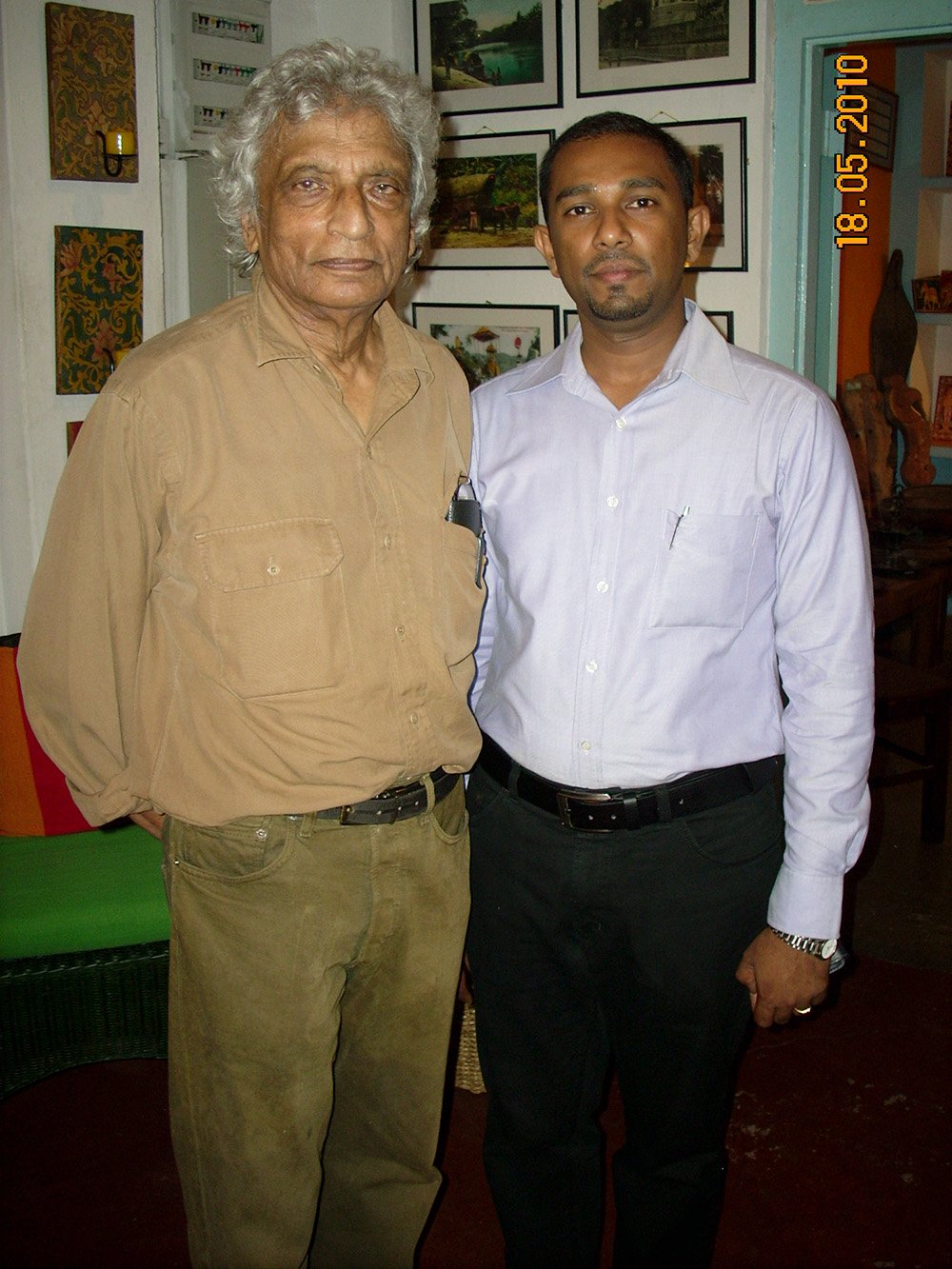
This paper narrates the epistemological shift that took place in my anthropology learning journey, mapping how the guru-ship system functioned as both an educational and ontological framework.[1] Through mentorship with Mark P. Whitaker, a student of Gananath Obeyesekere, I became part of an intellectual lineage in which anthropology was regarded not simply as a technical discipline but as a practice enriched with existential reflections and grounded in ethical interactions and symbolic interpretations.
Anthropology, both as a field of study and a way of living, requires not just the development of research skills but also the fostering of a distinct epistemological perspective. For many individuals, this perspective develops gradually, often through personal interactions and lived experiences that transform our understanding of knowledge, ethics, and what the human condition means. In my situation, the most significant change in my anthropological learning journey occurred through my involvement in a guru-ship system—an interactive, dialogic, and ethical mentorship model that fundamentally altered my epistemological approach.
Encountering Gananath Obeyesekere and Mark Whitaker
While studying sociology at the University of Dhaka, I often found myself intellectually adrift, not fully drawn to the rigid frameworks of training offered there. My heart inclined towards qualitative inquiry and interpretive approaches—methods I only later came to recognise as rooted in symbolic or interpretive anthropology. This intellectual restlessness became the turning point in my academic path.
During my time in Dhaka, I took a leap of faith and wrote an email to Prof. Gananath Obeyesekere in 2008. Astonishingly, I received a reply from him. That moment remains one of the highlights of my academic life. Gananath, a true Everest in the world of anthropology, responded with generosity and collegiality. That first email exchange marked the beginning of a long and transformative intellectual relationship.
Later, when I returned to Sri Lanka in the latter part of 2008, Gananath graciously invited me to lunch in Colombo. It was there that I shared my desire to formally move into anthropology. He listened attentively, offered generous advice, and encouraged me to prepare for the TOEFL and GRE exams. More importantly, he began supporting my journey by writing reference letters—always willingly and without hesitation—whenever I requested them. Gananath also read and commented on my research proposals before I submitted them to various graduate programmes. His intellectual presence, even from a distance, was immensely impactful. Although he never taught or supervised me directly— in a reference letter dated 21 November 2013, he wrote: “I have known Sanmugeswaran Pathmanesan for at least five years and have indeed encouraged him to work towards his PhD, even though I have neither taught him nor have any contact with him in the classroom or seminar situation”—, his mentorship from afar was no less formative.
In 2013 I came to know of another key figure in my academic lineage: Mark Whitaker. I first reached out to him also via email. To my surprise, I later discovered that Mark had been a doctoral student of Gananath Obeysekere, the latter serving on his PhD advisory committee at Princeton University. Mark Whitaker became my dissertation advisor, chair, and direct guru. Meeting him in person at the Bluegrass Airport in Lexington, Kentucky in 2014 was a moment filled with symbolic meaning. When he asked me how I knew Gananath, I recounted the story of our correspondence and mentorship. Mark smiled and said, “Gananath was my teacher too.” It was at that moment I recognised the beautiful continuity of this intellectual lineage—my Brahma Guru (guru’s guru) was Gananath, and my guru was Mark Whitaker.
Mark Whitaker, with his Wittgensteinian approach to cultural analysis, his philosophical depth, and his anthropological wisdom, became the guiding force behind my academic transformation. His passion, compassion, and immense generosity were foundational to my growth as a scholar of anthropology and of Sri Lanka and South Asia. It was he who encouraged me to think deeply and write clearly, to see anthropology not only as a method but as an ethical and philosophical vocation.
I must also mention Dr. Pradeep Jeganathan, whose seemingly small act recommending that I read Mark Whitaker’s Amiable Incoherence: Manipulating Histories and Modernities in a Batticaloa Hindu Temple was another pivotal moment. I had approached him for feedback on a paper I had written on a temple-centred community in Jaffna. His advice opened new directions in my thinking and ultimately led me to the University of Kentucky to study under Mark’s supervision.
Looking back, my journey into anthropology was shaped not merely by disciplinary shifts but by profound personal and intellectual relationships that exemplify the guru-ship tradition. From Gananath Obeysekere to Mark Whitaker—spanning continents, disciplines, and generations—this lineage has not only trained me but transformed me. The epistemological turn in my life was not just academic; it was embodied, lived, and guided by my gurus.
The guru-ship tradition: Transcending pedagogy
The practice of guru-ship in South Asia goes beyond the typical Western idea of a “teacher”, functioning instead as a relational and transformative method of conveying knowledge that is grounded in ethical understanding and lived experiences. Derived from the meaning of “one who dispels darkness”, the guru serves not only as an educator but also as a moral and epistemological model who shapes the perspectives and sensibilities of the learner.
Within the context of anthropological education, the guru-ship system serves as an apprenticeship model of knowledge acquisition, where learning is cultivated through closeness, interactive teaching, and personal growth. This aligns with Talal Asad’s (1993) idea of a “discursive tradition,” where knowledge transcends mere text or propositions and is instead interwoven with bodily practices, gestures, silences, and the development of ethical habits.
Within this framework, anthropology is seen as a practice of lifeworld engagement, representing a way of existing in the world where ethics and epistemology are tightly interconnected. In this regard, the guru imparts not just academic skills but also ethical qualities such as humility, reflexivity, critical inquiry, and patience, exemplifying ways to perceive and interact with the world.
Jacob Copeman and Aya Ikegame (2012) further develop this idea by exploring how guru-ship encompasses various religious and social figures in South Asia—such as sants, maharajs, babas, mahants, swamis, sannyasis, and acharyas—each serving not just defined roles but also reflecting a larger organising principle. By approaching guru-ship as a conceptual framework rather than a static identity, they illustrate how it encourages movement among different social, religious, and intellectual realms, thus offering anthropology an essential model for understanding relational knowledge, authority, and transformation.
What does it mean to know anthropologically?
Before my encounter with this system, my understanding of anthropology was largely methodological—focused on tools, fieldwork techniques, and theoretical models. The guru-ship system, however, revealed the ontological and epistemological dimensions of the discipline. I was encouraged to ask, what does it mean to know anthropologically? How does one’s social location affect the production of knowledge? Can anthropology be done ethically without undergoing personal transformation? What can an anthropologist tell about human conditions? What are we going to do with ethnographic narratives? This epistemological turn was catalysed by the realisation that anthropology is not only about studying the Other but also about transforming the Self. Learning under my guru, who had been shaped by Obeyesekere’s psychoanalytic and interpretive insights, I came to view anthropology as a moral and existential journey. The ethnographic encounter became less about “data collection” and more about co-presence, empathy, and reflexivity. The epistemological turn I underwent was characterised by several shifts:
(a) From data to discourse: Initially, I approached anthropology as a data-gathering enterprise—field notes, coding, interviews. Through guru-ship learning, I came to see the ethnographic encounter as “dialogical”, a dialectic process (between researcher and informant) where both anthropologist and interlocutor are co-producers of meaning.
(b) From objectivity to positionality: The myth of neutrality gave way to an awareness of positionality. My guru constantly reminded me: “You are never outside the field”. Since I was a native anthropologist, he more often brought examples from Gananath’s works. My social background, emotions, and beliefs, all shaped the encounter. As Gananath noted in his reference letter: “My own advice to Pathmanesan is that he might want to limit his proposal to a well-known temple complex such as the Kandasvami temple in Nallur; or a couple of lesser ones; or several minor shrines perhaps for different deities or castes.”
(c) From method to ethics: Anthropology became an ethical practice. I was challenged to ask: What are the consequences of my writing? The guru-ship model emphasised co-presence—learning with people, not merely about them. This meant enduring doubt and the loss of control in the field. One of the most transformative experiences came during my fieldwork in a Tamil Hindu community in Sri Lanka. I entered with questions about ritual, caste, and migration, but what unfolded were lessons in silence, resistance, and shared suffering. My guru, rather than providing answers, urged me to sit with discomfort, to write from uncertainty, and to listen beyond speech.
Intellectual lineage
As I have already mentioned, my journey into this epistemological world was shaped by learning under Mark P. Whitaker, whose own intellectual formation was deeply influenced by Gananath Obeyesekere. Obeyesekere emphasised that cultures are symbolic systems structured by inner conflicts, historical negotiations, and existential meaning-making. His work moved beyond surface-level descriptions to ask: What are the psychic, historical, and symbolic logics that animate cultural forms? Whitaker extended this legacy into contemporary ethnographic practice, particularly in the context of post-war Sri Lanka, where he explored ambiguity, pluralism, and the fragility of coherence in Tamil lives. Learning from Whitaker was not just about methods or theories—it was an initiation into a way of seeing the world and analysing the human condition.
My intellectual lineage—Mark Whitaker ← Gananath Obeyesekere ← interpretive traditions of anthropology—instilled in me a particular way of knowing. Obeyesekere’s emphasis on psychological interiority, symbolic structures, and the negotiation of meaning, deeply influenced my conceptual horizons.
I would like to highlight here Obeyesekere’s theoretical orientation with psychoanalytical anthropology. His scholarship marks a significant intervention in anthropological thought by integrating psychoanalysis and hermeneutics, particularly in the study of South Asian religious practices. In The Cult of the Goddess Pattini, he approached the ritual and mythic traditions surrounding the goddess Pattini not just descriptively, but interpretively, revealing how religious texts and rituals open up layered symbolic worlds rooted in historical, psychological, and cultural processes. Medusa’s Hair shifted focus to the inner life of religious practitioners, using Freudian case analysis to explore how personal symbols, unconscious desires, and cultural practices converge in religious experiences like possession and penance. He challenged the dichotomy between the individual psyche and public culture, proposing instead a unified symbolic logic. These ideas culminated in The Work of Culture, where Obeyesekere developed the concept of symbolic transformation—how unconscious fantasy becomes cultural form. Drawing inspiration from Freud’s early writings and Paul Ricoeur’s hermeneutics, he proposed a psychoanalytic anthropology that moves beyond rigid structuralism and cultural relativism, offering an interpretive model that links deep motivation with cultural expression.
Through Whitaker, I engaged not just with theory but with how theory lives in practice—how fieldwork requires not only critical tools but an attuned self. This kind of learning cannot be acquired from textbooks alone. It is transmitted experientially—in conversations, silences, feedback, and shared moments of field immersion. In this lineage, knowledge is not a commodity but a relationship, something cultivated and passed on through mutual trust, dialogic critique, and ethical orientation.
The guru-ship tradition cultivated in me a habit of reflexivity, which became central to my epistemological stance. Anthropology, I learned, is not simply about “objectivity” or “neutrality,” but about positionality and reflexivity. This guru-ship allowed me to understand that the field is not “out there” but also “within”—shaped by my emotions, prejudices, and aspirations. My guru constantly challenged me to reflect on the ethics of representation: Who speaks for whom? The power dynamics of knowledge: What voices are included or excluded? The fragility of understanding: Can we ever truly know the Other? These shaped my anthropological learning and practice.
My own theoretical position
While my undergraduate studies were formally rooted in sociology, my intellectual path quickly shifted towards anthropology—not only as a methodological approach but also as a philosophical commitment. This shift was heavily influenced by Gananath Obeyesekere’s writings and scholarship. Even my bachelor’s thesis, titled “Kinship System and Its Changes in Jaffna Society: A Social Anthropological Study based on Inuvil Village,” showcased this shift in discipline. Though it was presented under the sociology banner, the conceptual frameworks, fieldwork techniques, and analytical perspectives were clearly anthropological. This blending of disciplines is not coincidental; rather, it reflects the intricate landscape of social sciences in Sri Lanka, where sociology and anthropology are profoundly intertwined. Sri Lankan sociology often embodies the methodological richness and ethnographic insight characteristic of anthropology, challenging the rigid disciplinary distinctions prevalent in Western academic contexts.
My dedication to anthropology was not just an intellectual shift; it was deeply rooted in my own life experiences in Jaffna. The rhythms of village life, religious customs, and intergenerational storytelling were the fertile ground for my anthropological creativity. My grandmother played a vital role in this formative journey, as her narration of local folktales, myths, and temple stories provided more than simple entertainment; they served as a form of vernacular knowledge. Her tales, steeped in Tamil cultural contexts and shared within close family settings, offered me a nuanced and relational perspective on identity, place, and ritual. Our evening strolls through Inuvil—marked by the greetings exchanged with family and friends—turned into ethnographic explorations, immersing me in the social landscape of the village. Although I did not recognise these moments as such at that time, they were my initial lessons in participant observation, sensory ethnography, and contextual knowledge.
A crucial location for my early immersion in religious life was the Pillaiyar temple in Inuvil. Every Friday evening, I joined my grandmother there, witnessing scenes filled with devotional fervor: middle-aged and older women lighting oil lamps before the deity, offering prayers for fertility, prosperity, and family well-being. These physical expressions of faith, situated in gendered spaces and fuelled by personal aspirations, later shaped my comprehension of the anthropology of ritual, sacred spaces, and emotional economies. My grandmother’s regular temple visits throughout Jaffna were not merely acts of worship; they were educational experiences. Through these excursions, I was introduced to what I would come to refer to as the ‘sacred geographies’ of the Jaffna peninsula—a lived mapping of temples, rituals, and spiritual entities that are inseparable from Tamil identity and collective memory.
Crucially, my grandmother’s approach to understanding relationships between humans and non-humans exposed me to an alternative metaphysical perspective that resonates with current anthropological discussions on ontology. Her ability to acknowledge the agency of deities, trees, ancestors, and even objects that seem inanimate provided an intuitive pathway into what anthropologists like Viveiros de Castro and Philippe Descola refer to as the “ontological turn” in the field. Long before I came across these theoretical frameworks in graduate studies, I had already internalised, through lived experience, a way of perceiving the world that challenges Eurocentric divisions such as nature/culture, human/non-human, and subject/object.
This foundational experience was later enriched and academically refined throughout my doctoral education, particularly under the guidance of Prof. Mark P. Whitaker. His focus on interpretive anthropology, especially Clifford Geertz’s (1973) concept of thick description and the significance of cultural meaning, equipped me with the skills to articulate my lifeworld in scholarly terms. Equally significant was Whitaker’s integration of Ludwig Wittgenstein’s later philosophy into anthropological discourse, which helped me understand the grammar of cultural existence—not just as a symbolic system but as a way of life. This philosophical perspective heightened my awareness of diverse worldviews, the limitations of representation, and the ethical implications tied to anthropological interpretation.
Consequently, my academic transition from sociology to anthropology represents more than a mere change of discipline; it is a deep reorientation influenced by personal histories, philosophical ideas, and spiritual experiences. This journey remains invigorated by the sacred and the quotidian, by my grandmother’s stories and academic texts, by the Tamil village and global conversations within anthropology.
To return to Gananath, his anthropological orientation remained deeply informed by psychoanalysis, not as a fixed model but as an interpretive method capable of tracing the movement from private fantasy to public symbol. He consistently dismantled the artificial boundary between the personal and the collective, the psychological and the sociocultural, offering in its place a rich theory of symbolic transformation. For me, learning from Obeyesekere’s writings was not simply an academic encounter, but an epistemological apprenticeship. His interpretive rigor, his bold integration of Freud with cultural theory, and his insistence on the anthropologist’s role as a cultural translator made him not just a theorist but a guru in the truest sense—one who dispels darkness through insight. In this way, my own intellectual trajectory has been shaped through a lineage of thought that finds its roots in the intimate, transformative relationship between guru and disciple.
The epistemological turn I experienced aligns with interpretive anthropology (Geertz, Obeyesekere), critical reflexivity (Rosaldo 1993; Marcus and Fisher 1999), and postcolonial anthropology (Said 1979; Appadurai 1996). These traditions challenge the colonial gaze and technocratic rationalism of earlier anthropology by foregrounding meaning, subjectivity, and representation. These virtues were cultivated not through lectures but through shared journeys—in temples, homes, archives, and email correspondence.
Anthropology as a practice of sādhanā
The guru-ship system has revealed to me that anthropology can be approached, not merely as a discipline of knowledge acquisition, but as a form of sādhanā—a sustained practice of ethical self-cultivation, epistemic humility, and spiritual engagement. Under this paradigm, fieldwork becomes more than a methodological necessity; it becomes a ritualised journey of liminality, encounter, and transformation. The anthropologist, rather than functioning solely as an objective observer, takes on the role of a seeker—one who moves between worlds, engages dialogically with alterity, and emerges reshaped by the very relationships that constitute the field.
The epistemological turn in my anthropological learning was not an abrupt shift but a slow, unfolding transformation enabled through the lived experience of guru-ship. This tradition disrupted my intellectual certainties, dislocated prior assumptions, and cultivated within me a more reflexive and relational mode of anthropological inquiry. As I continue this journey, I carry with me the epistemic ethics, affective sensitivities, and dialogical commitments instilled by this intellectual lineage. Anthropology, as I now understand and practice it, transcends its disciplinary boundaries to become a way of being in the world. The guru-ship tradition, in this regard, was not merely pedagogical; it was initiatory—a discipline of the self, an ethical orientation, and a form of epistemic responsibility.
This journey has redefined my relationship to knowledge: from the distanced analyst to an embedded, affectively-attuned practitioner who values the dialogic over the declarative, the experiential over the merely textual. It has affirmed that anthropology is not simply the study of cultures or societies—it is a lived practice of engaging with, learning from, and walking alongside others. Through this sādhanā, guided by the guru-ship tradition, I have come to see anthropology as a disciplined mode of relational understanding, rooted in humility, care, and co-presence.
Sanmugeswaran Pathmanesan (PhD., University of Kentucky) is a senior lecturer in the Department of Social Studies at the Open University of Sri Lanka.
References
Appadurai, Arjun. (1996). Modernity at Large: Cultural Dimensions of Globalization. University of Minnesota Press.
Asad, Talal. (1993). Genealogies of Religion: Discipline and Reasons of Power in Christianity and Islam. John Hopkins UP.
Copeman, Jacob, and Aya Ikegame (Eds.). (2012). The Guru in South Asia : New Interdisciplinary Perspectives. Taylor & Francis.
Geertz, Clifford. (1973). The Interpretation of Cultures. Basic Books.
Marcus, George E., and Michael M. J. Fischer. (1999). Anthropology as Cultural Critique: An Experimental Moment in the Human Sciences. 2nd ed. Chicago: University of Chicago Press.
Obeyesekere, Gananath. (1981). Medusa’s Hair: An Essay on Personal Symbols and Religious Experience. University of Chicago Press.
Obeyesekere, Gananath. (1987). The Cult of the Goddess Pattini. 1st Indian Edition. Delhi: Motilal Banarsidass.
Obeyesekere, Gananath. (1990). The Work of Culture: Symbolic Transformation in Psychoanalysis and Anthropology. University of Chicago Press.
Rosaldo, Renato. (1993). Culture & Truth: The Remaking of Social Analysis: With a New Introduction. Boston: Beacon Press.
Said, Edward. (1979). Orientalism. Vintage Books.
Whitaker, Mark P. (2007). Amiable Incoherence: Manipulating Histories and Modernities in a Batticaloa Hindu Temple. Amsterdam: V. U. University Press.
Notes
[1] Editors’ Note: An earlier version of this essay has been translated into Sinhala and is forthcoming (March 2026): ෂන්මුගේස්වරන්, පත්මනේසන්. (2026). “ගුරුදේව ක්රම පද්ධතිය ඔස්සේ ගමන් කරමින් මානවවිද්යාව හදාරන විට මා මුහුණ දුන් ඥානවිභාගීය හැරවුම”. රංජිත් පෙරේරා සහ ක්රිශාන්ත ෆෙඩ්රික්ස් (සංස්.), විදර්ශන: ගණනාත් ඔබේසේරක උපහාර කලාපය. කළුබෝවිල: විදර්ශන ප්රකාශකයෝ [Sanmugeswaran, Pathmanesan. (2026). “Epistemological turn in my anthropology learning journey through the guru-ship system”. In Ranjith Perera and Krishantha Fedricks (Eds.), Vision: A Volume in Tribute to Gananath Obeyesekere. Kalubowila: Vidarshana Publishers].
You May Also Like…
India’s Youth Protest and the Limits of Demand-Driven Mobilisation
Manoranjan Pegu
The recent protests ‘led’ by the Cockroach Janta Party (CJP) in India, have been seen as the latest addition to South...
This Government, That Opposition, and the Work Still Ours
Lionel Bopage
For sixty-six years, until his death in 2014, the legendary comrade Bala Tampoe led the Ceylon Mercantile Union...

Our support for the open letter: To Iran’s political prisoners, trapped ‘between two blades of a scissors’
Collective
As migrants and refugees in diaspora and in exile from Iran, who have our loved ones suffering in the Iranian state’s...