
A Funeral in Rathugala
Amalini De Sayrah
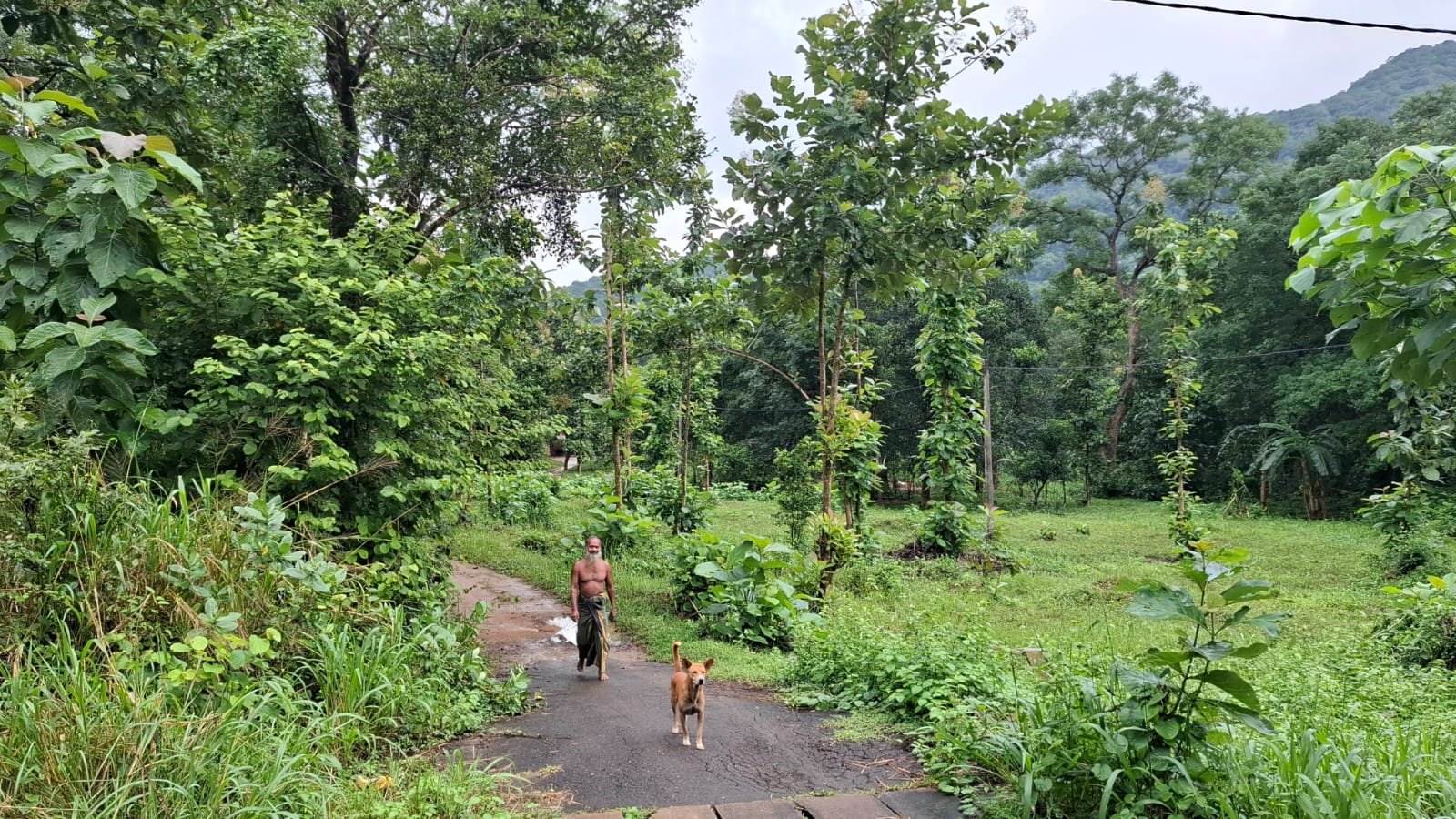
May 9th is an overcast day in Rathugala. Figures dressed in white zoom past on motorbikes or walk slowly through the humidity on the Bibile-Ampara road that is otherwise empty for kilometres. Everyone is going to the same place.
Danigala Maha Bandalage Sudha Wannila Aeththo, chief of the Rathugala adivasi community, had passed away three days prior and was being laid to rest.
Large crowds are gathered around his small, light pink-hued house. Young people and women from the community are heating belimal over a scorching wood fire and squeezing pani dodam to serve the numbers that mill in and out all day. Acquaintances and others from nearby villages come crammed five in a three-wheeler. Local bureaucrats and former politicians arrive in their big vehicles. All are here, sitting on plastic chairs under a canopy of large trees, to pay their respects.
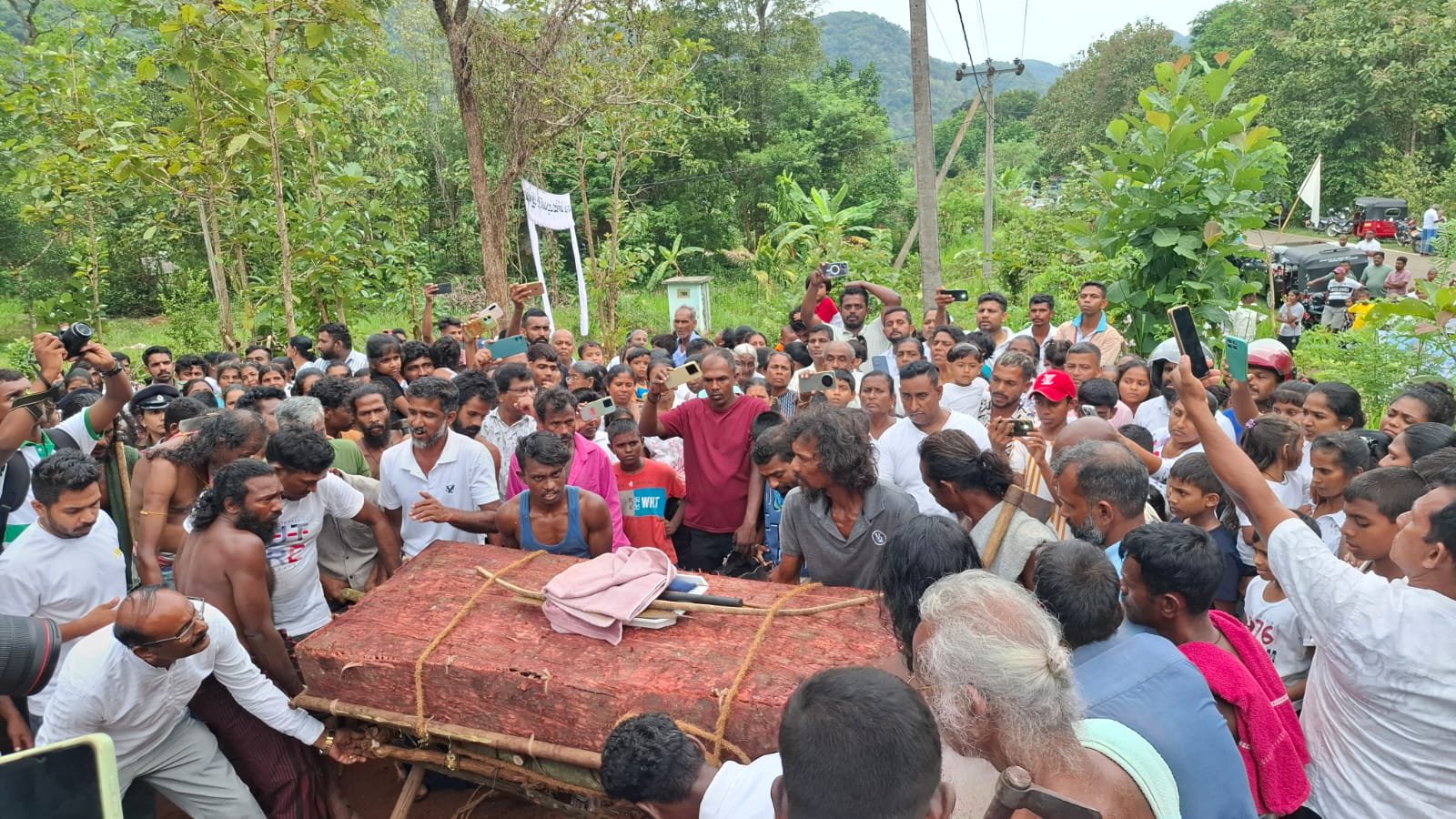 Final respects
I last met the former chief of the Rathugala indigenous tribe, Sudha Wannila Aeththo, in January 2026. This field note recounts his funeral as well as his thoughts, as shared with a friend and myself, months before his passing.
Before ‘Lanka’
The adivasis of Lanka—before it was even ‘Lanka’—lived around the island in forests, in caves and along the coasts. Several tribes lived in the country’s south-eastern plains. In the late 1940s, everything changed. Plans were made to build the Senanayake Samudraya as part of the Gal Oya project, Sri Lanka’s major dry-zone irrigation scheme at that time. The Samudraya or ‘ocean’, was to flood areas close to where the adivasi tribes lived, placing them in the sensitive buffer zone. They were unaware that these plans had been made and were not given much notice. They were simply told, and more or less forced, by various authorities to leave immediately.
The leaders of some tribes accepted the state’s offer of housing for their people in the scheme’s new colonies. One leader, Danigala Maha Banda, refused this resettlement, wanting to preserve their identity and traditional way of life. He and seven families of his tribe trekked down into the forest on the other side of Danigala and lived in caves in the valley. The village of Rathugala has, over generations, come up around that initial site of relocation after displacement.
Sudha Wannila Aeththo was born in this ‘new’ village, a direct seventh generation descendant of Danigala Maha Banda. It is important to note here that the Rathugala tribe is the only one, among the many adivasi groups on this island, who can trace a history that long. His passing takes away not only a leader in the present but the closest connection to a layered past.
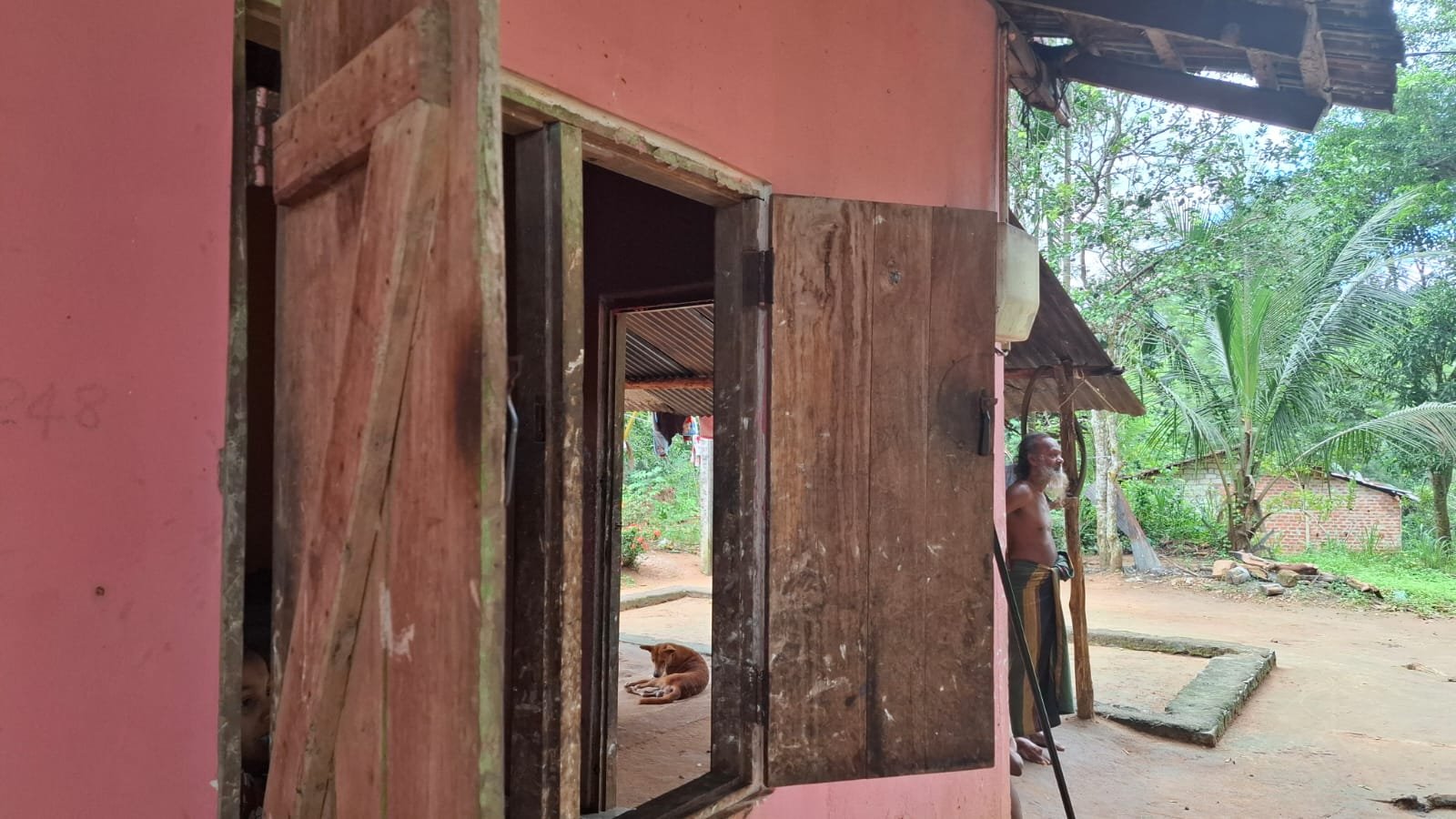 Sudha Aeththo at his home
Place and community
“Our entire lives were around the forest, and the creatures within it”, he said. Food, supplies and implements were made from elements from the forests that they cared for. It was after arriving in the new location of Rathugala that they began cultivation to the extent it is done now. Even that was not immediate: farming practices became widespread amongst the community only in the 1980s.
The adivasis of Rathugala remained closer to the forest—in distance and other exchanges—more than most of the other tribes. Yet in this new location, they soon came within the reach of the expanding formal state and especially its bureaucracy.
“We made our own names, elders would pass this down to younger generations”, he says. Soon they were having to navigate birth certificates, marriage registrations and signatures on paper, far removed from their traditional ways. Adivasis married people of other ethnicities, and the structure and meaning of names began to change over generations as well.
Marriages were once formalised within the village, by exchange of symbolic items between the two families to indicate the union. From the multitude of caves in Danigala, families or couples would select the ones they wanted to inhabit. “We had our own laws”, he says. These ‘laws’ were an understanding of what was right and wrong among the community. They were not in written form, but instead a collective understanding passed down through generations. The responsibility for ensuring they were followed lay with the chief. Resources and shelters were shared and used based on this understanding.
Once settled and governed by the civil administration of Ceylon/Sri Lanka, adivasis became subject to the codified, written law of the country, with restrictions and punishments a world apart from the practices they had followed for generations.
A change in forest dynamics
The smooth, tarred B527 bisects the forests on this side of Danigala. Older members of the community and Sudha Aeththo himself remember how recently it was built. Until 2013, when the Deyata Kirula development exhibition was held in Ampara, there was only what they describe as a weli para or dirt track for travel in this area.
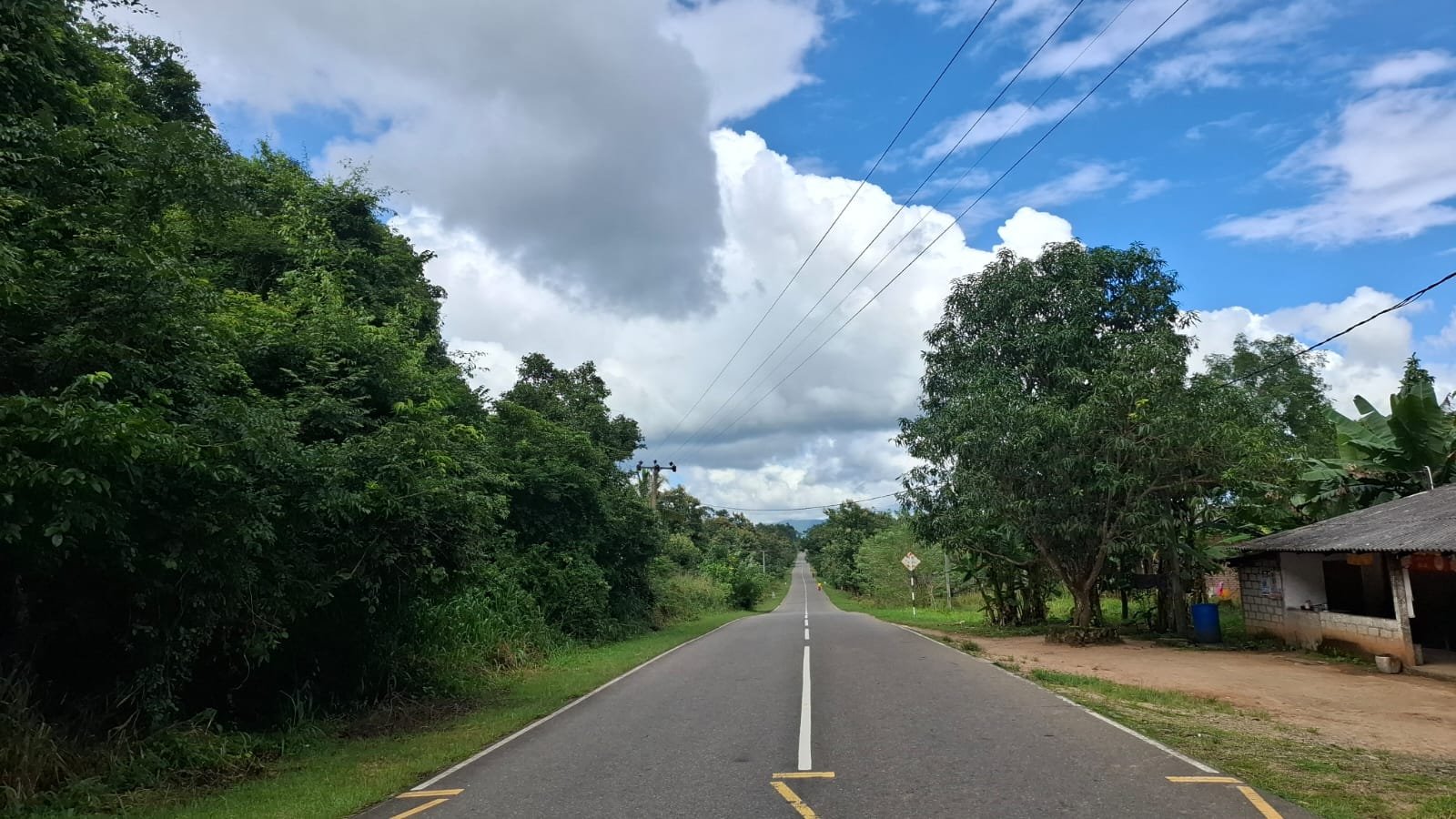 Road B527 between storm and shine
The forests of Nilgala were declared a reserve in 2024. The adivasi community only knew of this ruling when a minister paid a visit to the area prior to the publication of the gazette. They had not been given any prior notice, much less been consulted, despite the gazetted area surrounding and even encompassing the area around their village of Rathugala.
“‘Threats from outside’. We were told that was the reason why the reserve had to be gazetted”, Sudha Aeththo said. He was happy that a precious resource such as the forest was being protected. However, he also reflected that the danger of external destruction had now restricted the adivasis’ interactions with the forest, of which they are not ‘external’ by any means.
The Environment Ministry insisted at a meeting with the community that the adivasis have use-rights of the forest following their traditional customs. This is subject to the standard regulations for anyone entering or taking resources from these reserves, including prohibitions on using firearms or carrying out largescale activities.
Initially, Vanajeevi Avasara Pathra (wildlife conservation area passes) to enter the forest were given to just 10 individuals from the community, and no one else. Lifetimes of journeys into the forest meant that people took some time to adapt to these restrictions and were arrested for entering the forest without the permit. A youth leader reflected that it’s a ridiculous turn of events when the “man who belongs to the forest” has to show an ID to enter the forest.
“We have our own conditions. We know that we can enter the forest, but do not own it”, Sudha Aeththo said. Anything that is taken from the forest is in such a way that there is more the next year, ensuring regeneration and not destruction. Even today, as elders use plants for medicinal purposes, they explain the care and balance involved in this relationship with the environment. If the bark is cut from one side of the trunk today, that side is then left to regenerate before it is cut again. This applies to all of the key things the adivasis take from the forest—honey, roots, medicinal plants, fruits, and more. Sudha Aeththo believed that ‘while we can still walk and travel’, it was up to the elders to teach the younger generation about these practices.
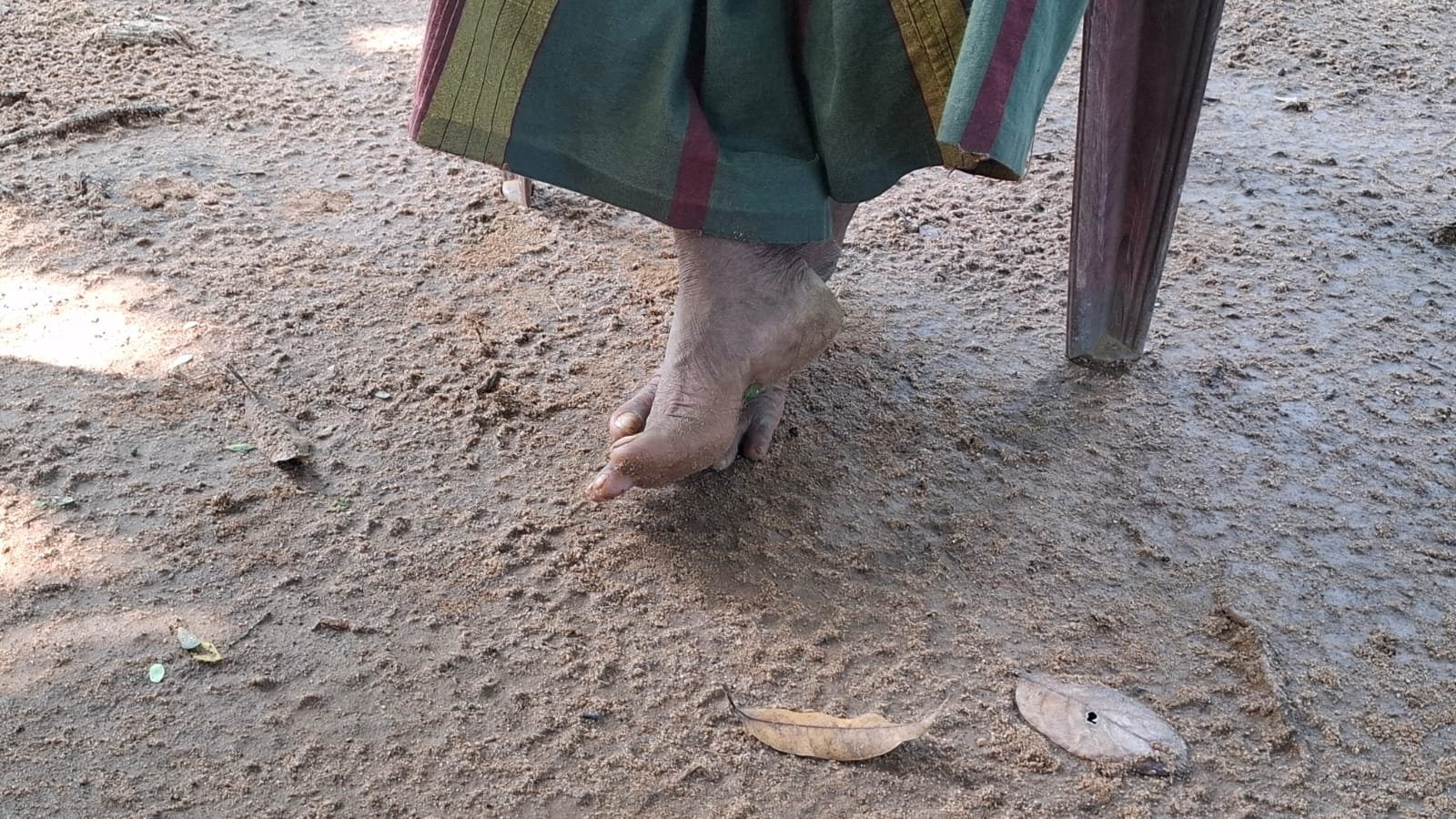 For walking and learning the forest
Inside the Rathugala Adivasi Heritage Centre, large caves loom over parts of the forest. These very caves gave shelter to Danigala Maha Banda and the others who came with him at the time of displacement nearly eight decades ago. The museum, built into the forested hill, showcases cooking and trapping methods, traditional ornaments and weapons. In one section, the clay wall is covered with older photos of villagers alongside fair-skinned people. “Spittel mahaththaya spent years with our ancestors”, Kiribanda Aeththo says, referring to surgeon and author R. L. Spittel. Some in Rathugala note with respect that he spent much time in the forests with their people, though they have not read the books (Wild Ceylon, Vanished Trails, etc.) that were written from these visits.
What is ‘ours’?
At the funeral, Kalubanda Aeththo is standing watch over some important heritances of the Rathugala adivasi legacy. He holds a slim copper plate, the arrowhead of King Buddhadasa which is engraved with a sannasa and was given to Danigala Maha Banda. On it is carved a square and a sun. The square depicts Danigala and read together, the declaration carries the meaning that so long as the sun rises, Danigala will be the place of this tribe of adivasis. The written text on the other side has faded with time.
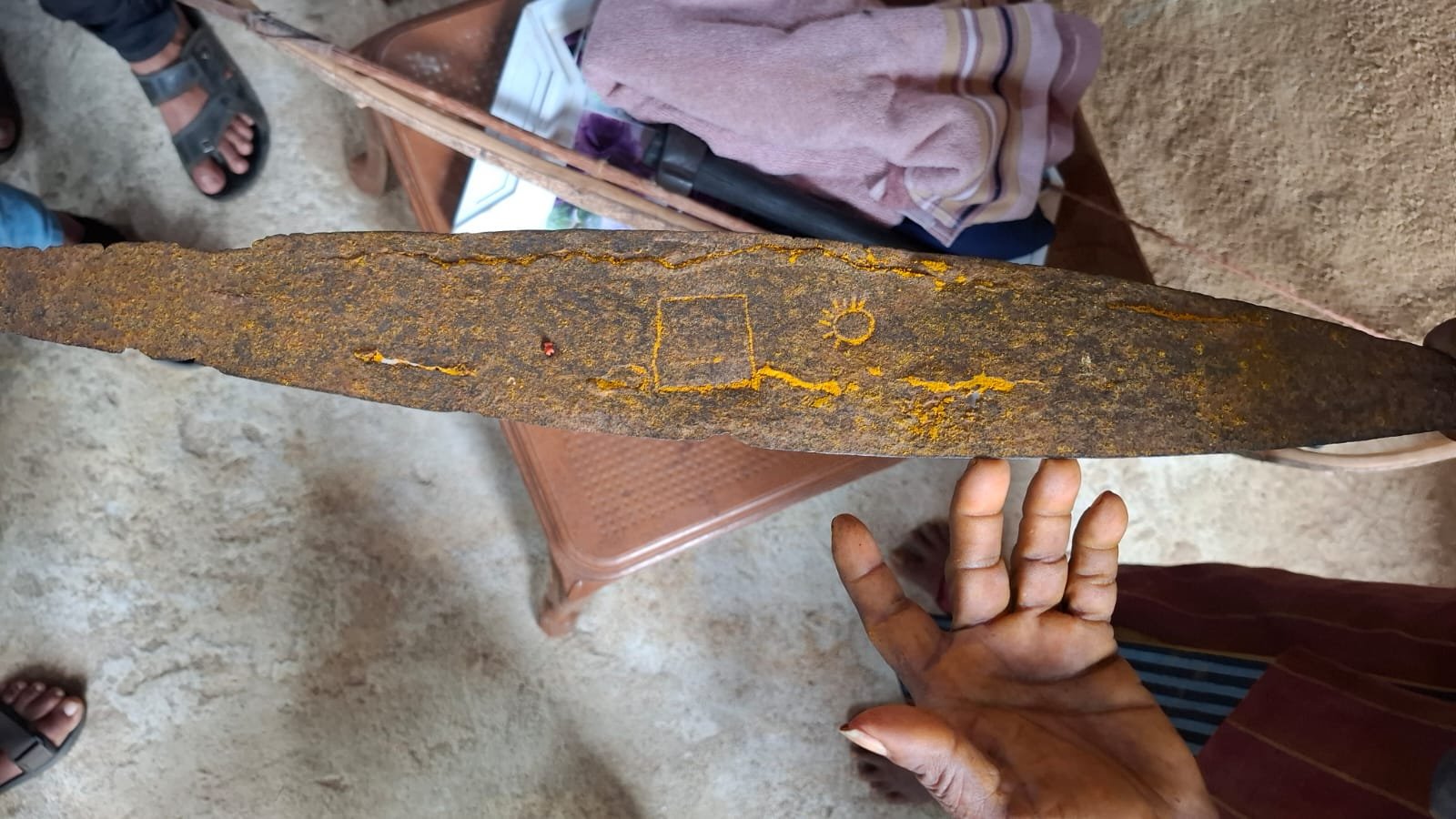 The sannasa, part of a people’s legacy
As the adivasi community came into more sustained contact with the state, land ownership deeds were issued to the people. At time of writing, fewer than 20% of the community have received such documentation. Some youth leaders ask, how one can ask an adivasi or indigenous person, to prove ownership of land that they and their ancestors have stewarded, before these current structures and ideas of the state existed?
Previously, people would mark the borders of their lands with a rock and so would those around them. One understood not to cultivate beyond the rock marker and enter into another’s territory. “Now we have modernised”, they say, and permission for farming has to be taken from the Divisional Secretariat.
In their relationship with the land and the forest, they have never claimed ownership. This is despite having lived in these regions and interacted with these forests over generations. The state claims ownership over the land. “But what about our rights?”, they ask.
The regulations governing state forests, reserve forests and protected reserves do not name adivasis in any manner; even to recognise that they are allowed use-rights because of historical and cultural connection to the forest. This reflects the broader state structure. The Sri Lanka Constitution, the Forest Ordinance, and the Fauna and Flora Protection Ordinance, bear no mention of ‘adivasi’, ‘indigenous’, or ‘vedda’.
However, the Cabinet has recently approved new regulations for activities relating to the livelihoods of indigenous communities in designated areas, and to keep these within existing laws. The legislation is also meant to protect their rights—listed as ‘law, custom, usage and traditional practices’—in the process. Whether this is a recognition of the adivasis’ connection with the forest, or a restriction of their activity that would benefit others seeking profit, remains to be seen.
The earthly farewell
Sudha Aeththo lies under kohomba leaves. A box made with the bark of the hik tree, which has medicinal properties, holds his body. The person who prepared this box first sought permission from the tree before cutting its bark. He peeled the bark like two big sheets; in this manner, the bark will regenerate, the trunk is not severed, and the tree is not cut down.
An eethalaya, dunna, porowwa and saaluwa are placed on Sudha Aeththo’s coffin before the burial. These items—arrow, bow, machete and shawl—are ceremonially handed over to the tribe’s new chief, Sudha Aeththo’s son.
While the grave is being covered, a plate of food is kept at the head: a blessing as the soul travels on; and a diversion for perethayo, hungry ghosts that linger. The tribe regards their ancestors as gods, who are venerated for their protection and favour of prosperity. Sudha Aeththo now goes to walk and travel with them.
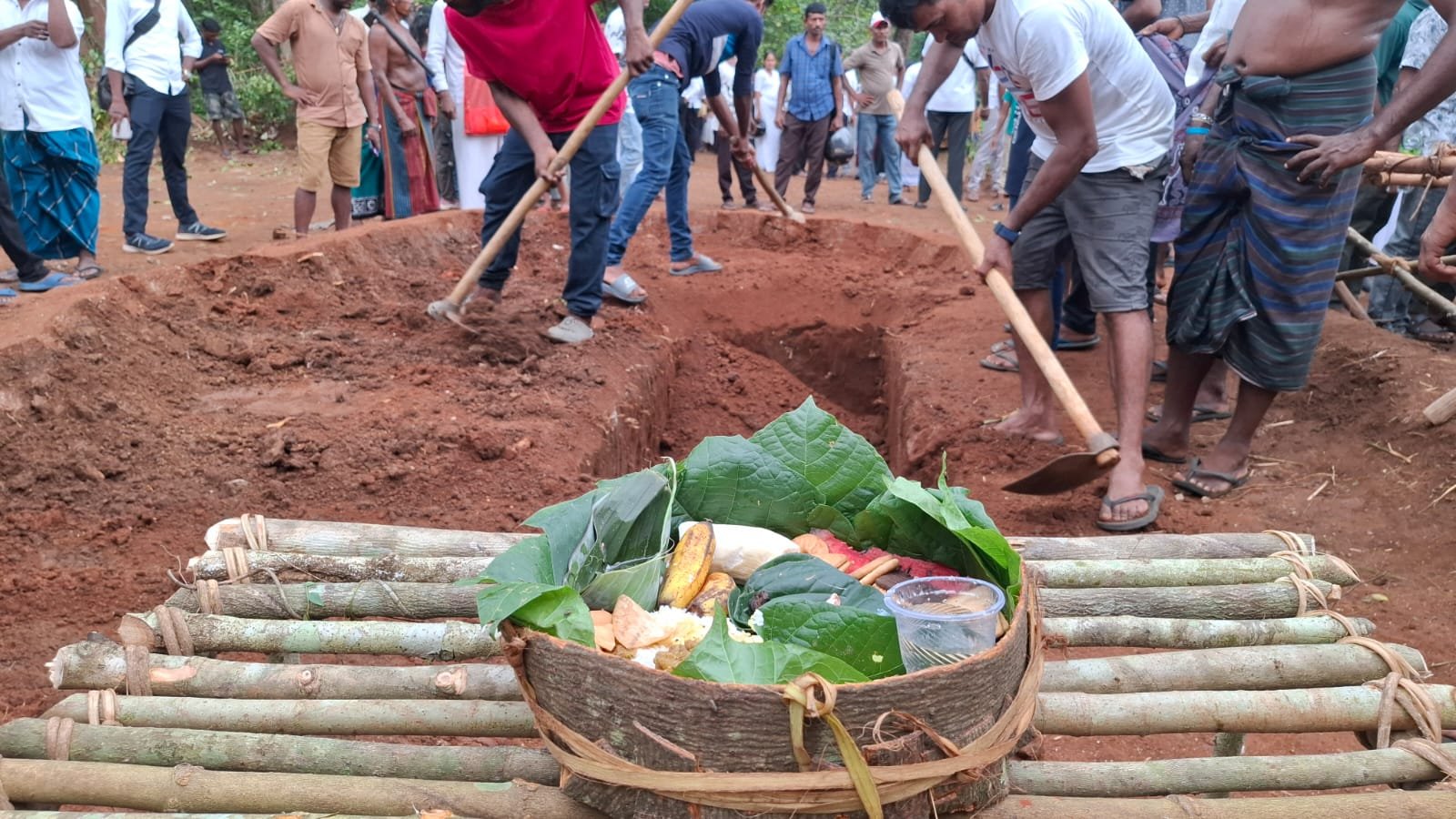 Offering to the hungry ghosts
Amalini De Sayrah is a researcher, photojournalist, and activist.
Photo credits: Amalini De Sayrah
You May Also Like…
Mining Heavy Mineral Sands: Deepening Dependency, Not Enhancing Leverage
Amali Wedagedara
The decision to mine mineral sands along two-thirds of Sri Lanka’s coastline is fuelling anxiety and tension among...
The Art of Witness: Memory and Resistance in Sri Lanka
Yolanda Foster
When I first arrived in Colombo in the 1990s, I was in my twenties and had just begun a volunteer role with Peace...
‘Border villages’: Emergence, Salience, and implications for ‘Community’ in Sri Lanka
Viyanga Gunasekera
Despite Sri Lanka being an island and not sharing land borders with another country, the term ‘border villages’...