
Twenty Years of the PDVA: How has it worked for Women?
Chulani Kodikara
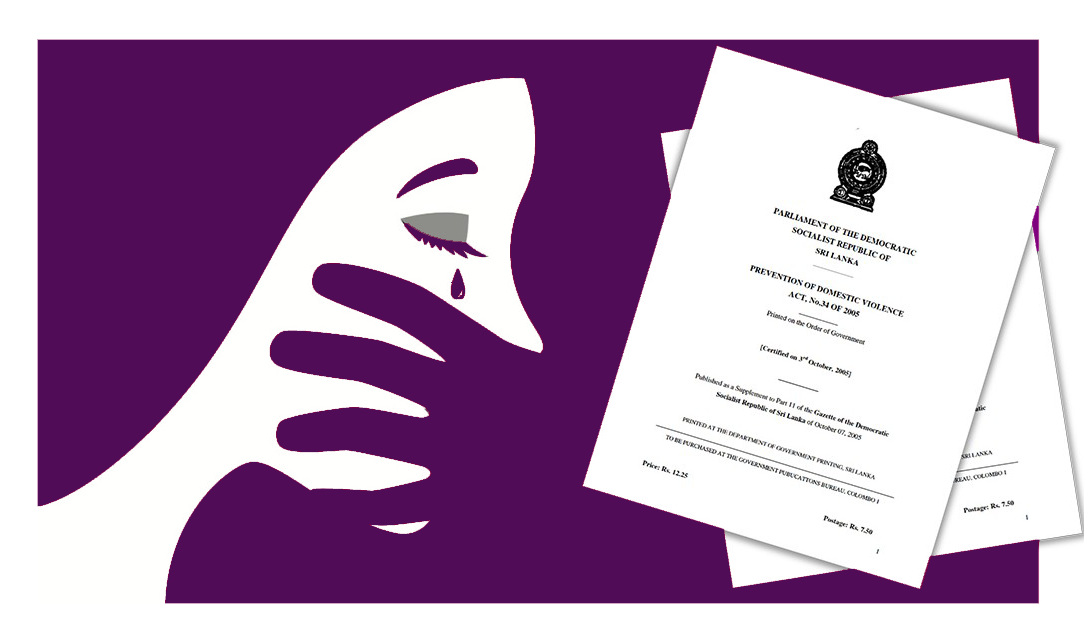
October 2025 marked 20 years since the Prevention of Domestic Violence Act (PDVA) was unanimously passed by parliament. Even though the Act fell short of the expectations of women’s organisations that had lobbied for it (Kodikara 2012), it remains an important victory in the ongoing struggle to address violence against women in Sri Lanka, particularly intimate partner violence.
Symbolically, the Act renders what has long been considered a private, family issue a matter of public concern. It sends a message to society in general, and to perpetrators of domestic violence in particular, that such violence is unacceptable. In doing so, it challenges popular narratives that trivialise, normalise, and legitimise intimate partner violence.
Moreover, it authorises a court to intervene and protect women facing abuse and violence at home. Prior to its enactment, women in Sri Lanka did not, in effect, have a legal remedy for intimate partner violence. They could make a police complaint, but such complaints were rarely taken seriously, and women themselves were often reluctant to file criminal charges against their husbands.
Five years after the enactment of the PDVA, the feminist collective ‘Cat’s Eye’ (in a newspaper column reproduced in Polity in 2010) noted:
In a society where the family is upheld as the most sacred social institution, it is not pleasant to consider that within the walls of some families, women are abused in inhuman ways. For over a century, Sri Lanka hid behind the provision that women abused by their husbands can access punitive justice via the Penal Code, which lists some offences that describe domestic violence disputes. But no women came forward and no cases went to court under the Penal Code, not because there was no violence being perpetrated within families, but because of this very same sentiment – that domestic disputes should be kept domestic and it was wrong, as the Sinhala saying goes, to ‘spread home fires to the outside world . . .’” (Cat’s Eye 2010: 4)
Has the PDVA—conceived as a civil law remedy as opposed to a criminal law remedy—made women’s lives safer in their homes?
In the latest print issue of Polity magazine (Vol. 13, No. 2, July–December 2025), two articles explore and interrogate the implementation of the PDVA over the last two decades. Thahira Cader and Raaya Gomez, in ‘Reflecting Back and Looking Forward: 20 Years Since the Prevention of Domestic Violence Act’, draw on interviews with four lawyers to argue that every stage of filing for a Protection Order (PO) under the PDVA is bedevilled by structural and systemic impediments rooted in patriarchal attitudes and values. These include preliminary barriers at the stage of reporting; a preoccupation with physical violence at magistrates’ court inquiries; weak monitoring of interim and permanent protection orders; and the lack of mechanisms to ensure the safety and protection of women who seek an order under the PDVA. Cader and Gomez also draw attention to the additional challenges faced by some groups of women—because of class, ethnic, religious, and geographical factors—in invoking the PDVA.
In ‘Safety is Not a Wall: Beyond Protection from Domestic Violence’, Prasanna Pitigala Liyanage explores the PDVA from an altogether different lens. He reads the PDVA as a “designed space” to vividly describe its “design failures”. He argues that the PDVA can interrupt violence, put up a wall between victim and survivor, open a corridor, and provide a temporary scaffold, but not a safe passage out of violence to a safer home. The material and social precarity of survivors—and the economic and social support that is often necessary to build a life of safety and security in the wake of filing for a PO (cash, housing, childcare, counselling, etc.)—remain unaddressed by the law.
Both articles call for urgent amendments and adequate support services to strengthen the implementation of the PDVA. Discussions about amending the PDVA to address its many limitations have been taking place at least since 2018. A set of amendments to the PDVA received cabinet approval when Chandrani Bandara was the Minister for Women and Child Affairs in 2018 but did not materialise (Office of the Cabinet 2018). A new cabinet in June 2023 again granted approval to gazette a bill to amend the PDVA (Office of the Cabinet 2023). Since the bill had a long list of amendments, President Ranil Wickremesinghe, in his capacity as Minister for Women and Child Affairs, proposed repealing the old Act and replacing it with new legislation. Cabinet approval was granted to the Legal Draftsman’s Department to draft a new Act (The Morning 2024). Proposed amendments to the old law included expanding the categories of persons who can institute legal action on behalf of an adult or child subjected to domestic violence, simplifying the process of filing an application, and removing the requirement of mandatory counselling unless requested by the survivor. But this bill too was not passed at the time. The National People’s Power (NPP) government has now pledged to enact this new law to strengthen protection for survivors of domestic violence. However, amendments to the PDVA alone will be inadequate to address its limitations.
The PDVA is a civil law remedy that moves away from a carceral approach. Yet it mimics one by requiring women to apply for a PO through a magistrate’s court, making it contentious and difficult for survivors to navigate. A good wife in Sri Lanka, is one who is expected to endure the violence in silence and not talk about it in public, much less take her husband to court.
These applications continue to be perceived by perpetrators and communities as hostile acts that disrupt “family harmony” and as “spreading home fires to the outside world”. The choice facing a woman is a stark one: Do you suffer violence in silence or do you put your marriage in jeopardy by making a complaint under the PDVA? Many women will prefer to suffer in silence to protect their marriage. Filing an application for a PO will more often than not make it untenable for the survivor/complainant to remain in the matrimonial home; if she is economically dependent on her husband, he may stop maintaining her; she may lose access to and custody of her children. If more women are to seek protection under the PDVA, the PDVA must necessarily anticipate these consequences for women applying for a PO and provide them the necessary “room/s” to do so with dignity and in safety.
As Liyanage searingly points out, more than anything else what is needed are adequate resources for support services. Access to a shelter can make all the difference both in deciding to apply for a PO and in the ability to navigate life after a PO. Yet there are very few shelters that can provide a safe haven for women survivors of violence in Sri Lanka. The Ministry of Women and Child Affairs currently operates 10 shelters across the country. Most recently, a new, dedicated GBV shelter was officially opened in Nuwara Eliya in July 2025, with financial support from the Government of Japan and technical support from the United Nations Population Fund (UNFPA).
At the review of Sri Lanka’s 9th periodic report to CEDAW in February 2025, the government committed to increasing the number of state-run shelters while expanding budgetary allocations (Paulraj 2025). The 2025 budget, presented by President Anura Kumara Dissanayake, included several provisions related to women’s welfare and support services: an allocation of 5 billion LKR to combat GBV, specifically funding shelters, legal aid, and awareness campaigns (Nawaratne 2025). In December 2024, the Cabinet also approved an allocation of 25 million LKR to address operational costs and past expenses of existing shelters run by the ministry (Office of the Cabinet 2024). .
Increased state support for GBV services is more necessary than ever, given the funding crisis facing support services run by women’s organisations. As Sandunlekha Ekanayake (2025) noted in the previous issue of Polity, the closure of USAID has severely reduced funding for NGOs, including women’s organisations. Women In Need (WIN), one of the largest organisations providing assistance to survivors of domestic and gender-based violence, relied on USAID for approximately 85% of its operational costs. WIN’s services included counselling, emergency shelters, and legal aid (Alphonsus 2025; Ekanayake 2025).
Funding is important, but from a feminist perspective, it is also necessary to ensure that support services truly empower women to build lives free of violence. Yet, support services cannot be delivered without necessarily challenging the unequal power relations underpinning violence or the discourses that normalise and trivialise it. Thus, 20 years after the PDVA, there is still much work to be done to stand with women to build lives free of violence.
Chulani Kodikara is an editor of Polity and a director of the Social Scientists’ Association.
Image credit: Suresh Amuhena
References
Alphonsus, Mimi. (2025). “MEND programme did much more than merely train journalists on gender sensitivity”. The Sunday Times (9 February): https://www.sundaytimes.lk/250209/news/mend-programme-did-much-more-than-merely-train-journalists-on-gender-sensitivity-sources-587266.html
Cader, Thahira and Raaya Gomez. (2025). “Reflecting Back and Looking Forward: 20 Years since the Prevention of Domestic Violence Act”. Polity, 13 (2): 92-97.
Cat’s Eye. (2010). “Domestic Violence: The Rice Pot Boils Over”. Polity, 5 (5): 4-6.
Ekanayake, Sandunlekha. (2025). “Aid Interrupted: Reverberations in Sri Lanka of USAID’s Dismantling”. Polity, 13 (1): 34-41.
Kodikara, Chulani (2012). Only Until the Rice is Cooked: The Domestic Violence Act, Familial Ideology and Cultural Narrative in Sri Lanka. Colombo: International Centre for Ethnic Studies. Available at https://www.ices.lk/publications-1/only-until-the-rice-is-cooked%3F-the-domestic-violence-act%2C-familial-ideology-and-cultural-narratives-in-sri-lanka
Liyanage, Prasanna Pitigala. (2025). “Safety is Not a Wall: Beyond Protection from Domestic Violence”. Polity, 13 (2): 98-102.
The Morning. (2024). “PDVA to be revoked and revised”. (27 March): https://www.themorning.lk/articles/eDcgpg96YQTEur06Vk3W
Nawarathna, Gayathri. (2025). “Is Sri Lanka’s 2025 Budget Truly Workable for Women?” Midpoint (6 March): https://midpoint.lk/is-sri-lankas-2025-budget-truly-workable-for-women/
Office of the Cabinet of Ministers. (2024). “Administration of Temporary Shelters for Providing Protection to Female Victims of Violence”. (18 December). Available at https://www.cabinetoffice.gov.lk/cab/index.php?option=com_content&view=article&id=16&Itemid=49&lang=en&dID=12937
Office of the Cabinet of Ministers. (2023). “Amendment to the Prevention of Domestic Violence Act, No. 34 of 2005”. (12 June). Available at https://www.cabinetoffice.
Office of the Cabinet of Ministers. (2018). “Amendments to the Prevention of Domestic Violence Act, No. 34 of 2005”. (6 March). Available at https://www.cabinetoffice.
Paulraj, Saroja. (2025). Opening statement of the Hon. Saroja Savithri Paulraj, Minister of Women and Child Affairs, Head of Delegation to the CEDAW Review of Sri Lanka´s 9th Periodic Report, 13 February, Palais des Nations, Geneva. Available at https://live.lankamission.org/images/pdf-2025/Opening_statement_final_-english.pdf
Wijesinghe, Dilushi. (2025). “Domestic Violence: Victim Fear Still Reigns but there’s Hope”. The Sunday Times (19 January): https://www.sundaytimes.lk/250119/news/domestic-violence-victim-fear-still-reigns-but-theres-hope-585120.html
Editors’ Note: This text, introducing the Polity forum on ‘Twenty Years of the Prevention of Domestic Violence Act’ was originally published in Vol. 13, No. 2 (July-December 2025): 89-91, and has been slightly revised for online publication.
You May Also Like…

‘A literary man interested in anthropology’
Ranjini Obeyesekere interviewed by Crystal Baines
Dr. Ranjini (Ellepola) Obeyesekere is one of Sri Lanka’s leading translators, and among its first female theatre...
Conversion and Tradition: The Religious Public in Millennial Sri Lanka
Geethika Dharmasinghe
A proletarian ethic parallel to the bourgeois ethics of Protestant Buddhism has not developed in the city’s working...
A Tale of Two Islands
Anne M. Blackburn
As long as I have studied Buddhism and Southern Asia, Gananath Obeyesekere has been a guide and interlocutor, always...