
Polity aims to advance democratic consciousness, gender equality, state reform, and social change in Sri Lanka, while interested in South Asia and the World.
As its predecessor Pravada (1991-2002), Polity is published by the Social Scientists’ Association in Colombo, with critical content on politics, political economy, history, women, ethnicity, sexualities, religion, labour studies, agrarian relations, nationalisms, violence, ecology, and much more.
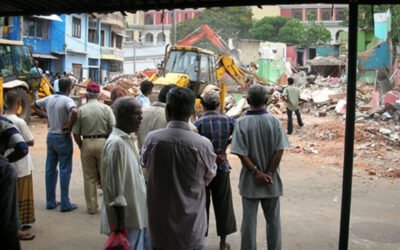
Colombo’s Gentrification: The ‘Right to the City’ during Neoliberalism
Hasini Lecamwasam
IntroductionOne thing that classical economists seem to agree on with their colleagues of a more leftist persuasion is...
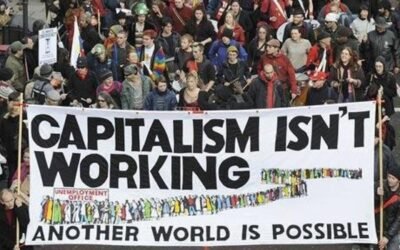
The Crisis of Neoliberalism and the Progressive Alternative
Devaka Gunawardena
The current crisis in Sri Lanka is not only a political crisis of the regime of Gotabaya Rajapaksa. It is also a...

A History of Unfortunate Circumstances
Hasini A. Haputhanthri
‘A Day in July 2019’ by Rajitha Dissanayake, 2022, Lionel Wendt, Colombo
This play has been long in the making. A string of unfortunate circumstances induced by the pandemic resulted in the...
A Secular Need: Islamic Law and State Governance in Contemporary India. Geoffrey Redding. Seattle: University of Washington Press, 2020. 240 pp
Reviewed by Farzana Haniffa
Redding’s book lays out the manner in which regardless of the horrendous anti- Muslim violence permitted and often...

Dissident Memory and Democratic Citizenship: Sandya Ekneligoda and Her Struggle for Justice
Chulani Kodikara
Sandya Ekneligoda holding a flame and trident (24 January 2019). (Photo: Nilshan Fernando)Prageeth Ekneligoda,...

Democracy in the Global Interregnum
Devaka Gunawardena
The meaning of democracy is becoming unmoored. Since the end of World War II, the US claimed the banner of democracy,...
Current Issue

Out Now! Vol. 13 No. 2 (July – December 2025). 148 pages. #SriLanka. Politics. Cyclone Ditwah. Ecology. Feminism. Education. Justice. Domestic Violence Act. History. Culture. Work. Labour. Books. Cover Picture Sakuna M. Gamage. LKR1000 from the Social Scientists’ Association or Barefoot or SLBOOKS.lk.
Calls
Archive
Pravada (1991-2002) and Polity (2003-) back issues available here.

Social Scientists’ Association
The Social Scientists’ Association (SSA) was founded in 1977, at a turning point in Sri Lankan politics, economy, and society, marked by among other aspects: the ‘open economy’ market reforms; deepening ethnic conflict; and the growing concentration of executive power. Its initiators were academics from public universities, seeking an autonomous space to grapple with these shifts; and to promote progressive political, economic, and social change.