

Polity aims to advance democratic consciousness, gender equality, state reform, and social change in Sri Lanka, while interested in South Asia and the World.
As its predecessor Pravada (1991-2002), Polity is published by the Social Scientists’ Association in Colombo, with critical content on politics, political economy, history, women, ethnicity, sexualities, religion, labour studies, agrarian relations, nationalisms, violence, ecology, and much more.

Locating Labour in Sri Lanka’s Ethical Sourcing: Review of “Garments without Guilt? Global Labour Justice and Ethical Codes in Sri Lankan Apparels” Kanchana Ruwanpura Cambridge University Press, Cambridge, 2022
Shyamain Wickramasinghe
Garments without Guilt? Global Labour Justice and Ethical Codes in Sri Lankan Apparels by Kanchana Ruwanpura uses an...
Call for Urgent Action by the Sri Lanka Women’s NGO Forum (SLWNGOF) to alleviate the suffering of the people of Sri Lanka
Call for urgent action: Nominate women and men who have no allegations of corruption, and hold a vision and a...

Federation of University Teachers’ Association speaks up on current crisis
The current momentWe are witness to an unprecedented happening in the postcolonial history of this country....

The Argentinian (2001) and Sri Lankan (2022) Financial Crises: Ways Forward from a Feminist Perspective
Corina Rodriguez
In response to Sri Lanka’s ongoing economic crisis, and the consensus across the political spectrum and even social...
Statement from the Social Scientists’ Association on Sri Lanka’s Current Crisis
Sri Lanka is currently experiencing the worst economic crisis in its post-independence history. Foreign reserves of...
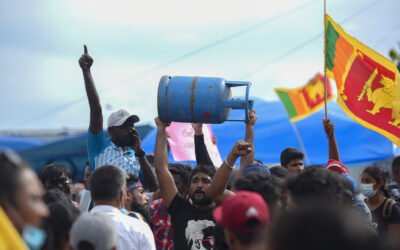
The democratic moment today: A call for action and reflection
We are witness today to events that are unprecedented in our postcolonial history. Hundreds of thousands of people are...
Current Issue

Out Now! Vol. 13 No. 2 (July – December 2025). 148 pages. #SriLanka. Politics. Cyclone Ditwah. Ecology. Feminism. Education. Justice. Domestic Violence Act. History. Culture. Work. Labour. Books. Cover Picture Sakuna M. Gamage. LKR1000 from the Social Scientists’ Association or Barefoot or SLBOOKS.lk.
Calls
Archive
Pravada (1991-2002) and Polity (2003-) back issues available here.

Social Scientists’ Association
The Social Scientists’ Association (SSA) was founded in 1977, at a turning point in Sri Lankan politics, economy, and society, marked by among other aspects: the ‘open economy’ market reforms; deepening ethnic conflict; and the growing concentration of executive power. Its initiators were academics from public universities, seeking an autonomous space to grapple with these shifts; and to promote progressive political, economic, and social change.