

Polity aims to advance democratic consciousness, gender equality, state reform, and social change in Sri Lanka, while interested in South Asia and the World.
As its predecessor Pravada (1991-2002), Polity is published by the Social Scientists’ Association in Colombo, with critical content on politics, political economy, history, women, ethnicity, sexualities, religion, labour studies, agrarian relations, nationalisms, violence, ecology, and much more.
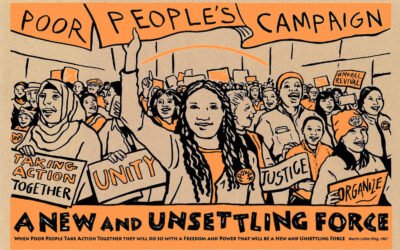
Don’t Use Class as a Weapon to Dismiss Social Struggles
Devaka Gunawardena
We can blame the chaos of the contemporary global moment for many problems. From rising prices, to rearmament and the...

Budget 2023: Heal the Wound or Worsen it?
Dhanusha Gihan Pathirana
This text is adapted from a presentation made at a virtual discussion on the 2023 Budget organised by the...
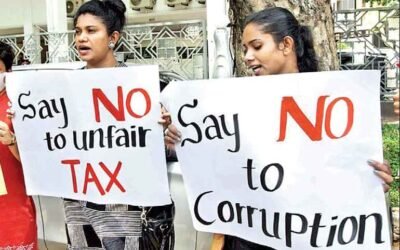
Left Strategy in the Time of the IMF Counter-Revolution
Devaka Gunawardena
Less than a year has passed since the 9th July uprising last year in Sri Lanka. Nevertheless, the contours of the...
Sri Lanka 2023: Anniversaries of Struggle
Q. M. Saul
No matter what happens for the rest of this year, 2023 will go down in the history books of Sri Lanka. This year is...
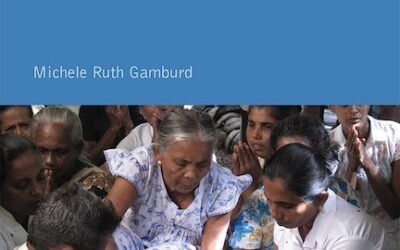
Entangled Lives and the Crisis of Care – Linked Lives: Elder Care, Migration, and Kinship in Sri Lanka. Michele Ruth Gamburd. New Brunswick, New Jersey: Rutgers University Press, 2020
Asha L. Abeyasekera
Michelle Gamburd’s ethnographic monograph Linked Lives looks in depth at practices of care in a Southern Sinhala...
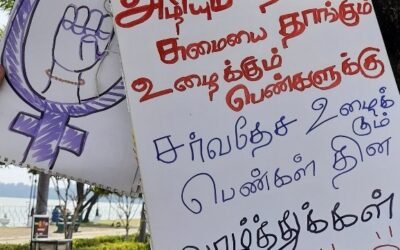
International Women’s Day: Sri Lankan Women Demand Democracy, Economic Justice, and Freedom
Feminist Collective for Economic Justice
Working women are bearing the debt burden!In 1908, 15,000 working women marched through New York City demanding decent...
Current Issue

Out Now! Vol. 13 No. 2 (July – December 2025). 148 pages. #SriLanka. Politics. Cyclone Ditwah. Ecology. Feminism. Education. Justice. Domestic Violence Act. History. Culture. Work. Labour. Books. Cover Picture Sakuna M. Gamage. LKR1000 from the Social Scientists’ Association or Barefoot or SLBOOKS.lk.
Calls
Archive
Pravada (1991-2002) and Polity (2003-) back issues available here.

Social Scientists’ Association
The Social Scientists’ Association (SSA) was founded in 1977, at a turning point in Sri Lankan politics, economy, and society, marked by among other aspects: the ‘open economy’ market reforms; deepening ethnic conflict; and the growing concentration of executive power. Its initiators were academics from public universities, seeking an autonomous space to grapple with these shifts; and to promote progressive political, economic, and social change.