
Signal Right, Turn Right: The Class Politics of the Janatha Vimukthi Peramuna (JVP)
B. Skanthakumar
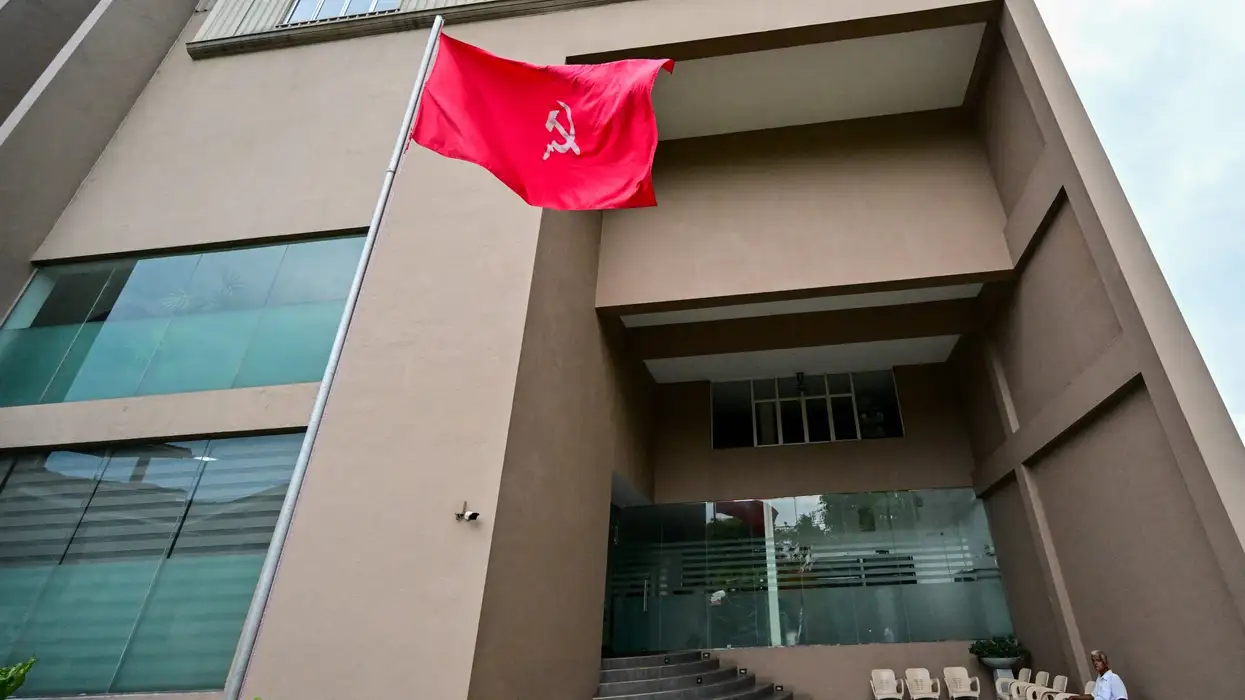
“History has shown that lower-middle-class and rich peasantry are rather unlikely to perform the role of the ruling class. Whenever social upheavals have enabled representatives of these classes to rise to power, they have invariably served the interests of big business…”
– Michal Kalecki (1967/1972: 162)
Across the world in the age of neoliberalism, it is commonplace for social democrats and ex-Communists, to embrace the economic agenda and prescriptions of parties of the conservative Right, once in government. This may explain why there is no domestic public disquiet in the Janatha Vimukthi Peramuna’s (JVP’s) pivot to the economic philosophy of its political rivals. However, surely this transformation has to matter to socialists, distant relations notwithstanding. Their praxis and theory cannot be indifferent to what happens in and around Sri Lanka’s premier party of the Left. More so, when that party in a new shape is the party of government.
Leaving aside socialists, what does that sliver of society, consistently in the low hundreds of thousands, who turned out for the JVP at the ballot box between the 1979 Colombo Municipal Council election and the 2020 General Election, think of its turn? Their ballot paper selection was in full knowledge of their choice having no prospect of victory nor power. There was no anticipation of gain from the patronage that flows from public office. They voted for a fellow outcast of the prevailing economic and political system. The JVP, in their eyes, was an authentic representative of the nirdhana panthiya (“class of the property-less”)[1].
More curious is how the cadre of the JVP—historically drawn from radicalised ‘educated’ youth, of rural Sinhala petty-bourgeoise origin as well as a section of the working class and the poor—and long served a pottage of simplified socialism, Sinhala-Buddhist inflected nationalism, and anti-imperialism, have not resisted their leadership’s evident rightward shift. How have they tolerated the trajectory of Rohana Wijeweera’s party—self-defined as Marxist-Leninist, and whose most recent political programme (2014) envisages “the creation of a liberated human being within a new Socialist state” (emphasis in the original)—from adversary to adherent of capitalism? Why is there no battle within its ranks for the soul of the JVP?
Some 30 years ago, in the wake of Chandrika Bandaranaike Kumaratunga’s centre-left People’s Alliance (PA) upon election in 1994, acceding to and even accelerating the neoliberal agenda of its right-wing rival the United National Party (UNP), Mick Moore posed a similar puzzle. How, he asked, have parties “with a substantial historic commitment to use state power and resources to directly benefit large constituencies of poor people”, been able to retain their “unity and coherence”, and a large part of their electoral base, even after implementing policies that harmed the standard of living and social welfare of their supporters, once in government (Moore 1997: 1009)?
My question echoes his. Since its election in 2024, the JVP in government as the National People’s Power (NPP)[2] has enforced an austerity programme rebranded by the IMF as “fiscal consolidation”. These right-wing measures attack the living standards of the poor; protect the privileges of the rich; and are antithetical to the transfer of power and wealth, from a minority to the majority. And these actions are in the particular setting of a society battered since 2019 by the COVID19 pandemic, economic catastrophe, the Cyclone Ditwah disaster, and the transmission effects of war in Europe and West Asia on food, fuel, and fertiliser prices. Consequently, two in every five are poor or at risk of poverty; stunting among children under the age of five rose to 10.1% in 2025; real wages nosedived by more than 40% as of 2023 and have yet to recover to 2019 level; while women’s labour force participation dropped to 32.4% in 2024, 2% lower than in 2019 (World Bank 2026: 31-34).
Yet, two years into government, the JVP has not experienced fractures between and within its leadership and membership; nor apparent discontent from its traditional (that is, pre-Aragalaya) electorate. How does a left party betray its cause, and not experience discord and disunity? This contribution is an exercise in self-clarification. Its first section rehearses an analytical approach to this question from 30 years ago applied in Argentina, Mexico and Sri Lanka. The second section sketches the ideological itinerary of the JVP from the 1990s onwards in the confluence of international and national dynamics. The third section introduces the petty-bourgeoise (literally, ‘small’ middle-class) as the protagonist in the narrative. The piece concludes on the bewildering bonhomie between the home-grown big bourgeoisie and Bolsheviks.
Leading the Left to the Right
To respond to his own question, Moore borrowed from work on Argentina and Mexico which argued that their populist parties, long connected to organised labour and previously aligned with statist import-substituting policies, comprised a “metropolitan” coalition and a “peripheral” coalition:
The metropolitan coalition functioned primarily as a policy coalition that gave support to the parties’ development strategies. The peripheral coalition functioned largely as an electoral coalition, which carries the burden of generating electoral majorities. (Gibson 1997: 340)
In the pre-market liberalisation era, Gibson’s “metropolitan” coalition comprised largely labour and business associations; in the urban and commercialised regions; and protected by state intervention in the labour market, and state subsidies for domestically-oriented industry, agriculture, and services. Meanwhile the “peripheral” coalition consisted mainly of peasants, rural labour, and the urban poor, as well as local elites; located in rural and economically marginal areas. The metropolitan coalition, though less significant in voter mobilisation, was crucial in shaping the development policy of the state. The peripheral coalition, though more significant in electoral terms, had limited influence in the state’s policymaking.
However, this metropolitan coalition, Gibson persuasively suggested, had been “recast” in the era of neoliberalism. Its new components became central to the shifting policy of these populist parties from the late 1980s onwards, in favour of market liberalisation. The changing global and national political economy weakened organised labour’s influence in state policy, while strengthening that of capitalists oriented to global market imperatives and opportunities. The numerical size and social weight of the urban population in services, informalised employment, and in professional and managerial work, expanded. This broadened the middle-class, making it more heterogenous.
The liberalization of financial systems and the opening of the domestic market created major economic opportunities for competitive firms and financial groups. The widescale privatization of state-owned enterprises favored domestic entrepreneurs with access to large amounts of capital and accelerated the process of economic concentration. (Gibson 1997: 357)
This dynamic within the metropolitan coalition, and between the peripheral and metropolitan coalitions, was at work in Sri Lanka too, suggested Moore. The core constituent of the PA electoral coalition, that brought the left into government after 17 years of UNP-rule, was the Sri Lanka Freedom (SLFP). The SLFP was a populist left-of-centre party, of intermediate classes including workers, farmers, and ‘national capitalists’, favouring state ownership of the commanding heights of the economy, and with close relations to the Eastern Bloc (Shastri 1983).
However, some time before the PA’s general election victory in August 1994, Chandrika Bandaranaike Kumaratunga, then Chief Minister of the Western Province and putative leader of the SLFP, announced before Colombo’s business community her party’s new economic policy. Henceforth, the SLFP would commit itself to a “free market economy” … where the private sector would be the driving force”, in partnership with the state on national needs and priorities; where no cronies nor commissions are tolerated; and where as reward, multilateral institutions would be “willing to be flexible” in lending negotiations (Kumaratunga 1994).
In retrospect, it is possible to see that the metropolitan component of the SLFP had recomposed as an indirect effect of the UNP’s structural changes to economy and society since 1977. Here is Moore’s analysis:
The peripheral component remains largely intact. The metropolitan component has been reconstituted: “the traditional” urban-labor core, that had previously provided the drive behind statist economic policies, has largely been replaced by a less stable combination of urban middle classes, professionals, and “technocrats”, that now provides the impetus behind economic liberalization. (Moore 1997: 1010)
Elaborating on the pro-business stance of the People’s Alliance, Moore drew attention to two relatively new fractions of the capitalist class in Sri Lanka, capital market players and apparel sector manufacturers, whom he claimed were campaign financiers of the incoming government, and subsequently influential in shaping its policy direction.
To return to the Janatha Vimukthi Peramuna in the 21st century, its conversion from enemy to ally of market capitalism is particularly glaring these past two years. Now that it is in government, its actions and omissions weigh heavier than words from the opposition bench, at television studios, on political stages, and in election manifestos. If we are caught by surprise, it is not because the JVP had signalled left, before turning right. We were not paying attention.
In what follows, taking off from Gibson and Moore above, I advance two propositions. Both are tentative, for limitations of data. The process culminating in the JVP-led NPP government managing and not overturning ‘really existing’ capitalism: one, has been underway since before the JVP’s makeover as the Jathika Jana Balawegaya/National People’s Power before the 2019-2020 presidential and parliamentary elections; and two, mirrors changes in identity and consciousness of Sri Lanka’s petty-bourgeoisie[3]; a class with which the JVP has been intertwined since its beginnings in the mid-to-late 1960s.
New course
Let me begin by speculating that the JVP determinedly embarked on a new course after its 7th national convention in 2014 when Somawansa Amarasinghe conceded leadership to Anura Kumara Dissanayake. The delegates, unanimously of course, adopted the ‘Our Vision’ political programme. That text began with an analysis of capitalism in Sri Lanka as “impotent, backward, and crippled”; of neoliberalism having supplanted neocolonialism; resulting in high levels of inequality where “20% of the richest grab 54% of the national income [and] the poorest 20% get only 4%”; such that the only way out of our crisis “is a new society with a people’s administration based on Socialist policies” (People’s Liberation Front 2014: v-viii).
However, within a few months, the JVP in its 2015 parliamentary election manifesto ‘Accord of the Conscience’ faced two ways. The longer Sinhala-language version was presumably aimed at its cadre and traditional electorate (Gibson and Moore’s peripheral coalition); while an abridged English-language version appeared to target groups at home and abroad with an outlook bounded by the existing socio-economic system and drawn to the technocratic language of ‘rule by experts’ (Gibson and Moore’s metropolitan coalition).
Thus, the Sinhala-language version “centred a ‘production economy based on modern socialist policies’ as remedy to the ‘predatory open market economic policy’ that had ‘failed’ (39)” says Novellis (2026: 12). Meanwhile, the shorter English-language version dropped the references to ”capitalism’’, “socialism”, and “anti-imperialism”, to be found in their convention programme. Instead, in this version of the 2015 election manifesto, there is a distinct orientation towards the anxieties and aspirations of the new middle class (People’s Liberation Front 2015), in the numerous pledges on education, health, housing, employment, transport and tourism. This is the approach subsequently pursued through the NPP since 2019: the discourse of state socialism is shed for that of an active state within market capitalism.
The JVP recycled concepts from its earlier programmes in the 2024 election manifesto, such as the “production-based economy” (Jathika Jana Balawegaya 2024: 5). However, these are ameliorative measures within and often reinforcing the existing socio-economic system; and with no ambition of transgressing let alone transcending it. Three Budgets have been presented by the NPP government to date. None attack poverty and inequalities at their root. None promise the redistribution of power in the workplace, markets, and the wider economy. None even begin the process of decommodification of public services.
The deradicalisation of the JVP since its re-emergence in the early 1990s, has generally been analysed in relation to its entry into elected liberal democratic institutions and parliamentary politics, as loss of insurrectionary fervour and adaptation to the Old Left strategy of gradualism. However, the ex-Jacobins of the JVP, unlike the Lanka Sama Samaja Party and Communist Party against whom they defined themselves as revolutionaries in the 1970s, have given up even the rhetoric of reformism: that is the transition—through incremental advances, and respecting the legal-constitutional-institutional structures of the capitalist state—to socialism.
Three reasons have been mooted by Dewasiri for the “mainstreaming”, as he terms it, of the JVP. He describes these as (1) the elitisation of the JVP leadership; (2) the transformation of the political subjectivity of rural youth; and (3) the broadening of the social base of the JVP (2010: 86-89).
The first, refers to the post-1989 leadership of the JVP allegedly acquiring ‘elite’ status: through their gradual entry into elected office (in local government, provincial councils, and parliament) with access to foreign governments; their position as trade union leaders, becoming interlocutors with employers’ representatives, international organisations and the mass media; and the increase in number of party full-timers with accompanying resources (such as vehicles with drivers).
The second, touches on how rural youth, who once provided the JVP’s mass following, have had their life-worlds transformed as a consequence of capitalist globalisation. The diversification of livelihood opportunities through internal and out-country migration and the seductions of consumerist culture, are suggested as reshaping their political imagination from overturning capitalism to finding the route to its promised land of plenty and prosperity. The third, points to the switch in the JVP’s base of support (political, electoral, financial)—and therefore also its political subject—to the semi-urban middle class. This is what my second proposition, in the section below, expands upon.
What is missing from the factors above, are the world-historical circumstances when the JVP re-emerged after its suppression in the late 1980s, and re-entered parliamentary politics in 1994. The socialist project was in tatters. The implosion of the former Soviet Union and collapse of Communist regimes in Eastern and Central Europe; China and Vietnam’s marketisation, courting foreign capital and promoting exports; the ignominious rule and end of self-described Marxist-Leninist regimes across the Third World; and the mutation of Western social democratic parties into social liberalism, ricocheted across the global Left.
The JVP could not have been immune to these transformations. It retained the symbols of its past, including icons and emblems, which figure in its rituals to rally the faithful (April Heroes Day, May Day, November Heroes Day). But by the late 1990s, in its everyday political discourse, the JVP tacked towards Sinhala nationalism (Dewasiri 2025: 16), as it has over the course of its chequered history. This phase resonated with the JVP’s own cadre, whom as Senaratne (1997: 119) observes,
… had everything in common with [the] ordinary Sinhala Buddhist population, with the only additional distinctions being a naïve belief in the ability of a harsh state-socialist economic policy to solve the country’s economic problems, the ideological adherence to a one-party ‘proletarian’ dictatorship, and the complete rejection of the prevailing establishment and the democratic system.
The JVP opposed a ‘political solution’ to the Tamil national question and the war through negotiations with the Liberation Tigers of Tamil Eelam (LTTE) and/or power-sharing arrangements with the Tamil-speaking north-eastern region. It also opposed the Ranil Wickremesinghe-led ‘Regaining Sri Lanka’ neoliberal programme inspired by the IMF and World Bank, by organising strikes, protests, and other large-scale actions against privatisation, trade liberalisation, and withdrawal of the fertiliser subsidy (Venugopal 2018: 180, Table 8.1). These are issues of the urban working class and rural cultivators—the ‘peripheral’ coalition or electoral component in the Gibson-Moore model.
However, already following its short-lived participation in the United People’s Freedom Alliance (UPFA) government in 2004-5, David Rampton perceptively observed that “the experience of political office has softened [the JVP’s] once uncompromising hostility to [the IMF and World Bank]. The experience has opened them up to the potential of dialogue and the possibility of a long-term transition on economic policy…” (Rampton and Welikala 2005: 36). Twenty years on, the JVP in government is not only in cordial dialogue with the Bretton Woods twins—not long ago denounced as “imperialist”—their economic policy is made by them in Washington DC.
New middle class
When the JVP re-emerged as an above-ground organisation in the mid-1990s, following the extermination of its leadership, most of its cadre, and many of its supporters, Sri Lanka under the People’s Alliance government was experiencing its third wave of market reforms. In this period, whether or not to ‘open’ the economy ceased to be in political debate; what was in contention was the speed, sequencing, and substantiveness of liberalisation. ‘Globalisation’ (in the sense of integration with the world market) was perceived as irresistible, and on the whole, desirable. Returnee labour migrants with any savings resorted to micro- and small-enterprise development. The transfer of public assets into private ownership was in full swing. Organised labour had been routed in the July 1980 general strike, reducing weakened trade unions to defensive actions. In the spiralling violence unleashed by war after 1983; and of fratricidal nationalisms in Tamil and Sinhala ethnic camps, the party and non-party Left was caught in the crossfire. There was no powerful countervailing force in society against the current of the right-wing.
This was the environment which shaped the class consciousness of the petty-bourgeoisie—including those within the JVP and among its electoral supporters. Indeed, the JVP’s changing political strategy has been expressly linked by Dewasiri with “the growing influence of the political interests of [the] new middle class” (2010: 75); and formed by the capitalist consumerism driven by economic liberalisation post-1977. Decades of ‘open economy’ reform have reconstituted politics in Sri Lanka.
The JVP’s second insurrection between 1987-1989 had been fuelled by the hopelessness of the losers in economic liberalisation. According to Uyangoda, the JVP in its campaign of violence against the UNP regime, drew on “social groups that were in the margins, or the edge, of society” (2003: 53). These ranged from secondary school students, the unemployed, university students, casual workers, young Buddhist monks, and oppressed caste youth to army deserters and criminals.
Ironically, after the JVP’s rebirth in the 1990s, it was the middle-class votaries of market capitalism who became their new imagined political subject. This pattern was already clear in the 2001 parliamentary election result, when the bulk of the 13 seats won by the JVP were not from rural or ‘peasant’ electorates but districts with urban and semi-urban centres with a concentration of this new middle-class. This was in addition to the support the JVP continued to receive from among the old lower-middle class of schoolteachers, lower strata government officials, and petty traders.
We know little and understand less of this nebulous category of the “middle class”. The World Bank, the Asian Development Bank, investment bankers and the business media, imagine a rising middle-class in the Global South, especially in Asia (Therborn 2020; Robison and Goodman 1996). For them, it is a class defined by income and consumption, rather than social relations and production. In Sri Lanka, for instance, this class is associated with the demand for private healthcare and education and high-end products like foreign holidays, luxury apartments, and car purchases. All manner of virtues are attached to the growth of the middle-class including: “sustained economic growth, good governance, better democracy, political and macroeconomic stability, and improved institutions…” (Institute of Policy Studies 2013: 59).
Based on the Household Income and Expenditure Survey – 2009/10 data, the Institute of Policy Studies estimated that over 76% of the population were ‘local middle-class’: those spending more than US2 and under USD10 per capita daily, (as distinct from the ‘global middle-class’ whose daily per capita spend is over USD10 and under USD100 per day); with the majority at the bottom end (Institute of Policy Studies 2013: 62). To describe the bulk of the population as ‘middle-class’ does not tell us much of course. Neither is it defensible if, as we are told by the same source, the majority are bunched only slightly above the threshold below which they would be classified as ‘poor’.
Sociologist Siri Hettige made a start on situating the development and differentiation of the petty-bourgeoisie in Sri Lanka in the 1990s, by coining the label, ‘New Urban Middle Class’, which was mostly based in and around Colombo. They were defined as those enjoying a high level of private consumption compared with low-income wage earners in the public and private sectors; comprising higher-level employees, the self-employed, and the “newly emerging small-scale business elite engaged in new service industries” (Hettige 1995: 102). The marketisation of the economy had reshaped social mobility and elite formation, such that the identity of this class owes more to lifestyle than past social hierarchies, he claimed. There is much here to debate;[4] and empirical investigation to do, after 30 more years of societal transformation.[5]
Within the expanding Sinhala petty-bourgeoisie, which provides the ‘metropolitan’ coalition or policy component of the Gibson-Moore schema, the JVP distinguished itself in two areas. Even its detractors acknowledged it as an upholder of ‘clean politics’ with ‘educated’ leaders, in contrast to the thieving, violent and moronic representatives of traditional political parties; and of the unitary status of the Sri Lankan state, in contrast with regimes allegedly bargaining it away with Tamil separatists. Both these stances played well in the received memory of the Sinhala middle-class, once their infatuation with the Rajapaksas ebbed in the fallout from the 2021-2022 crises, and their outrage over grand corruption awakened, driving support for the 2024 victory of the National People’s Power.
The process of embourgeoisement set in train by the development of capitalism, has penetrated the JVP too. The most recent (2025) declaration of assets and liabilities of JVP central leaders is illustrative of this. Their property ownership places them comfortably within the middle-class: a residential home; ¼ acre of land; one or sometimes two vehicles; jewellery valued in several lakhs of rupees; even a modest portfolio of stocks and shares in one instance. At least two among them own multiple commercial properties and/or agricultural land from which rental income is derived. In a number of declarations, some of these assets (usually land, gold and gems) are described as “gifts” from parents or family members, meaning their families are not poor either. The purpose of this inventory is not to insinuate impropriety. Mostly, there is nothing extraordinary in the scale and value of their possessions—relative to other middle-class households. Here’s my point. The new middle-class which is the bedrock of the NPP is not alien in its lifestyle and consciousness to the contemporary JVP leadership and presumably a significant number of its cadre.
A government for the non-elite?
How does it come about that a government of the non-elite, elected by the non-elite, becomes the vehicle for the economic programme of the elite? This is the riddle posed in this article. Its object is narrowed to the JVP—frequently described as not English-educated, not English-speaking, and “not from the traditionally English-oriented upper and middle classes” (Senaratne 1997: 103)—as opposed to the heterogenous NPP whose non-JVP members and supporters include people identified as urban, middle-class, multi-lingual, and of plural ethnic, religious, and regional identities.
To hazard an answer, I began by borrowing from similar inquiries in the 1990s in Latin America and Sri Lanka following the experience of economic liberalisation undertaken by leftwing parties. Edward Gibson and Mick Moore respectively dichotomised populist parties and alliances in government into peripheral or electoral, and metropolitan or policy components, identifying the reconstitution of the latter. In this way, the new middle-class emerges as the actor crucial to the volte-face by left parties from doubters to believers in market institutions, the private sector, foreign capital, and external trade. The precondition for the programmatic renovation of the JVP is suggested as its deradicalisation in the course of re-entry into democratic politics and the global and local political environment in the 1990s. Thereafter, I introduced the petty-bourgeoisie, and its changing ideology and internal differentiation, in response to marketisation, privatisation and globalisation from the late 1970s onwards. What rising classes saw as good for them, was identified as good for all.
My contention is that in forging the ‘social coalition’ (that is, multi-class alliance) which is the NPP in 2019, the JVP did not have to backtrack from its own politics. It had already abandoned its socialist-tinged programme before the 2015 elections. The JVP was repositioning: to change its image in society, blemished by a blotted history. For now, it has stopped short of renouncing its identity and name—as did some European communist parties, in their elusive search for the radical centre. The NPP was the bridge built to those allergic to the JVP’s past record. The JVP believed this new front would yield greater returns in elections. It did not at first. The NPP’s vote share in the 2020 general election was a bitter disappointment: polling 3.84% as compared to 4.87% in 2015 when the JVP contested in its own name.
The NPP’s success in 2024 (42.31% in the presidential race and 61.56% in the parliamentary contest) is an incredible upshot of the social upheaval that was the 2022 citizens’ movement. Untainted by dint of being an outsider to the political establishment, the NPP became the refuge of those repelled by the degenerate system. After the Aragalaya, this momentum from below, meant that even big capitalists—whose natural choice had been the UNP, although some shifted to the Rajapaksas after 2005 and up to 2021—were drawn to the JVP’s new avatar.[6] Some, rumour has it, making generous campaign contributions.
This new alliance, between the political representatives of the petty-bourgeoisie and the economic representatives of the big bourgeoisie, was sealed after the NPP took office, with the appointment of then Ceylon Chamber of Commerce (CCC) chairman Duminda Hulangamuwa as senior economic advisor to President Anura Kumara Dissanayake (concurrently the Minister of Finance, Planning and Economic Development); and past CCC chairman and former telecommunications transnational chief Hans Wijayasuriya as the president’s chief advisor on the digital economy: the latest arena of capital accumulation. It is the elite committee of top capitalists, and not the business chambers of small and medium scale companies, in the cockpit of economic policy formulation and management.
In the run-up to, and after the 2024 elections, the liberal and racist Right presented the NPP as a mask worn by the JVP, later to be dropped revealing its true identity. Actually, as the JVP leadership has repeatedly (and sincerely) stressed, there is no distinction between the visage and the bearer. What is clear over the past two years in government, is that the JVP does not represent a ‘left’ pole within the NPP. It does not see its part as winning over progressive sections of the middle-class to link their fate with that of the working class and other dominated classes, in a combined struggle against the dominant order. Now, channelling the “dreams and nightmares” of the petty-bourgeoisie, the JVP tethers itself to the haute bourgeoisie.
B.Skanthakumar is co-editor of Pathways of the Left in Sri Lanka (Colombo: Ecumenical Institute for Study and Dialogue 2014).
Image source: https://bit.ly/4CorUfx
References
Dewasiri, Nirmal Ranjith. (2010). “Mainstreaming Radical Politics in Sri Lanka: The Case of JVP Post-1977”. Journal of Power, Conflict and Democracy in South and Southeast Asia, 11 (1): 70-94.
Dewasiri, Nirmal Ranjith. (2025). “The Revival of the JVP after 1989”. Polity, 13 (1): 14-17.
Engels, Frederick. (1975). “Engels to Laura Lafargue in Paris” (October 2, 1886). In Marx Engels Selected Correspondence (372-373). Moscow: Progress Publishers.
Fanon, Frantz. (1967). “The Pitfalls of National Consciousness”. In The Wretched of the Earth (119-165). (1961) (Trans. Constance Farrington). Harmondsworth: Penguin.
Gibson, Edward. (1997). “The Populist Road to Market Reform: Policy and Electoral Coalitions in Mexico and Argentina”. World Politics 49 (April 1997): 339-370.
Hettige, S. T. (1995). “Economic Liberalization and the Emerging Patterns of Social Inequality in Sri Lanka”. Sri Lanka Journal of Social Sciences, 18 (1 & 2): 89-115.
Institute of Policy Studies. (2013). “Driving Growth from the Middle: A First Look at the Middle Class in Sri Lanka”. In Sri Lanka State of the Economy 2013: The Transition to a Middle-Income Economy (54-71). Colombo: Institute of Policy Studies.
Jathika Jana Balawegaya (NPP). (2024). A Thriving Nation A Beautiful Life. Pelawatte, Battaramulla: Jathika Jana Balawegaya (NPP Sri Lanka).
Kalecki, Michal. (1972). “Social and economic aspects of ‘intermediate regimes’” (1967). In Selected Essays on the Economic Growth of the Socialist and Mixed Economy (162-170). Cambridge: Cambridge University Press.
Kumaratunga, Chandrika Bandaranaike. (1994). “SLFP’s New Economic Policy”. Pravada, 3 (2): 17 & 29.
Moore, Mick. (1997). “Leading the Left to the Right: Populist Coalitions and Economic Reform”. World Development, 25 (7): 1009-1028.
Novellis, Andrea. (2026). “The divided self: how ideological compartmentalization drives rebel-to-party success in Sri Lanka”. Democratization, 1–27.
People’s Liberation Front. (2014). Our Vision Policy Framework. Pelawatta, Battaramulla: Niyamuwa Publications.
People’s Liberation Front. (2015). Accord of the Conscience. Pelawatta, Battaramulla: Niyamuwa Publications.
Poulantzas, Nicos. (1973). “On Social Classes”, New Left Review, I/78 (Mar/Apr): 27-54.
Poulantzas, Nicos. (1975). “The Petty-Bourgeois Ideological Sub-Ensemble and the Political Position of the Petty-Bourgeoisie”. In Classes in Contemporary Capitalism (Trans. David Fernbach) (287-299). London: New Left Books.
Rampton, David. (2003). “Sri Lanka’s ‘Many Headed Hydra’: The JVP, Nationalism, and the Politics of Poverty’. In Centre for Poverty Analysis & Improving Capacities for Poverty Research (IMCAP) Program, University of Colombo & Sri Lankan Association for the Advancement of Science (SLAAS) – Section F (eds.), Poverty Issues in Sri Lanka: Towards New Empirical Evidence (149-180). Colombo: IMCAP.
Rampton, David, and Asanga Welikala. (2005). The Politics of the South 2000 – 2005. (No. 3 of the Sri Lanka Strategic Conflict Assessment 2005). Colombo: The Asia Foundation.
Robison, Richard and David S. G. Goodman. (1996). “The new rich in Asia: economic development, social status, and political consciousness”. In The New Rich in Asia: Mobile Phones, McDonalds and middle-class revolution. London and New York: Routledge.
Senaratne, Jagath P. (1997). Political Violence in Sri Lanka, 1977 – 1990: Riots, Insurrections, Counterinsurgencies, Foreign Intervention. Amsterdam: VU University Press.
Shastri, Amita. (1983). “The Political Economy of Intermediate Regimes: The Case of Sri Lanka 1956-1970”. South Asia Bulletin, III (2): 1-14.
Therborn, Goran. (2020). “Dreams and Nightmares of the World’s Middle Classes”. New Left Review, II/124 (July/August): 63-87.
Trotsky, Leon. (1971). ‘The Only Road’ (September 14, 1932). In The Struggle Against Fascism in Germany (272-328). New York: Pathfinder Press.
Uyangoda, Jayadeva. (2003). “Social Conflict, Radical Resistance and Projects of State Power in Southern Sri Lanka: The Case of the JVP”. In Markus Mayer, Darini Rajasingham-Senanayake, and Yuvi Thangarajah (eds.), Building Local Capacities for Peace: Rethinking Conflict and Development in Sri Lanka (37-64). Delhi: Macmillan India.
Venugopal, Rajesh. (2018). “Sectarian Socialism”. In Nationalism, Development and Ethnic Conflict in Sri Lanka (163-184). Cambridge: Cambridge University Press.
World Bank. (2026). Sri Lanka Development Update: From Recovery to Transformation. (October 2026). Washington DC: World Bank.
Notes
[1] “The nirdhana panthiya could include all those social classes and strata that had felt grievances against the dominant order” (Uyangoda 2003: 41).
[2] The NPP was formed by the JVP along with small leftist political formations; associations of academics, artists, LGBTQI activists, professionals, social activists, women’s rights activists, women free trade zone workers; retired public officials; individuals; and JVP front organisations of Buddhist monks, public, private sector and plantation workers and migrant workers.
[3] The petty bourgeoisie was believed by Karl Marx and Frederick Engels in the late 19th century to be an intermediate or transitional class. “It will ever be the lot of the petty bourgeois – as a mass – to float undecidedly between the two great classes” (Engels 1975: 372). They were trapped, between the proletariat and the bourgeoisie, and doomed to vacillate in their sympathies between those two classes. This was the era of the rising or revolutionary bourgeoisie in its political struggle against absolutism.
Decades later, during the 20th century crisis in capitalism called the ‘Great Depression’, Leon Trotsky described the petty bourgeoisie as “an exploited and oppressed class”. Subject as it was to the “conditions of capitalist disintegration and the impasse in the economic situation” it was capable, he suggested, of “linking its fate” with that of the proletariat. But this needed the revolutionary working class convincing other exploited and oppressed classes, that it could show them a new road to freedom from class society (Trotsky 1971: 284). This was not to be.
In imperialised social formations in the later 20th century, the two-class model of Marx and Engels was found wanting. The bourgeoisie and the proletariat were equally underdeveloped in colonial capitalism. Neither had the capacity to become the ruling class. The peasant and petty-bourgeoisie classes were of greater significance in national liberation struggles. Further, arising from their location in the social structure, the petty-bourgeoisie or ‘national middle class’ became beneficiaries of political power following decolonisation. However, they lacked economic power and the consciousness for socialist transformation. Frantz Fanon writing on the eve of Algerian independence held that,
… the historical vocation of an authentic national middle class in an under-developed country is to repudiate its own nature in so far as it is bourgeois, that is to say in so far as it is the tool of capitalism … In an underdeveloped country an authentic national middle class ought to consider as its bounden duty to betray the calling fate has marked out for it … (Fanon 1967: 120).
This was not to be either.
Towards the end of the ‘short twentieth century’, Nicos Poulantzas anatomised the political and economic characteristics of the petty-bourgeoisie in Western Europe as
… individualism; attraction to the status quo and fear of revolution; the myth of ‘social advancement’ and aspirations to bourgeois status; belief in the ‘neutral State’ above classes; political instability and a tendency to support ‘strong States’ and bonapartist regimes … (Poulantzas 1973: 37-38).
An acute aside by him elsewhere is an appropriate conclusion to this compressed circuit of a category:
Afraid of proletarianization below, attracted to the bourgeoisie above … the new petty bourgeoisie often aspires to … becoming bourgeois … it does not want to break the ladders by which it imagines it can climb [into the bourgeois elite – my insertion] (Poulantzas 1975: 292).
[4] En passant, the spatial categories are overdue for overhaul: it may be more productive to think of the blending or permeation of the rural by the urban as connoted by ‘rurban’; while concentrations of the new middle class outside of the Western Province, for instance in Galle-Matara; Kandy-Kurunegala; Ratnapura; and Ampara-Batticaloa, are neglected.
[5] On finalising this piece, I became aware of Shiran Illanperuma’s unpublished paper, “The Leveraged Middle: Sri Lanka’s Debt-Financed Growth Model and the Class Basis of the 2024 NPP Vote”, (presented at the South Asia Democracy Conference –2026, Colombo, 03-05 November 2026, organised by the Media Law Forum), which I have yet to sight.
[6] Days before the presidential election in September 2024, with the NPP candidate still the outsider, its business forum was attended by a phalanx of leading capitalists: Krishan Balendra (John Keells Holdings), Hiran Cooray (Jetwing Symphony), Ashroff Omar (Brandix), Nandadasa Rajapaksa (DSI Samson), Pravir Samarasinghe (Overseas Realty), Mano Sekaram (99x), and many more. The sectors represented at the NPP business forum spanned footwear and leather goods, tourism and hospitality, apparel, real estate, logistics, IT services, banking and financial services, etc. The latest stage of capitalism has made sterile in Sri Lanka as elsewhere, the hackneyed distinction between the so-called national and the comprador bourgeoisie, that is: that is those focused on domestic production and expansion of the home market and more independent of foreign capital versus those integrated into transnational value chains and servicing the world market and therefore more subordinated to foreign capital, respectively. They are all compradors now.