
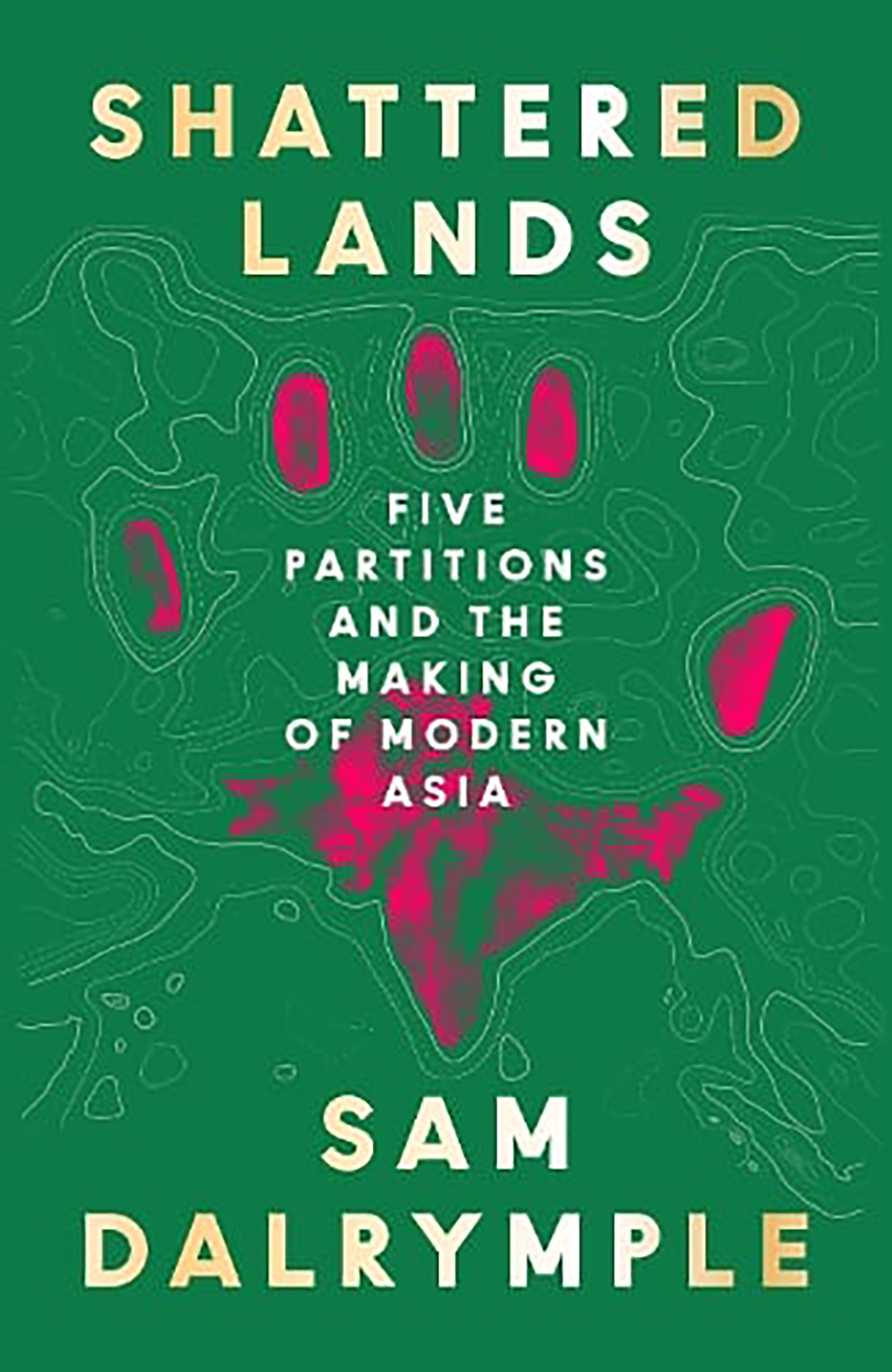
Shattered Lands: Five Partitions and the Making of Modern Asia. Sam Dalrymple. Harper Collins, 2025.
Roshni Kapur
Stories of displacement, separation of families and disruption of lives during the 1947 Partition are embedded in the memories of many families. Some of these stories riven with violence and tragedy have turned into generational trauma passed down from one generation to another. The bifurcation of the British India province of Punjab, that witnessed the worst forms of violence and bloodshed, is embedded into public memory, popular culture, and cinema.[1] The term ‘Partition’, however, has been termed as a singularity by equating it with the 1947 division of British India into ‘India’ and ‘Pakistan’. This conflation often overlooks how British India experienced not one Partition but five partitions.
These partitions resulted in lasting impacts on the relationships between the newly created states. The biggest impact has been on local communities whose stories and lived realities are often pushed to the margins by official and political discourses. Chattoraj (2021) writes that the process of uprooting is not limited to a material sense of security; but also loss of attachment to social and cultural settings, loss of access and belonging to communities, and loss of their immediate surroundings.
Growing up in a Hindu Punjabi family, I often heard my grandparents narrate accounts of spending their childhood in present-day Pakistan, coexisting with other communities but forced to flee in the wake of the 1947 Partition. These stories also resonated with many relatives and cousins whose grandparents experienced similar tragedies.
However, my late paternal grandfather’s story stood out from the rest given the contrast in location, circumstances, and the period of partition and displacement. Pitaji (father in Hindi, an endearing term we used to call him) was born and raised in Burma when it was part of British India. He and his siblings lived in Mandalay at a time when Indians formed a significant minority in many parts of Burma. However, they decided to leave Burma following a surge in anti-Indian sentiments and communal attacks. They were fortunate enough to receive ‘inside’ information that the situation was getting out of hand, and it was too dangerous for them to continue living there.
It was these distressing stories that I heard time and again that sparked my interest in reading Shattered Lands: Five Partitions and the Making of Modern Asia by Sam Dalrymple (2025). The book takes the reader down a memory lane of the five partitions that broke up British India within the span of a mere fifty years. The book navigates the complexities of partition, violence, and migration. In the process of creating new nation states, these partitions were accompanied by religious segregation, communal politics, and sectarian tensions. They also formalised the segregation between different groups—where one religious community enjoyed pre-eminent status in one country but faced discrimination across the border in its neighbour.
While many books have been written about the different partitions as memoirs, popular histories and fiction, and literary depictions, most have focused on a specific partition or historical timeline such as The Great Partition: The Making of India and Pakistan by Yasmin Khan (2007) and Freedom at Midnight by Larry Collins and Dominique Lapierre (1975).
Unlike them, Dalrymple’s book showcases how the five partitions were not isolated events but interconnected in terms of similar histories, aspirations, and struggles. It describes how the partition of Burma from the British Raj led to a domino effect that encouraged other regions and communities to seek separation too. The book foregrounds the experiences of communities affected by partition. It explores how they construct and reconstruct the notion of home, the struggles they face to establish a new sense of belonging, social structures and livelihoods when they move to new locations, and the emotional and existential displacement they continue to experience after migration.
Five partitions
The disintegration of British India started in 1937 with the partition of Burma to meet longstanding demands of the ethnic Bamar community. The author articulates in great detail the cultural and people-to-people ties between Burma and India particularly those residing in the borderlands. Chapters 2 and 3 also trace the genesis of anti-Indian attitudes that escalated into anti-Indian violence and the political stances of pro- and anti-separation leaders. While Burmese leaders such as U Ottama claimed that Burma was “an integral part of the Indian nation” (2025: 38) and he perceived himself as an Indian leader, others such as U Saw exploited communal animosity to instigate violence against the community and strengthen calls for separation.
The next partition was that of the Arabian Peninsula from India that culminated a decade later in 1947. Besides Bhutan and Nepal, the Gulf states were the only monarchies that remained intact in the early 21st century. While Indian and Pakistani authorities competed in seeking the accession of hundreds of princely states post-1947, the Arab states of the Persian Gulf were not part of that integration exercise. Bernard Reilly, a British colonial administrator, viewed Arabs as inherently different from Indians and thought that separation was necessary to introduce reforms that were otherwise hindered by the vast Indian bureaucracy (2025: 57).
However, the book does not explain at length the dynamics of the separation of the Arabian Peninsula comprising of seven key countries (Yemen, Oman, Saudi Arabia, Kuwait, Qatar, Bahrain and the United Arab Emirates), the demands articulated by leaders, and the violence that burgeoned during and immediately after separation (although later chapters explore the surge in anti-Indian sentiments in these Arab states that prompted many Indians to leave).
The third partition, that of what is now India and undivided Pakistan, that forms the dominant narrative of the Partition discourse, is discussed extensively in the book. The author argues that Muslim leaders, such as Muhammad Ali Jinnah, first expressed demands for adequate Muslim representation in a future Indian legislature to consolidate their political rights. However, disillusionment with the prospects of Hindu-Muslim unity gradually augmented calls to create a separate state for the Muslim community. The 1946 election was the turning point where Indian Muslims united to mount their demand for a Muslim state after the Muslim League led by Jinnah secured an overwhelming mandate from Muslim voters (2025: 163).
However, it was uncertain what ‘Pakistan’ meant at this point. Some assumed that it would manifest as ‘Hindu rule’ and ‘Muslim rule’ within a federal India framework. Interestingly, the biggest support for the creation of a separate state for Muslims, came from Muslims residing in predominantly Hindu provinces; whereas the support for separation was less in the predominantly Muslim North-West Frontier region (2025: 164). The author goes to great lengths to emphasise that the 1947 Partition was an outcome of a failure to reach a negotiated political settlement on adequate representation for the Muslim community and a breakdown in harmonious relations between communities despite long histories of co-existence.
The communal violence that unfolded in the lead-up to Partition was not limited to Hindu-Muslim hostility, because it affected other communities too such as the Sikhs. The author recounts several incidents where unrest occurred between sections of the Muslim and Sikh communities (2025: 223). These accounts showcase how the narrative of violence and victimhood is riven with complexity and ambiguity because communities had engaged both as victims and perpetrators, of hate and violence, dispossession and displacement.
Some of the later chapters focus on the partition of Princely India, the fourth partition, through the bifurcation and accession of princely states, such as Junagadh, Kashmir, and Hyderabad, to the new nation states of India and Pakistan.[2] While they used negotiation strategies in the early period to convince the princely states to join their respective unions, both India and Pakistan resorted to coercion to secure their accession of the remaining princely dominions such as Khasi, Hyderabad, and Kalat. For instance, Pakistan used force on Kalat to officially join; resulting in protracted and ongoing conflict in Baluchistan (2025: 279).
The fifth and final partition occurred in 1971 when East Pakistan separated to become Bangladesh, which is discussed at length in the final three chapters of the book. Military rule in Pakistan did not bode well for Bengalis who made up merely one percent of the country’s armed forces at the time of independence. West Pakistan continued to endorse the colonial narrative of “martial races” to claim that Punjabis were physically more suited for military warfare (2025: 367). The discrimination against East Pakistan was not only in the military arena but also on political, governance and economic fronts which created new forms of grievances and anger. Many Bengalis felt that East Pakistan was a neo-colonial subject, its economic resources, such as the earnings from the production of jute, exploited for the development and industrialisation of the western wing.
The book also discusses how these grievances catapulted into landmark events including the language movement of 1952[3], the “Six Point” campaign[4], and the shift in demand from autonomy to independence. These milestones have been discussed extensively in other books such as The Aid Lab: Understanding Bangladesh’s Unexpected Success by Naomi Hossain (2017) and A History of Bangladesh by Willem van Schendel (2009). Hossain also explores how, besides the language and governance issues, development and aid expenditure that was mostly reserved for West Pakistan contributed to resentment among the former East Bengalis.
Crosscutting themes
Dalrymple’s book is grounded in historical facts and archival research to provide readers with a repository of information. While it does not engage with theoretical frameworks, many themes are linked to multiple discourses.
First, the book seeks to challenge the popular narrative that India was a timeless entity which was forcibly disintegrated following reckless decisions undertaken by British administrators and demands made by Muslim nationalists. It shows that in reality, “Undivided India” was a colonial construct riven with complex relationships, particularly with communities living in the borderlands who were often neglected in state-building and state transformation processes. The creation of these borders also resulted in the separation of families, where members of a single family were divided between two new nation states.
Indigenous communities such as the Nagas and the Mizos began revolting against Indian rule to challenge the creation of new borders and state structures through top-down and non-consultative decision-making. The Nagas were unhappy that Nagaland had become part of the Indian federation, while Bhutan and Sikkim remained independent. The Naga liberation movement appeared most likely to succeed in the 1950s/1960s when Angami Zapu Phizo set up a parallel government after he was released from prison and declared Nagaland as a separate state in 1956.
Dalrymple argues that, while many scholarly inquiries of the Naga rebellion perceive the movement led by Phizo through the secessionist lens, it would be more instructive to examine it as an effort to undo or alter the boundaries of the partition of Burma and India to reunite the Nagas on both sides of the border. It was an effort by the agitators to reject flawed geography where one ethnic community was divided by artificial borders (2025: 355-358).
Second, the concept of nationalism was envisioned differently by various leaders. Third world nationalism has often been connected to the discourse of anti-colonialism. The notion of the nation state that manifested in post-independent societies did not emerge organically out of economic, political and social considerations. Rather it arose from the foreign gaze on the colonised. While leaders such as Nehru embraced a more civic and plural form of nationalism, others such as Gandhi and U Saw viewed nationalism in more ethnic or religious terms. Nationalism for the former was a more ‘inclusive and liberating force’ centred on a collective national identity to create strong nation states that transcended ethnic, racial and religious identities.
However, there were forces and leaders who traced nationalism to cultural or linguistic histories with strong cultural-revivalist overtones. Nation-building was conflated with ethno-nationalism, in the name of state formation. For them, a new nation state could only be established when the identity and history of a dominant group was closely connected with that of the state. They sought to legitimise their claims through a unique construction of history by way of reference to ancient chronicles. Their claim was that their ‘glorious past’ had been annihilated by the advent of other communities, making their brand of nationalism imperative to rectify this imagined historical wrong. Hence the push for separation by Indian, Burmese, Pakistani and Arab nationalists was driven by their vision of a more ethnically homogenous nation state. For instance, Hindu nationalists wanted an independent India to mirror the civilisational entity of ancient Bharat that did not include Arabia or Burma (2025: 25-27).
Third, the book examines themes of centre-periphery relations around how some of the new nation states adopted securitised approaches to revolt in their respective borderlands. India resorted to a militarised tactic of airstrikes to quell the revolt by the Mizo National Front in 1966. The Indian army also forcibly resettled most Mizos into “voluntary grouping centres” (2025: 373). Pakistan also resorted to projecting its military power by deploying troops in Baluchistan in 1973 (2025: 455). The approach of quashing rebellions made way for a kind of a longer-term frontier defence doctrine which shaped their military strategy and crisis behaviour. These operations were deemed successful since they managed to quell rebellion in the short-term. However, such a heavy-handed approach often led to resentment, and even sympathy and support for insurgent groups resulting in low-intensity conflicts in the frontier of both countries in decades to come. These militarised approaches in the borderlands did not align with the state formation processes based on liberal democratic values and institutions introduced by the nation states themselves (although Pakistan moved towards military rule in 1958 and Burma in 1962) (Doyle 2019).
Writing history
Overall, the book is written in a balanced and objective way, showing that the 1947 pre-partition, partition and post-partition dynamics were complex and multilayered. These realities cannot be understood through a binary or a rigid interpretation which obscures the presence, aspirations and struggles of multiple actors in different periods and events. For instance, the militarised response to the Mizo rebellion in the 1960s prompted a dramatic migration to East Pakistan and Burma where they “rendered active help to the Pakistani troops in suppressing the Mukti Fauj [Bahini] of Bangla Desh” during the 1971 Liberation War of Bangladesh (2025: 412). The dominant narrative of the 1971 war has limited its focus to key belligerents, instead of a multiplicity of actors aligning with different forces to secure their vested interests. The author, in a way, takes a post-structuralist approach by articulating that the ground realities were constructed and abstract. He encourages readers to go beyond a logic of self-sufficiency and self-evidence and to form their own conclusions.
Dalrymple could have discussed the partition of the Arabian Peninsula more extensively, but it would have been challenging since this partition was a gradual process and not a singular, time-bound event. The author could have also examined other historical events in more detail such as the evolution of the frontier defence doctrine and its invocation in other peripheries; or aspirations by Sikh leaders on having a separate homeland for Sikhs when Pakistan was formed, and the Khalistan insurgency that peaked in the 1980s . While many incidents were viewed from the religious and to some extent the class lens, the author could have further articulated this by examining these developments in gender and caste terms as well. Nonetheless the book is a comprehensive and a fascinating read for those interested in the history of the subcontinent, colonial history, partitions, political violence, and military history.
Roshni Kapur is a PhD student at the University of Ghent focusing on caste and land conflicts in Sri Lanka. She is an editor of a forthcoming volume on the 2022 economic crisis and implications for constitutional democracy and the rule of law in Sri Lanka.
Image Credit : Harper Collins
References
Chattoraj, Diotima. (2021). Displacement Among Sri Lankan Tamil Migrants: The Diasporic Search for Home in the Aftermath of War. Singapore: Springer.
Collins, Larry and Lapierre, Dominique. (1975). Freedom at Midnight. New York: Simon and Schuster.
Doyle, John (2019). “Indian approaches to security and conflict resolution.” UNISCI Journal, 49: 43-62.
Hossain, Naomi (2017). Aid Lab: Understanding Bangladesh’s Unexpected Success. Oxford: Oxford University Press.
Khan, Yasmin. (2007). The Great Partition: The Making of India and Pakistan. Yale: Yale University Press.
van Schendel, Willem (2009). A History of Bangladesh. Cambridge: Cambridge University Press.
Notes
[1] The partition of Bengal is not usually viewed as violent in the same manner as the partition of Punjab that was riven with a massacre at that time. However, it is worth noting that Bengal was engulfed in earlier waves of communal violence such as the Calcutta Killings in 1946.
[2] Some vassal states, such as the Karenni state and the Shan state, had also joined Burma.
[3] The 1952 language movement emerged in East Pakistan opposing Urdu as the sole state language and pushed for making Bengali an official language as well.
[4] The “Six Point” campaign in 1966 articulated six key demands seeking to decentralise power. One of the demands was to set up a federal form of government for East Pakistan.
You May Also Like…

Image-Based Sexual Abuse, and Consent, in the Digital Age
Sely Liyanage
The rapid development of digital technologies has created new forms of content and new forms of harm. Some content is...
India’s Youth Protest and the Limits of Demand-Driven Mobilisation
Manoranjan Pegu
The recent protests ‘led’ by the Cockroach Janta Party (CJP) in India, have been seen as the latest addition to South...
This Government, That Opposition, and the Work Still Ours
Lionel Bopage
For sixty-six years, until his death in 2014, the legendary comrade Bala Tampoe led the Ceylon Mercantile Union...